This riddle is over a thousand years old, and it speaks in a voice you might not expect. Something is talking to you. Something tired, beaten, and alone. Can you figure out what it is?
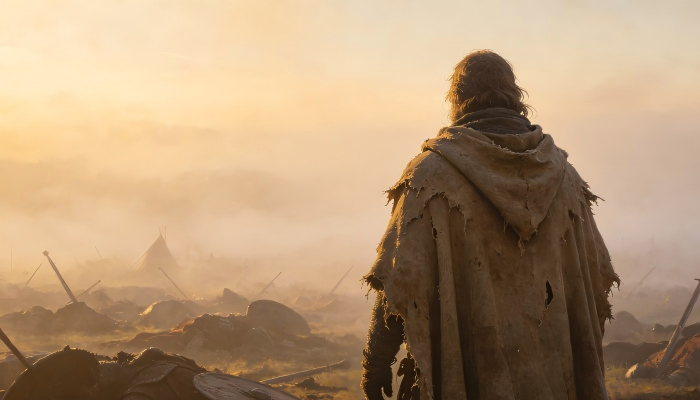
I am alone, wounded by iron, scarred by sword, weary of battle. I see much war. I do not expect that aid will come to me from the fighting, before I am completely destroyed.
Here’s a hint: it’s not alive, but it takes every hit so someone else doesn’t have to.
Click to Reveal the Answer
A Shield ⚔️
It endures every blow in battle so the warrior behind it doesn’t have to. It can never heal, only break down over time.
A Warrior’s Voice from a Thousand Years Ago
This riddle comes from the Exeter Book, a handwritten manuscript dating back to the late 10th century and one of the most important surviving collections of Old English poetry. The book contains over ninety riddles, and this one is known as Riddle 5 in scholarly editions.
What makes it special is the way it gives a voice to an object that can never speak for itself. The shield describes its own suffering in deeply personal terms: wounded, scarred, exhausted, with no hope of rescue or healing.
Anglo-Saxon shields were built from planks of wood (often linden, ash, or poplar), sometimes covered with leather and fitted with a central iron boss to protect the warrior’s hand. In the famous shield wall formation, warriors stood shoulder to shoulder, locking their shields together into an unbroken defensive line.
The shield absorbed every sword strike, spear thrust, and axe blow so the warrior behind it could keep fighting. But unlike human flesh, wood and leather can’t heal. Each scar stays. Each dent remains. The riddle captures this beautifully: a loyal protector that gives everything and receives nothing in return.
What’s remarkable about the Exeter Book riddles is how they turn everyday objects into living characters with feelings and stories. A shield becomes a tragic hero.
That shift in perspective is what made these riddles so popular in Anglo-Saxon England, and it’s what makes them still surprisingly moving today.