This riddle was found on the same 4,000-year-old clay tablet as the world’s oldest known riddle. That one was about a school. This one is darker, sadder, and just as clever. Something opens and closes right in front of someone, but it might as well be a locked door.
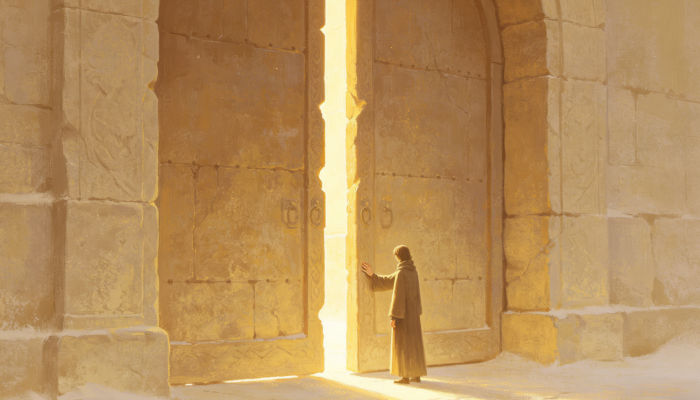
An open house, a locked up house. He sees it, but even then it remains closed.
Here’s a hint: the “house” opens and closes many times a day, and most people walk right through it without thinking. But for one person, it will always stay shut.
Click to Reveal the Answer
A Deaf Person 🤫
The “house” is the mouth. It opens and closes as people speak. A deaf person can see lips moving, but the meaning stays locked inside. The door opens, but for them, it never truly opens at all.
The Door That Opens but Never Lets You In
This riddle comes from the same cuneiform clay tablet as the famous school riddle, part of a collection of twenty-five Sumerian riddles dating to roughly 2500 BC and first translated by scholar E.I. Gordon in 1960. The school riddle was about the joy of learning: you walk in blind and walk out seeing. This one is its shadow. Here, someone watches a “door” open and close again and again, but what’s behind it never reaches them. The mouth moves, words come out, but a deaf person can only watch. The house is open. The house is locked. Both are true at the same time.
What’s remarkable is how the riddle uses architecture as a metaphor for communication. In Sumerian culture, the edubba (the scribal school, or “House of Tablets”) was where spoken and written language were taught side by side. The Sumerian word for “deaf” in some scholarly readings of this riddle can also carry the meaning of “one who is difficult to teach” or “obstinate,” suggesting the riddle may have worked on two levels. On the surface, it describes the literal experience of deafness. Underneath, it may be a teacher’s wry observation about certain students: the ones whose minds stay locked no matter how many times the door of knowledge swings open in front of them.
Placed together on the same tablet, the school riddle and the deaf person riddle form a kind of pair. One celebrates what happens when learning works: blindness becomes sight. The other quietly acknowledges what happens when it doesn’t: the door opens, but no one gets through. That a Sumerian scribe carved both of these observations into the same small piece of clay over four thousand years ago tells you something about how deeply these people thought about language, knowledge, and the gap between hearing and understanding. These aren’t party tricks. They’re philosophy pressed into mud.