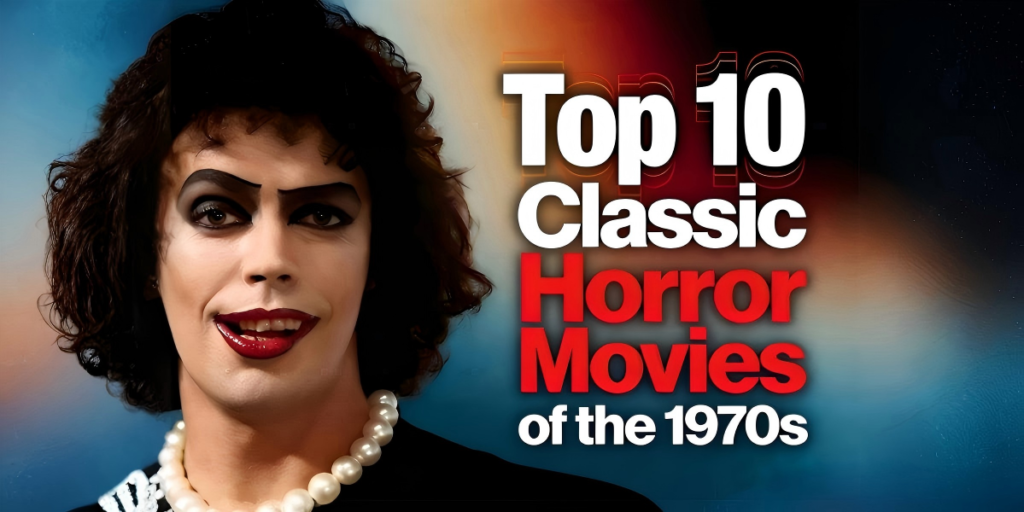
The 1970s didn’t just produce great horror movies — it reinvented what horror could be. Before this decade, the genre was largely confined to B-movie creature features and gothic ghost stories. But a generation of filmmakers, fueled by post-Vietnam disillusionment and newly relaxed MPAA censorship rules, turned horror into one of the most culturally significant forms of cinema.
From The Exorcist‘s spiritual crisis to Dawn of the Dead‘s consumer satire, these films didn’t just scare audiences — they forced them to confront the anxieties of their time. Here are the ten classic horror movies of the 1970s that defined the genre and still resonate today.
Here is a look at ten great 1970s horror movies that still scare us. We will look at why they were important back then and why they are still important today.
The Exorcist (1973)
William Friedkin directed The Exorcist like a documentary. He used flat lighting, handheld cameras, and no musical score for long stretches. And that simple approach is exactly what made a story about demonic possession feel so hard to watch. The film was based on a reported real case from 1949. It follows a mother and two priests fighting to save a twelve-year-old girl from an entity that medicine can not explain.
It became the first horror film nominated for Best Picture at the Academy Awards and won two Oscars for Best Adapted Screenplay and Best Sound. Theaters even stationed ambulances outside screenings. But what gave the film its lasting power was not shock value. It was the deeper question it asked a post-Vietnam, post-Watergate audience: what do you do when faith fails?
The Texas Chain Saw Massacre (1974)
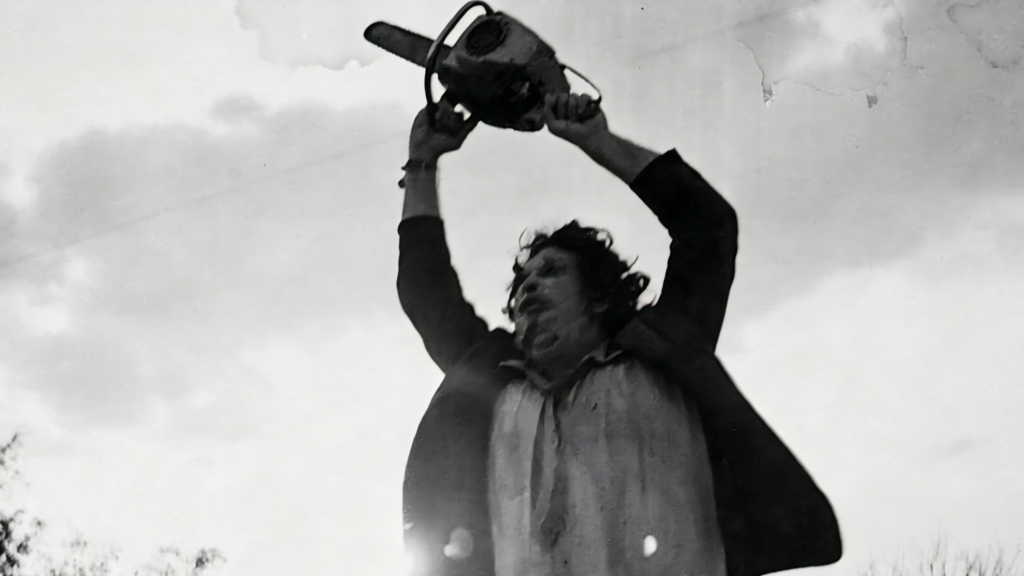
Tobe Hooper shot this for about $300,000 with unknown actors in brutal Texas summer. And it grossed over $30 million, making it one of the highest returns on investment in film history. In the film, a group of young people on a road trip wanders onto the property of a family of former slaughterhouse workers turned cannibals. The masked killer Leatherface, who uses a chainsaw and wears a mask of human skin, became one of horror’s most lasting villains.
The film is actually less gory than its reputation suggests. What makes it so hard to watch is the feel of it: the grainy 16mm footage, the nonstop sound design, and the sense that you have stumbled somewhere you were never meant to be. Hooper turned post-Vietnam disappointment into a story about a rural America left behind by industrial progress, where the forgotten become the dangerous. It helped start the slasher genre along with Black Christmas and set the model for American backwoods horror.
Jaws (1975)
Steven Spielberg was 27 and mostly unproven when Universal gave him a troubled production about a great white shark terrorizing a New England beach town. While filming, the mechanical shark barely worked, so Spielberg changed his approach.
He kept the animal offscreen for most of the film and let John Williams’s two-note score do the work. Unexpectedly, the result was a perfect example of suspense, because what you can not see is always scarier than what you can.
Jaws earned over $260 Mmillion worldwide and became the first true summer blockbuster. It also changed how Hollywood marketed and released films. On top of that, it reportedly caused a noticeable drop in beach attendance that summer.
More importantly for horror, it proved that a genre film could be serious entertainment. It was critically praised, culturally powerful, and commercially huge all at the same time.
Carrie (1976)
Brian De Palma’s adaptation of Stephen King’s debut novel was the first King story to reach the screen. Carrie White is a socially isolated teenager controlled by a deeply religious mother and constantly bullied at school. When she discovers she has telekinetic abilities, the story builds toward one of horror’s most famous endings.
Sissy Spacek and Piper Laurie both earned Oscar nominations. This was rare for any horror film, and it had never happened before for one focused on a teenage girl’s inner life. What made Carrie more than just a horror film was its feeling for the character. This was not a monster story. It was a picture of what happens when cruelty reaches its limit.
The Omen (1976)
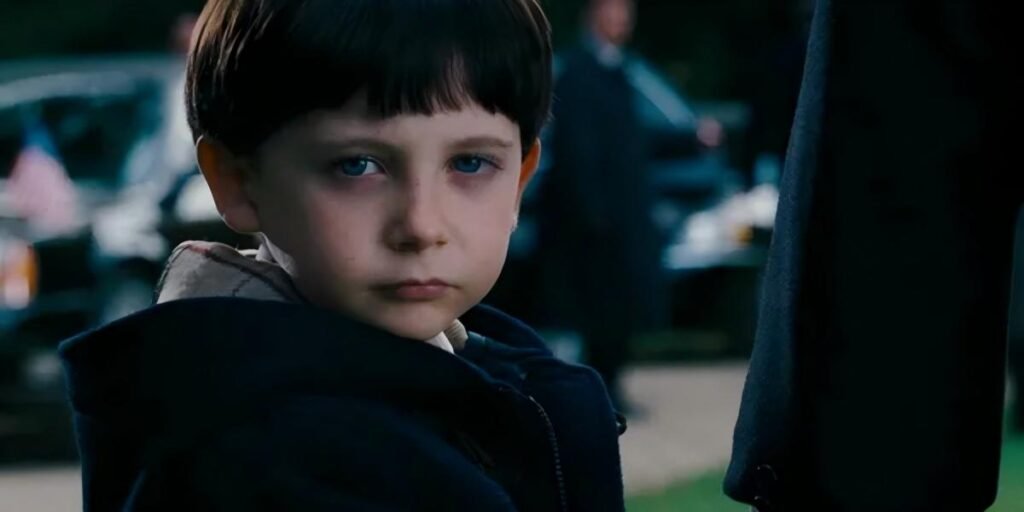
Richard Donner’s The Omen is a classic religious horror film. An American diplomat unknowingly adopts the Son of Satan. As strange and violent deaths pile up around the boy, the father is forced to face the possibility that his own son is the source.
Jerry Goldsmith’s score, full of Latin chanting and orchestral dread, won the Academy Award for Best Original Score. The film grossed over $60 million. And together with The Exorcist, it defined the religious horror wave of the 1970s. The Exorcist asked what happens when faith fails. But The Omen asked something even more disturbing: what if the evil is already inside your family, and you are the last to know?
Suspiria (1977)
Dario Argento‘s Suspiria is the aesthetic benchmark of European horror — a film that functions less as a narrative and more as a sensory assault. An American ballet student arrives at a prestigious German dance academy and discovers it’s controlled by a coven of witches. Argento wasn’t interested in narrative logic. He was building a sensory experience.
Every frame in the film is drenched in saturated primary colors, just like reds, blues, and greens that shouldn’t work together but create an atmosphere of constant, beautiful wrongness. Matching the score by prog-rock band Goblin is aggressive and disorienting.
Suspiria became the pinnacle of Italian giallo cinema and proof that horror could function as pure visual art. Its influence runs through every filmmaker who has tried to make terror aesthetically gorgeous, from Nicolas Winding Refn to Ari Aster.
Halloween (1978)
John Carpenter didn’t just make a horror movie — he wrote the rulebook that every slasher film has followed since. The premise is almost absurdly simple: a masked killer named Michael Myers escapes a mental institution on Halloween night and stalks teenagers in a quiet Illinois suburb. No elaborate backstory, no supernatural explanation. Just a shape in the darkness that won’t stop coming.
What made Halloween so effective was Carpenter’s discipline. He used wide Panavision frames so you could see Michael standing in the background before the characters noticed him. He shot long Steadicam sequences from the killer’s point of view, turning the audience into reluctant accomplices. And he composed the iconic piano score himself — five notes that still make people nervous.
The film cost $325,000 and grossed over $70 million worldwide. It made Jamie Lee Curtis a star, established the “final girl” archetype, and created the template that Friday the 13th, A Nightmare on Elm Street, and Scream would all build on.
Dawn of the Dead (1978)
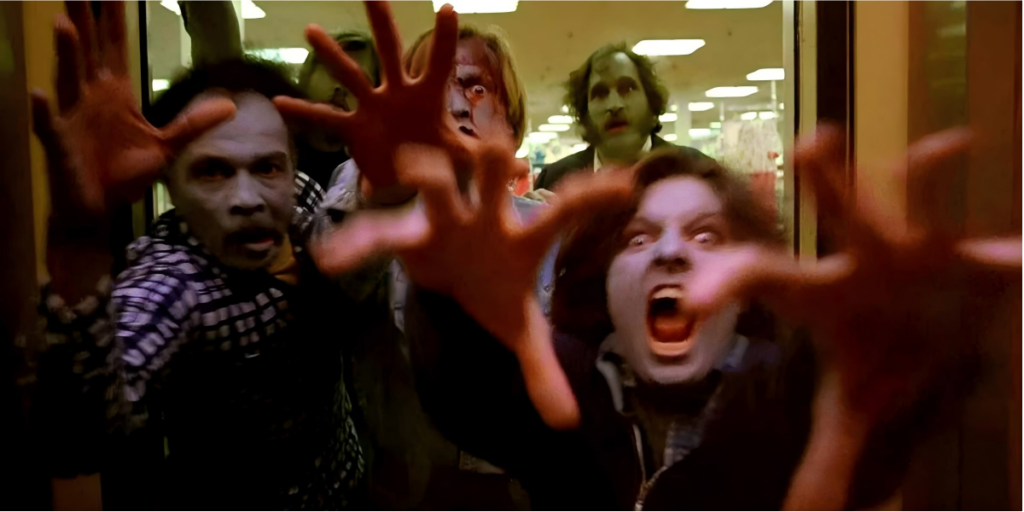
George Romero had already invented the modern zombie with Night of the Living Dead in 1968. A decade later, he topped himself. Dawn of the Dead follows four survivors who barricade themselves inside a suburban shopping mall after a zombie outbreak spirals out of control. They clear the building, secure the doors, and suddenly have access to everything consumer America has to offer — clothes, food, guns, arcade games. And none of it means anything.
That’s the point. Romero turned a zombie siege into a savage satire of consumerism. The undead wander the mall out of instinct, drawn to the place that defined their lives. The humans aren’t much different — they hoard, they fight over things, and they lose sight of what actually matters. The gore was extreme for its time (courtesy of makeup legend Tom Savini), but the real horror was the mirror Romero held up to his audience. Every zombie film made since — from 28 Days Later to The Walking Dead — owes its DNA to this movie.
Alien (1979)
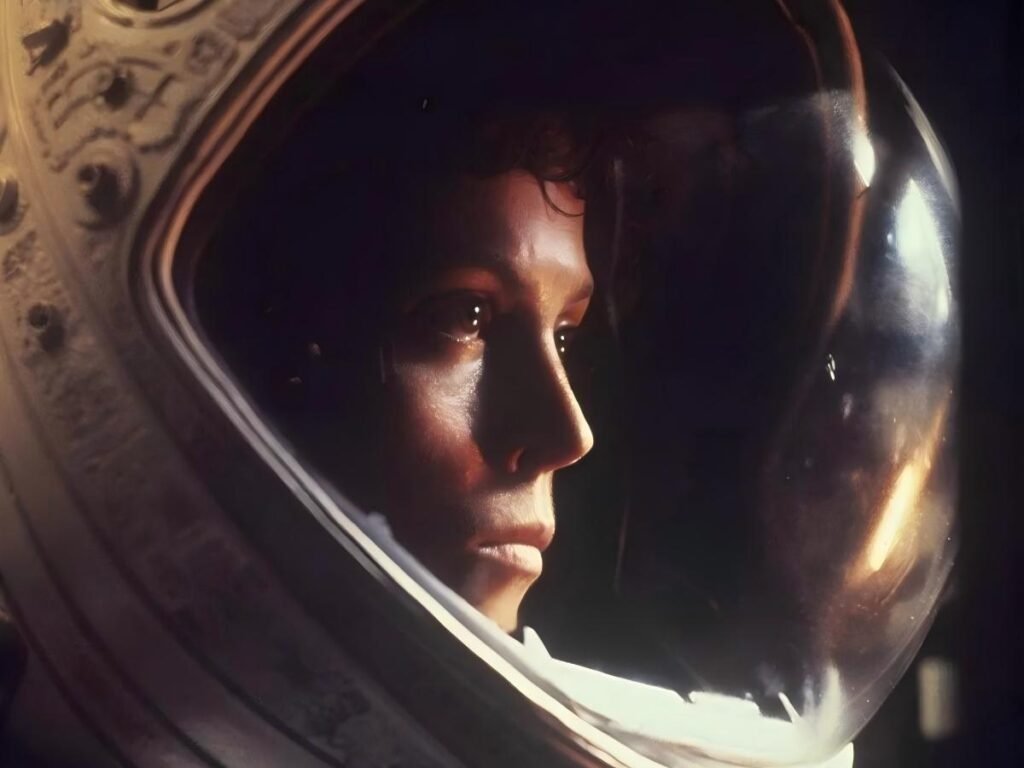
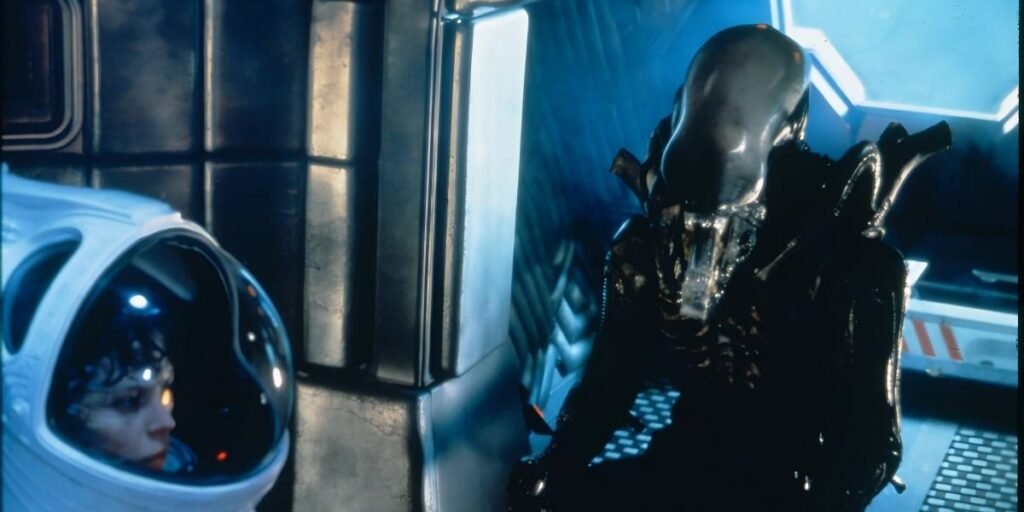
Ridley Scott took a premise that could have been a forgettable creature feature and turned it into a masterclass in atmosphere. The crew of the commercial towing vessel Nostromo responds to a distress signal on an uncharted planet and inadvertently brings a lethal organism back on board. From there, it’s a slow, claustrophobic hunt through dark corridors — except the crew is the prey.
The creature — designed by Swiss artist H.R. Giger — remains one of cinema’s most disturbing creations: biomechanical, sexually nightmarish, and utterly alien. But the film’s real breakthrough was Sigourney Weaver‘s Ripley. Written as a gender-neutral role and cast female late in production, Ripley survived not because of luck or rescue, but because she was the most competent person on the ship. Scott proved that sci-fi and horror could fuse into something genuinely elegant — and that a woman could anchor an action film without anyone questioning it.
Think you know everything about this film? Test yourself with our Alien (1979) trivia quiz.“
The Wicker Man (1973)
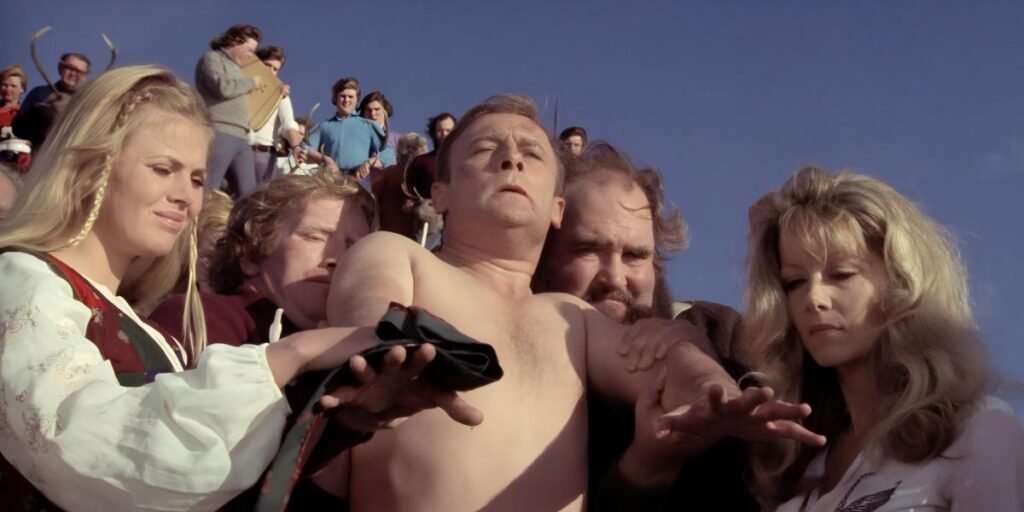
Robin Hardy’s The Wicker Man is one of the most unsettling films ever made — and it achieves this without a single drop of blood. A devout Christian police sergeant travels to a remote Scottish island to investigate a missing girl. What he finds instead is an entire community practicing pagan rituals, fertility rites, and a belief system that directly opposes everything he stands for. The tension doesn’t come from jump scares or monsters. It comes from the slow, sickening realization that the outsider is not the one in control.
Christopher Lee called it the best film he ever appeared in. The British Film Institute has ranked it among the greatest British films of all time. And its influence on the folk horror subgenre is immeasurable — you can draw a straight line from The Wicker Man to Ari Aster’s Midsommar and Robert Eggers’ The Witch.
Why 1970s Horror Movies Mattered
Horror films point out the ills of society
The Western world of the 1970s was defined by collective trauma: the psychological aftermath of Vietnam, the collapse of government credibility after Watergate, the erosion of religious authority, and the unchecked rise of consumer culture. Anxiety, anger, and disillusionment saturated daily life. Directors of 70s horror films were bold enough to subtly express public discontent with society through their cinematography. For example,
The Exorcist used demonic possession to expose a generation’s spiritual free fall, which is a crisis of faith dressed in supernatural clothing. Also, The Texas Chain Saw Massacre’s cannibal family were former slaughterhouse workers displaced by industrial automation; their violence wasn’t random evil, it was the byproduct of the unreasonable planning of social development
Independent filmmakers broke Hollywood’s monopoly
When the MPAA ratings system replaced outright censorship in 1968, it opened a door that major studios had no interest in going through. The big studios still saw horror as a low-class genre not worth their money. But this lack of interest actually helped independent horror filmmakers grow and succeed.
Halloween was made for $325,000 with no stars and no studio backing. It grossed over $70 million, a return of more than 200 times its budget. The Texas Chain Saw Massacre cost $300,000 and earned over $30 million. This made it one of the most profitable films in history compared to its budget.
70s horror films broke the prejudices and constraints of mainstream film
In 1970s Hollywood, the usual main character was a white male. Women existed as love interests, victims, or decoration. Minority characters were pushed aside or stereotyped. But horror broke that pattern years before mainstream cinema caught up.
Ripley in Alien was written without gender-specific traits. The role was cast female, and Sigourney Weaver played her as the most capable person on the ship. There was no romantic subplot and no rescue by a male lead. She survived because she was smarter and more disciplined than everyone around her. This was a quiet change in how women could exist in genre film. And its influence is still clear in every action or horror film that treats its female lead as a person and not a symbol.
Why 1970s Horror Still Matters
Every major innovation in modern horror traces a direct line back to this decade. The slasher formula. Zombie social commentary. Sci-fi horror. Folk horror. The final girl. The conviction that horror can carry real intellectual weight.
The lasting contribution of 1970s horror was never its box-office records or its franchise potential. It was a simple, radical idea: horror doesn’t exist to help audiences escape reality — it exists to confront it.