

Not every product marketed to older adults actually makes life easier. Most of the “senior-friendly” gadgets flooding Amazon are either overpriced gimmicks or cheaply made versions of things that already exist. This list takes a different approach.
Every item here was chosen around one question: does it solve a real, daily discomfort — neck tension, back pain, tired feet, or difficulty getting around the house — without requiring a manual to figure out? If the answer was yes, it made the cut.
We consulted product reviews from verified senior buyers, cross-referenced recommendations from sources like the American Association of Retired Persons (AARP) and the Arthritis Foundation, and filtered out anything with a pattern of durability complaints. These are the 10 comfort products on Amazon in 2026 that we’d actually recommend to a parent or grandparent.
Neck and Shoulder Relief
1. Neck Heating Pad
If stiffness greets you every morning, a neck heating pad is the kind of unglamorous product that quietly becomes indispensable. It drapes over the neck and upper shoulders, delivering low, steady warmth that loosens tight muscles. For anyone who spends a lot of time reading, watching TV, or just sitting, it turns an ordinary evening into something noticeably more comfortable.
The appeal for seniors is the simplicity. There is no app, no pairing process, no complicated interface. You plug it in, press a button, and it works. Most decent models include an auto shut-off timer, which matters more than you might think — it is easy to doze off with one of these on, and a good shut-off feature removes that worry entirely.

The honest downside: heating pads are not massagers. If you are expecting deep kneading or active muscle work, you will be disappointed. They provide passive warmth, nothing more. For pure tension relief through heat, though, they are hard to beat.
Look for: adjustable heat levels (at least three settings), soft fleece or microplush cover, and auto shut-off within 60 minutes.
2. Shoulder Massager
If your upper back carries the day’s stress, a shiatsu-style shoulder massager offers something a heating pad cannot — active kneading that digs into knots. You drape it around your neck and shoulders, and rotating nodes work the muscles while you sit in your chair. It is the closest thing to a quick massage without leaving the house or asking someone for help.
What makes these work well for seniors specifically is the hands-free design. Once it is positioned, you do not need to hold it, squeeze it, or guide it. Some models add a heat function on top of the kneading, which is a worthwhile feature if you can find it without a significant price jump.
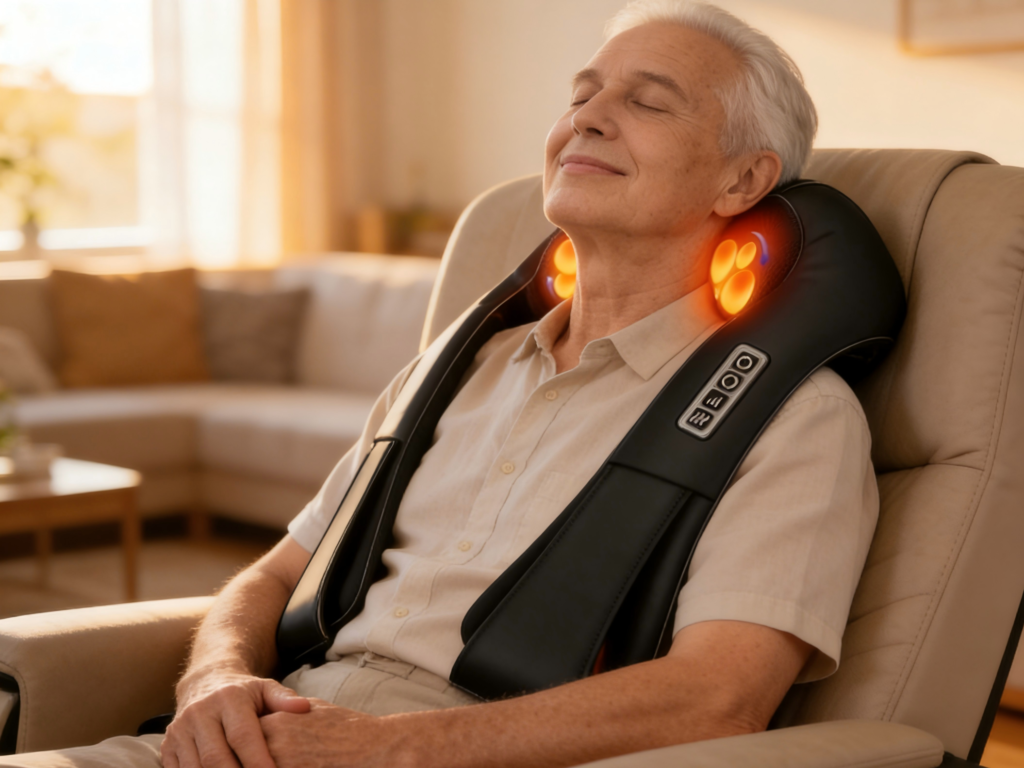
The drawback worth knowing: these are not light. Most weigh two to four pounds, and draping that around your neck can feel heavy after fifteen or twenty minutes. If you have any neck sensitivity beyond general stiffness, start with short sessions and see how it feels. Also, the kneading intensity on some budget models is either too aggressive or too weak — there is not always a middle ground.
Look for: lightweight build (under three pounds if possible), simple one-button or two-button controls, optional heat function.
Back and Sitting Comfort
3. Tailbone Cushion
If sitting has become something you dread, a tailbone cushion is probably the single most impactful product on this list for the price. The U-shaped cutout suspends your tailbone so it is not pressing directly against the chair surface, and for anyone dealing with coccyx pain or general soreness from hard seats, the difference is immediate.
These work on dining chairs, office chairs, car seats, and even wheelchairs. The versatility is the real selling point — you buy one cushion and it follows you around the house. Memory foam versions conform to your shape over a few minutes, which makes them feel custom even though they are not.
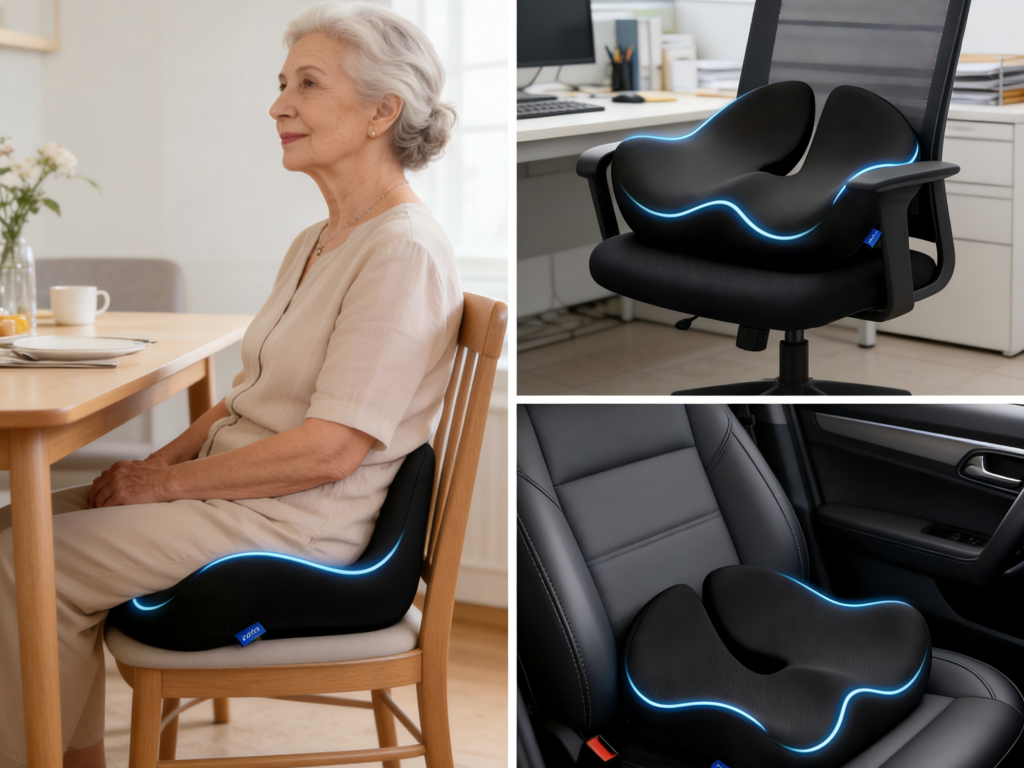
One thing to watch: not all memory foam is the same density. Cheaper cushions compress flat within a few months, and then you are sitting on a thin slab that does almost nothing. If you are going to use this daily — and most people who buy one do — it is worth choosing a higher-density foam even if it costs a bit more. Also, always check that the cover is removable and machine-washable, because this is a product that gets used constantly.
Look for: high-density memory foam, non-slip rubber bottom, removable washable cover, and carrying handle for portability.
4. Lumbar Support Cushion
If your lower back aches after thirty minutes in any chair, a lumbar cushion is a targeted fix that does not require replacing your furniture. It straps to the back of your chair and fills the gap between your spine and the seat back — that unsupported hollow that most chairs ignore entirely.
For seniors who spend long stretches reading, doing puzzles, or watching television, this is the kind of product that pays for itself in comfort within the first week. It gently pushes your lower spine into a more neutral position without forcing you to “sit up straight” through sheer willpower.
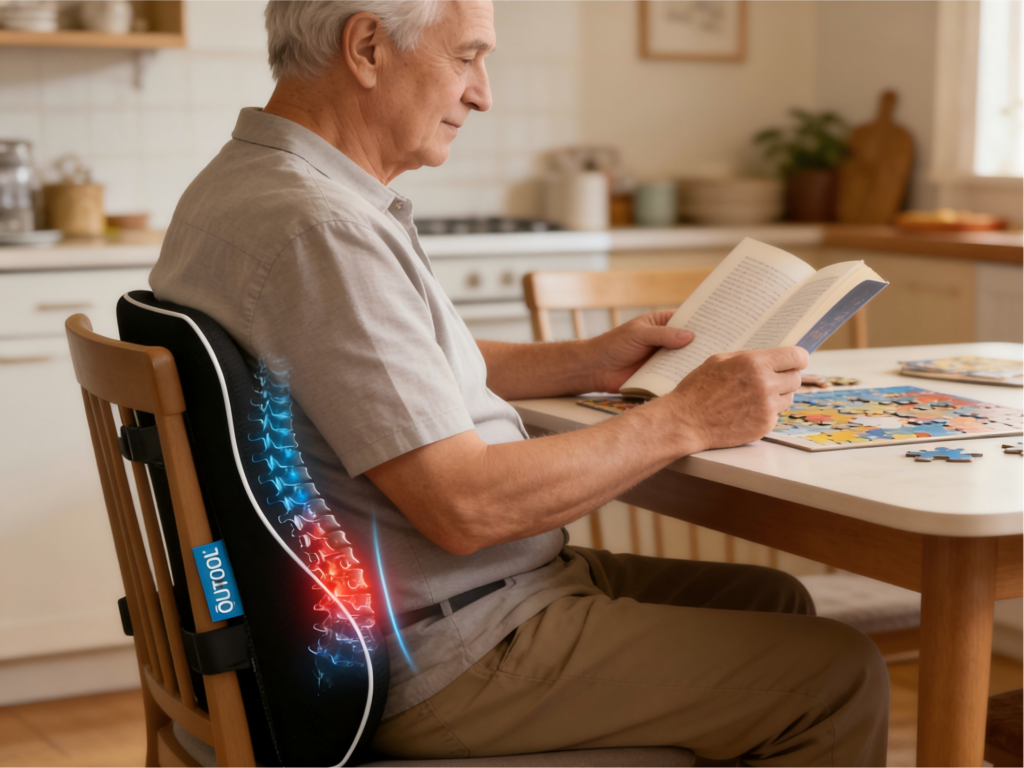
The limitation is fit. Lumbar cushions work best on chairs with a relatively flat back. Recliners, deep sofas, and bucket-style car seats can be tricky — the cushion sometimes slides or sits at the wrong height. If your primary seat is a soft recliner, test the fit before committing. An adjustable strap helps, but it is not a guarantee.
Look for: firm (not soft) foam, breathable mesh cover, adjustable elastic straps, thickness between three and five inches.
5. Seat Cushion
If you want an all-purpose comfort upgrade for any chair, a general seat cushion is the broadest solution in this section. Unlike the tailbone cushion, which targets a specific pressure point, a full seat cushion distributes your weight more evenly across the entire sitting surface. It is a good choice for someone whose discomfort is general rather than localized.
The practical appeal is straightforward: you place it on whatever you sit on most, and sitting becomes less of an ordeal. Gel-infused foam versions stay cooler than pure memory foam, which matters if you tend to sit for long periods — heat buildup is a common complaint with foam cushions that nobody mentions in the product listing.

The trade-off compared to a tailbone cushion: because it is designed to help with everything, it may not help with any single issue as dramatically. If you have a specific pain point — tailbone, sciatica, hip pressure — a more targeted cushion will likely serve you better. But for general “I just want my chair to feel less punishing,” this is the easiest place to start.
Look for: pressure-relief contour or gel layer, non-slip base, dimensions that match your most-used chair, portable weight.
Foot and Leg Relaxation
6. Foot Massager
If your feet ache by mid-afternoon, a home foot massager offers genuine relief without the cost or effort of regular spa visits. You slide your feet in, press a button, and rolling nodes or air-compression chambers work the soles and arches for fifteen to twenty minutes. For seniors who are on their feet during the day — even if “on their feet” just means moving between rooms — the nightly ritual becomes something to look forward to.
The better models include a heat function, and that combination of warmth plus kneading is noticeably more effective than either alone. It is also one of the few comfort products that feels like an indulgence rather than a medical device, which is a surprisingly important distinction when you are buying something for daily use.
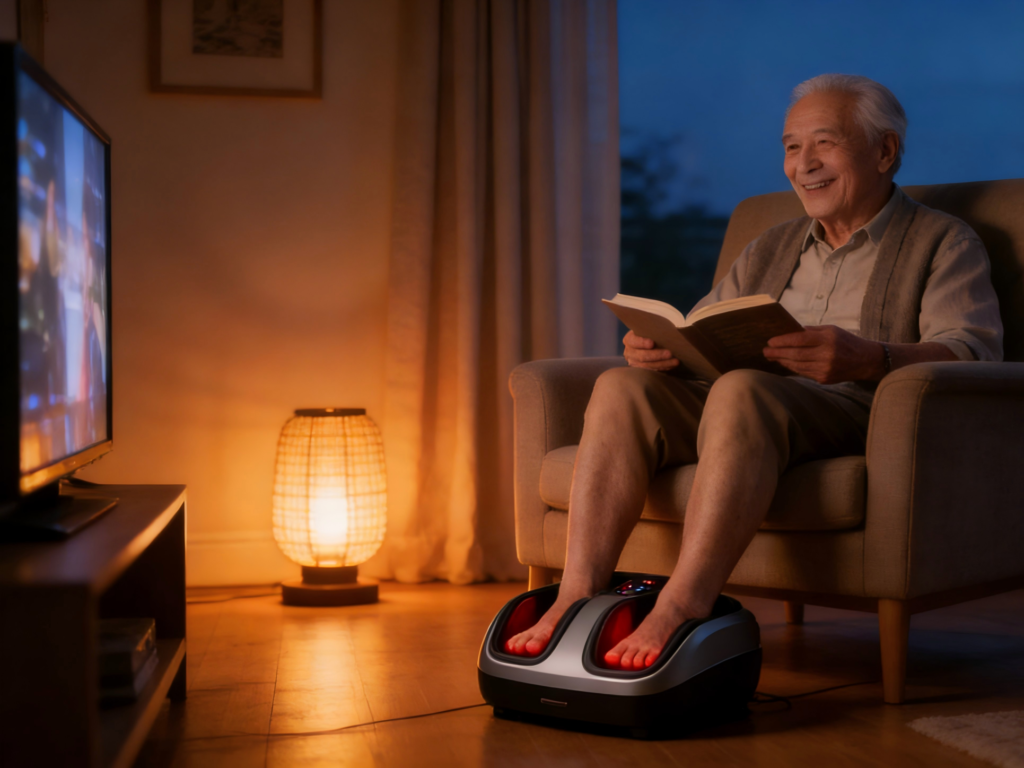
The honest caveat: foot massagers are bulky. They take up floor space, and most are not the kind of thing you tuck into a drawer. If your living area is tight, measure before you buy. Also, the intensity on lower-priced models can be disappointing — barely more than a vibration. Reading reviews from other seniors specifically is worth the extra few minutes.
Look for: heat option, easy-to-clean removable liners, simple controls with clearly labeled buttons, a kneading mechanism (not vibration only).
7. Leg Rest or Footrest
If your legs feel heavy and swollen after a long day, elevating them is one of the simplest things you can do — and a good footrest makes it effortless. This is not a high-tech product, and that is exactly the point. It sits in front of your chair or sofa, you rest your legs on it, and gravity does the work of easing pressure and improving circulation.
Foam wedge-style rests tend to work best because they hold a consistent angle without shifting. Inflatable versions are cheaper and easier to store, but they also wobble and deflate slowly over weeks, which gets annoying fast.
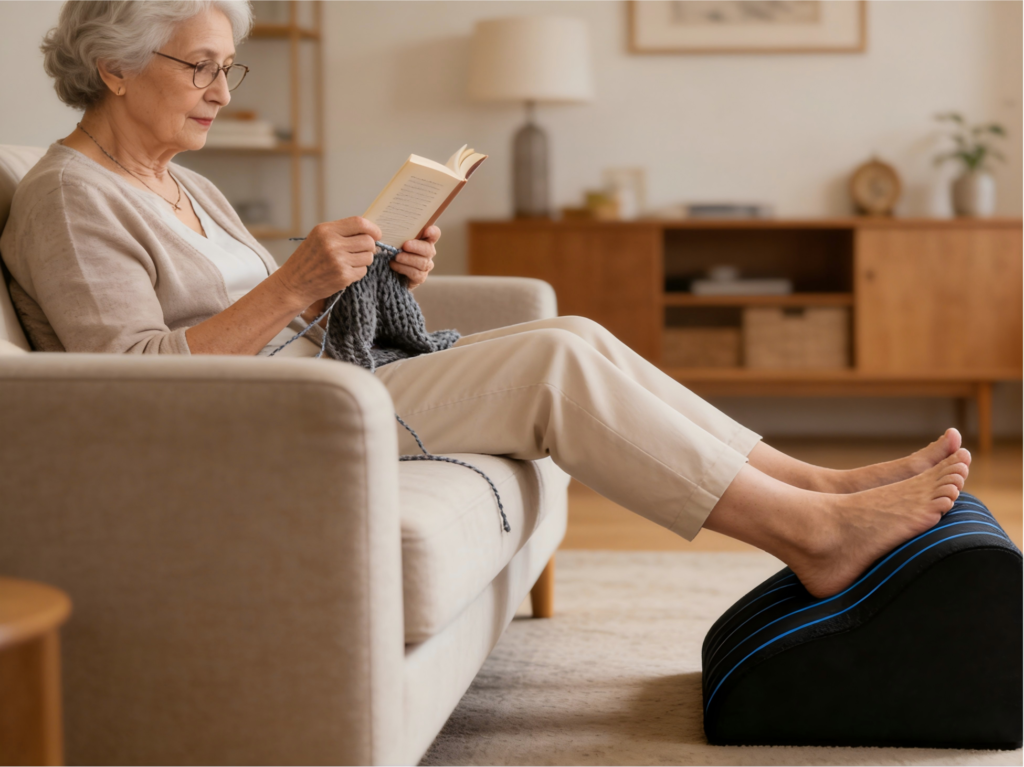
The thing most people overlook is height. A footrest that is too tall forces your knees into an uncomfortable bend; too short and you are not getting meaningful elevation. If your primary seat is a specific recliner or sofa, measure the distance from the floor to your seat edge and choose a rest that brings your feet to roughly the same height or slightly above.
Look for: stable foam construction, comfortable incline angle (around 30–45 degrees), soft removable cover, width that accommodates both legs comfortably.
8. Hot/Cold Therapy Pack
If you deal with minor aches that move around — a stiff neck one day, a sore knee the next — a reusable therapy pack is the most versatile comfort item you can own. Microwave it for heat, freeze it for cold, and apply wherever you need it. No cords, no outlets, no setup.
For seniors, the appeal is not just the relief — it is the independence. You do not need to ask anyone for help using it, and it works on essentially any body part. Shoulder tension after gardening, a sore lower back after sitting too long, swollen ankles — one product handles all of it.
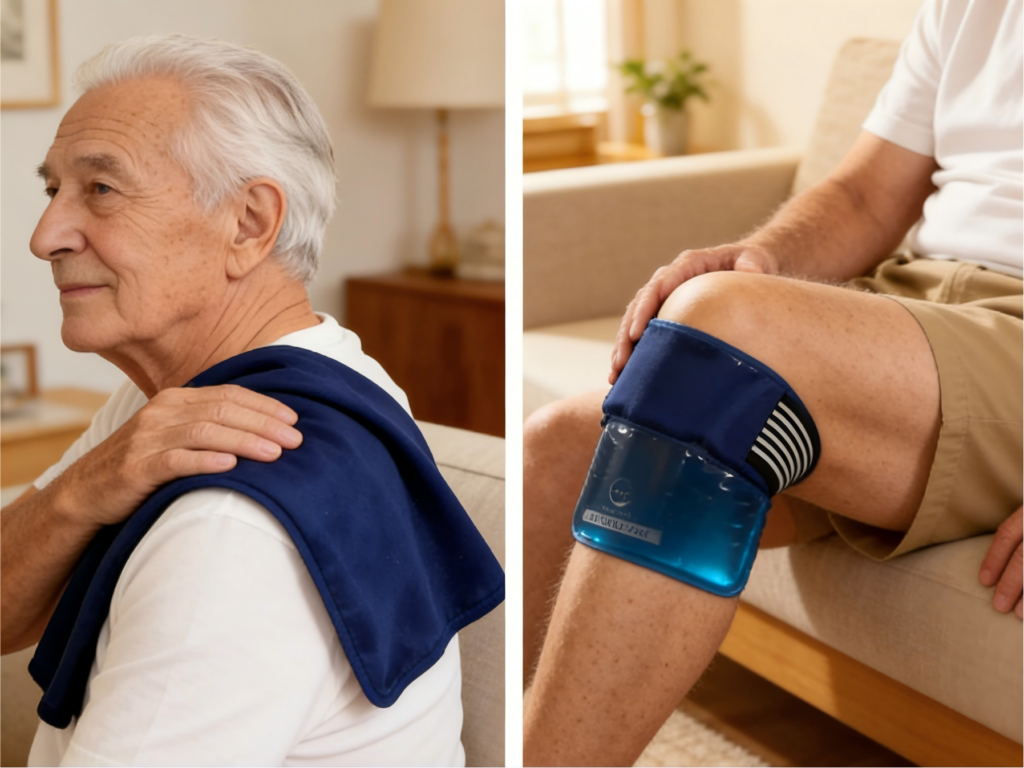
The downside is duration. Most gel packs hold their temperature for about twenty to thirty minutes before they need reheating or refreezing. If you need prolonged heat, a plug-in heating pad is a better choice. Therapy packs are best for short, targeted sessions. Also, some cheaper packs feel stiff or lumpy when frozen, which makes them uncomfortable against the skin — a soft fabric cover solves this, and it is worth choosing a pack that includes one.
Look for: reusable gel design, soft cloth cover included, flexible when frozen, microwave and freezer safe, size large enough to cover the shoulder or knee area.
Easier Movement at Home
9. Lift Chair or Standing Assist Device
If getting out of your chair has become a production, a lift assist makes the difference between asking for help and doing it yourself. Full electric lift chairs tilt the seat forward and upward, bringing you to a near-standing position with the push of a button. Portable seat-lift cushions do the same thing on a smaller scale, using a spring or powered mechanism on your existing chair.
This is the most meaningful product on the list in terms of daily independence. For someone who struggles with the sit-to-stand transition, which is one of the most common mobility challenges for older adults and a leading risk factor for falls according to the CDC. It removes a real barrier from dozens of moments throughout the day.
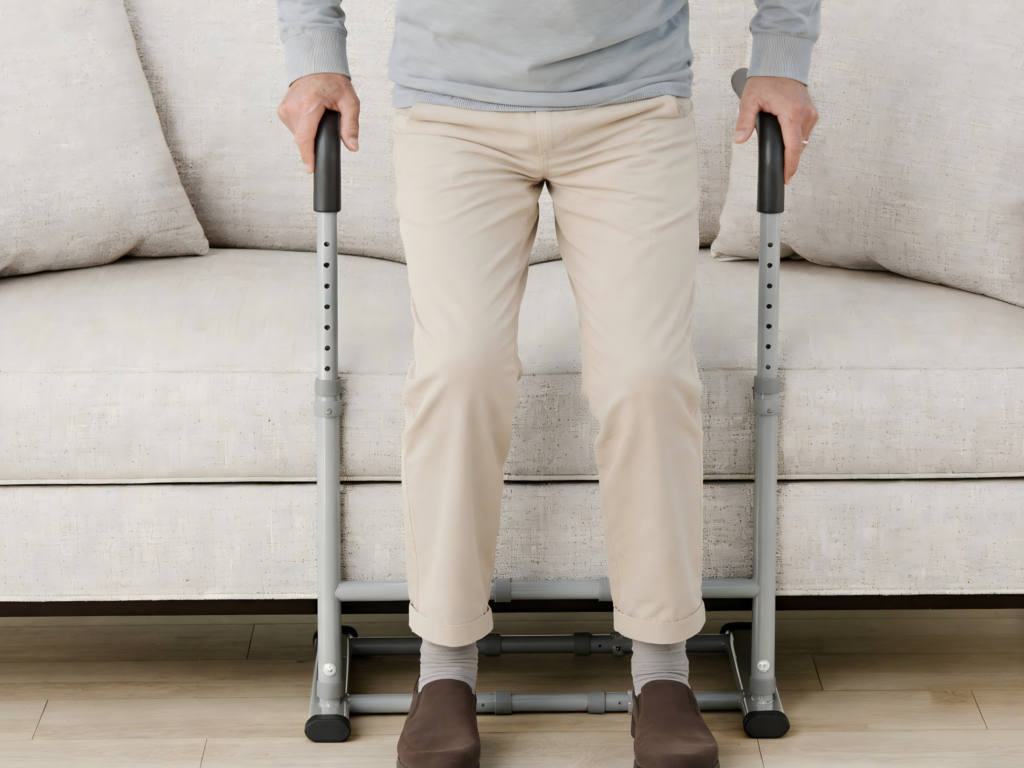
The reality check: full lift chairs are a significant purchase, both in cost and in space. They are large, heavy, and essentially replace your existing chair. Portable assist cushions are more affordable and flexible, but they do not work equally well on every seat — soft couches swallow them, and narrow chairs may not fit. Try before you commit if possible, or buy from a retailer with a straightforward return policy.
Look for: stable and certified mechanism, easy-to-reach controls (wired remote preferred over buttons on the side), comfortable seat padding, weight capacity that exceeds the user’s weight by a comfortable margin.
10. Reacher Grabber Tool
If bending down has become a calculated decision, a reacher grabber gives you an extra thirty-two inches of reach and saves you from the discomfort — or risk — of stooping, stretching, or climbing. Picking up a dropped remote, grabbing a can from a high shelf, pulling laundry out of the dryer — these small moments add up, and a grabber handles all of them.
It is also the least expensive product on this list by a wide margin, which makes it an easy first purchase for anyone exploring comfort aids for the first time. Most seniors who try one end up keeping it within arm’s reach permanently, which says more about its usefulness than any product description could.
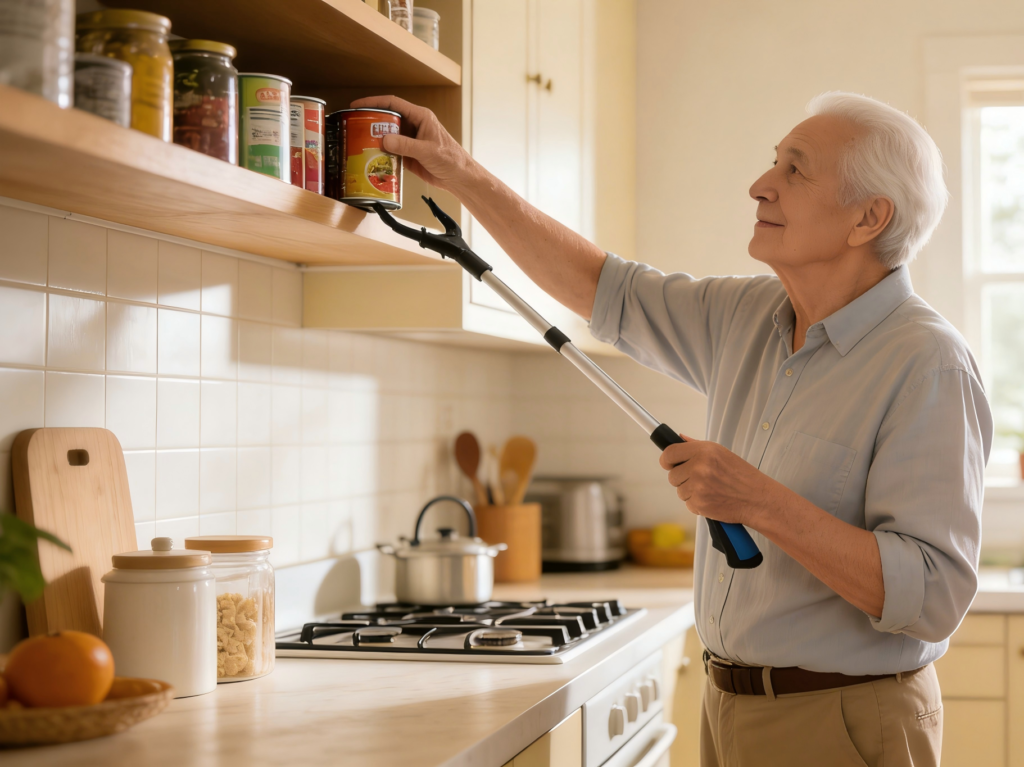
The only real weakness is grip strength on heavier or oddly shaped objects. Most grabbers handle lightweight items well — pill bottles, socks, paper, small containers — but struggle with anything slick, round, or over a pound or two. If you need to move heavier things regularly, look for a model with rubberized jaw tips, which grip noticeably better than hard plastic.
Look for: lightweight aluminum or plastic body, rubberized grip tips, foldable design for storage, ergonomic trigger handle that does not require strong hand strength.
Buying Guide: What to Look For (and What to Avoid)
What makes a good comfort product for seniors
The best products in this category share a few traits: they are genuinely simple to use out of the box, they are made from comfortable materials that hold up over months of daily use, and they require almost no maintenance. If a product needs regular charging, firmware updates, or assembly beyond “take it out of the box,” it is probably not the right fit.
What to skip
Be skeptical of products that advertise dozens of features. A foot massager with eighteen modes sounds impressive in a listing, but in practice, most people use one or two settings and find the rest confusing. Complexity is not a feature for this audience — clarity is. Also avoid anything that is difficult to clean. Comfort products get used daily, and if washing the cover requires disassembly or hand-stitching it back on, it will not get washed.
Quick guide by need
If your main issue is neck or shoulder tension, start with the heating pad or shoulder massager. If sitting is uncomfortable, a tailbone cushion offers the most targeted relief, while a lumbar support helps with posture. If your feet and legs are tired, a foot massager is the most satisfying option, and a footrest is the most practical. If getting around the house is the challenge, a lift chair or grabber tool directly supports independence.
Final Thought
None of these products are revolutionary, and that is the point. The most useful comfort products for seniors are not the ones with the most features or the flashiest marketing — they are the ones that quietly solve a specific daily frustration and then fade into the background of a normal routine. Start with whatever bothers you most, try one product, and go from there.