What is your impression of Easter? Chocolate bunnies, eggs, or a ham dinner if your family’s the traditional type.
Besides that, what you probably don’t know is that this holiday is way weirder and more fascinating than most of us realize. We will talk about ancient goddesses, exploding carts in Italy, an entire country binge-reading murder mysteries, and a town in France cooking a 15,000-year-old egg omelet every single year, and so on.
I pulled together 31 amazing facts about Easter: some fun, some strange, and I guarantee there are at least a few you definitely don’t know. Ready? Let’s go.
How Easter Got Its Start
1. Ever wonder why it’s called “Easter” in the first place? Scholars trace the name back to Eostre, an Anglo-Saxon goddess associated with dawn, spring, and fertility. Her pagan festivals celebrated the return of longer days, and when Christianity spread through Europe, those spring celebrations got folded right into the new religious calendar.
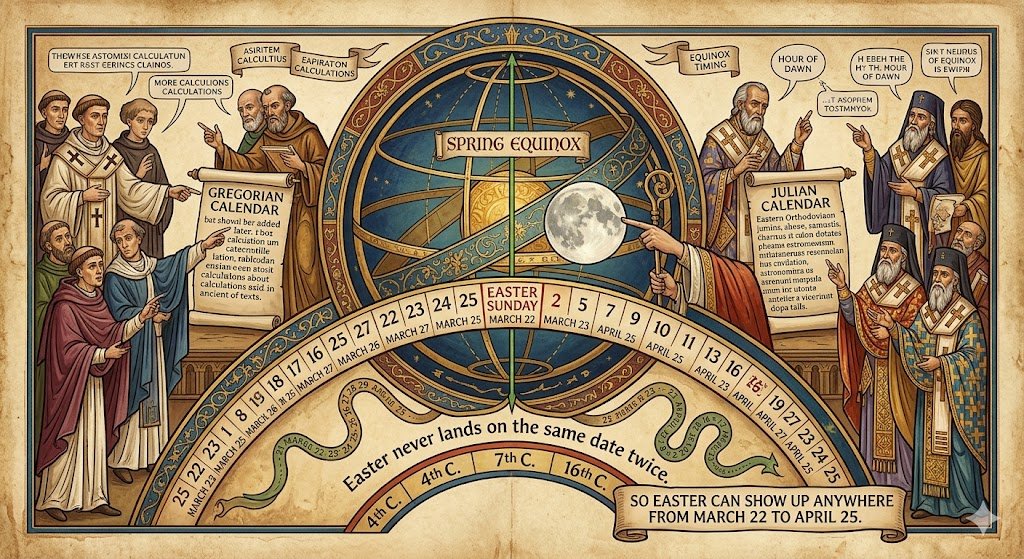
2. Easter never lands on the same date twice. The formula, set back in the 4th century, says it’s the first Sunday after the first full moon after the spring equinox.
Sounds straightforward enough, except early Christians spent centuries fighting over the details, which calendar to use, when exactly the equinox falls, and even what hour Easter Sunday technically begins. So Easter can show up anywhere from March 22 to April 25.
3. Lent, the 40 days stretch before Easter, mirrors the 40 days Jesus fasted in the desert. Holy Week unfolds in a very specific order, Palm Sunday, Maundy Thursday, Good Friday, Easter Sunday, Each is tied to a different chapter of the crucifixion story.
Back in the 1200s, the church flat-out banned eating eggs during Holy Week. So what did people do with all their extra eggs? They decorated them. And that, friends, might be how the whole Easter egg obsession got rolling.
Everything You Thought You Knew About the Easter Bunny
4. The first written record of a rabbit leaving eggs in a garden, in 1680 Germany.
The creature was called the Osterhase, who is the Easter Hare, and German kids would build little nests out of their caps or bonnets, hoping the hare would fill them overnight. When German immigrants settled in Pennsylvania in the 1700s, they brought the story with them. The nests eventually became baskets. The hare became a bunny.
5. The adorable cartoon bunny delivering pastel baskets is 20th-century marketing. The original Osterhase was more of a wild hare than a cuddly mascot.
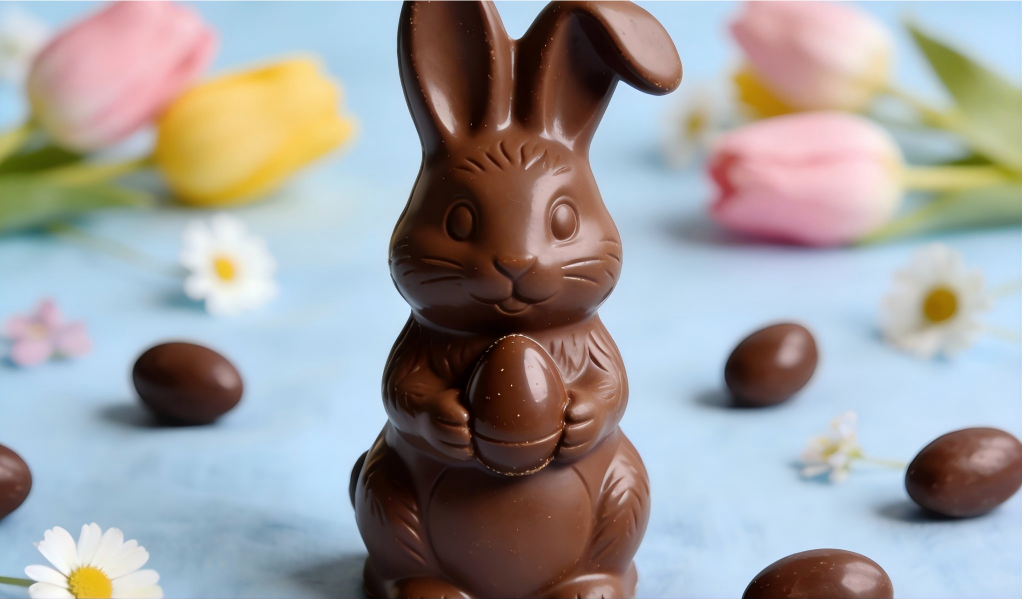
6. Here’s a fun easter bunny trivia fact: About76% of Americans believe the ears should be the first part of a chocolate bunny you bite into.
The Amazing Facts of the Easter Eggs
7. People have been decorating eggs for spring long before Christianity existed. Ancient Persians and Egyptians used dyed eggs as symbols of new life. Early Christians later gave the tradition a deeper layer of meaning, the shell as the sealed tomb, the cracking as the resurrection.
8. The first Easter eggs were dyed red, representing the blood of Christ. Greece still keeps that tradition alive today. Greek families play tsougrisma at the dinner table. you smash your red egg against someone else’s, and the person whose egg doesn’t crack supposedly gets a year of good luck.
9. Royals got in on the egg game early. In 1290, England’s King Edward I ordered 450 eggs covered in gold leaf as gifts for his court.
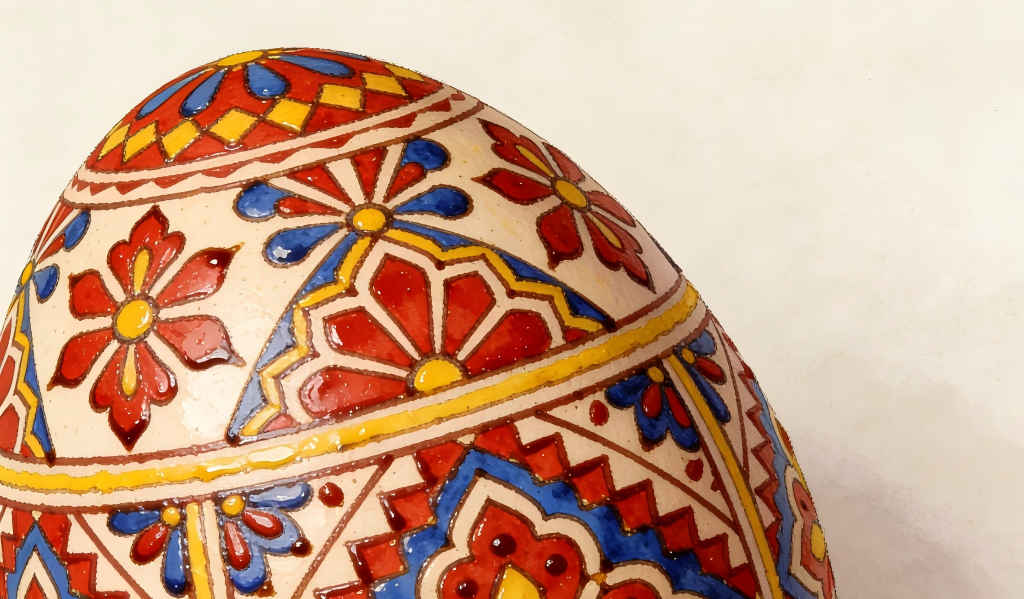
10. Easter eggs in Ukraine are unparalleled works of art. Their pysanka tradition uses a wax-resist dyeing technique to create incredibly intricate designs.
11. The world’s largest chocolate egg was built in Tosca, Italy, in 2011 — 34 feet tall, nearly 15,873 pounds. And the priciest egg ever sold, is A Fabergé masterpiece from 1902 that went for roughly £9 million at Christie’s in 2007. A jeweled cockerel pops out of it every hour and flaps its wings.
12. The first English chocolate Easter egg came from J.S. Fry & Sons in 1873. Cadbury introduced milk chocolate eggs in 1897.
Easter Candy & Food
13. Americans drop over $24 billion on Easter each year — candy, clothes, decorations, the whole deal. Easter ranks as the second-biggest candy holiday in the U.S., trailing only Halloween.
14. Every Easter season can sell 16 billion jelly beans. Cherry is the top flavor, with strawberry close behind.
15. Cadbury alone churns out 500 million Creme Eggs annually. Stack them up, and you’d hit ten times the height of Everest.
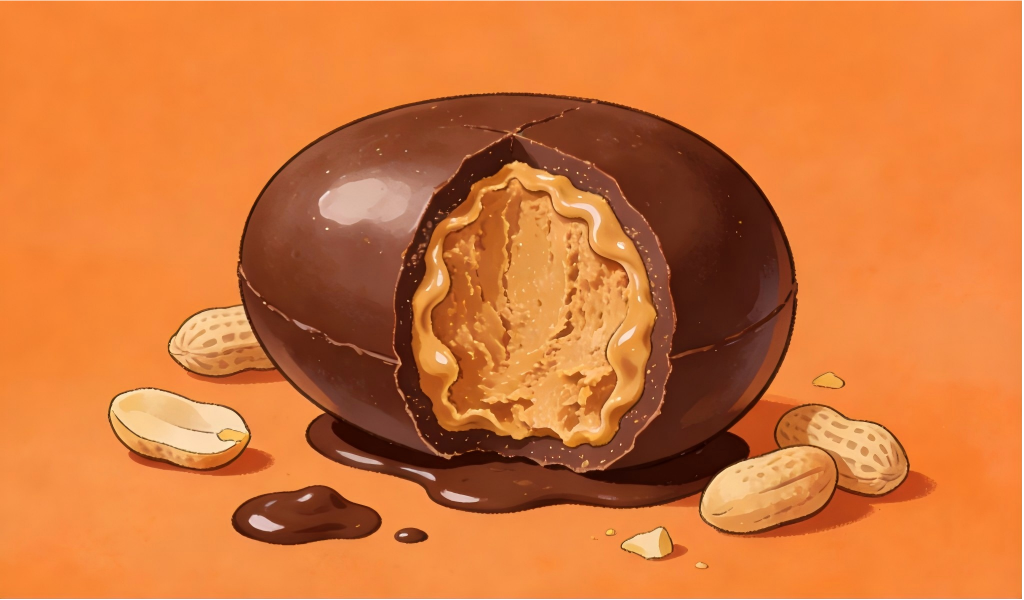
16. Reese’s Peanut Butter Eggs are America’s favorite Easter candy, and peanut butter wins every contest it enters.
17. Food traditions go well beyond candy. Hot cross buns have been a Good Friday staple since at least the 1700s, and old English folklore claimed that buns baked on that day would never go moldy.
People hung them in their kitchens as good-luck charms. Across the globe, every culture has its own Easter bread, like choreg in Armenia, babka in Poland, tsoureki in Greece, paska in Ukraine…
19. Bessières, a small town in southern France, where 50 volunteers crack 15,000 eggs into a 13-foot pan to make a massive Easter omelet for 2,000+ people. The story goes that Napoleon once loved a local innkeeper’s omelet so much, he demanded one big enough to feed his whole army.
Amazing Facts about Easter in America
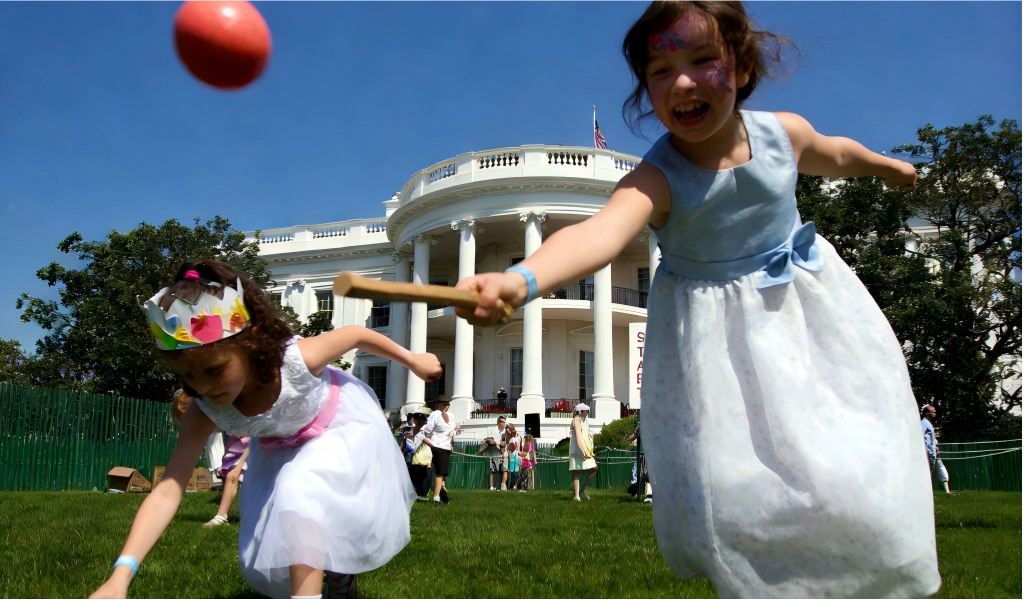
20. The White House Easter Egg Roll started in 1878 under President Rutherford B. Hayes, and it’s still going strong. Over 30,000 guests show up each year to roll eggs across the South Lawn with wooden spoons, making it one of the most-attended events at the White House, period.
21. New York’s Easter Parade has roots in the early 1800s, back when wealthy churchgoers would walk home from Easter services in their flashiest new outfits while less-wealthy New Yorkers lined the streets to watch. Now it has turned into a beloved public celebration.
22. Peeps are an iconic marshmallow candy produced by Just Born in the United States since 1953. They are known for their chick and bunny shapes and are a classic traditional snack in Easter baskets.
Fun Facts About Weird Easter Traditions Around the World
Influenced by the cultural customs of different countries, each country has its own unique Easter traditions.
23. Norway’s Easter means crime fiction. The tradition known as Påskekrim sees the entire country binge-reading detective novels and watching murder mysteries. It started in the 1920s–30s when two authors marketed their crime novel by running the title on a newspaper front page before Easter, and everyone thought it was real news. TV stations now switch to all-crime programming for the holiday.
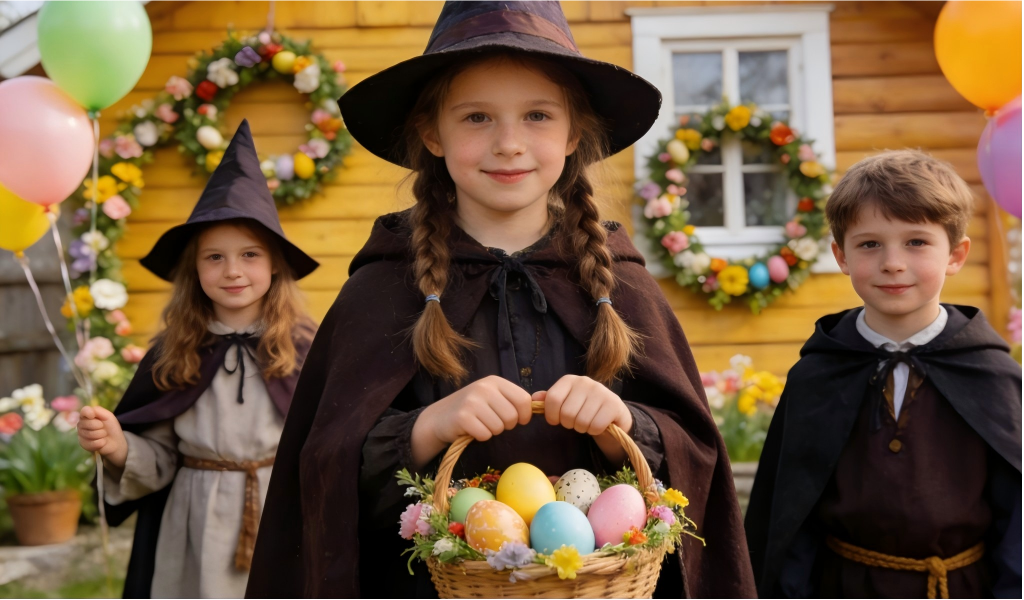
24. Finland and Sweden have their own version of trick-or-treating. Kids dress as Easter witches, broomsticks, colorful headscarves, painted freckles, and go door-to-door trading decorated willow branches for candy.
25. Corfu, Greece, residents celebrate Holy Saturday by throwing enormous clay pots from their balconies. The tradition dates back to the 16th century, when Venetians would toss out old belongings to make room for the new. The crashing pots are believed to scare away evil spirits.
26. Poland’s Śmigus-Dyngus (Wet Monday) turns Easter Monday into a full-blown water fight. Groups roam the streets armed with water pistols, and sometimes garden hoses. Getting soaked is said to bring good luck and, according to folklore, means you’ll be married within the year.
27. In the Czech Republic and Slovakia, men go around on Easter Monday, gently tapping women with decorated willow switches called Pomlázka. It’s an old pagan fertility ritual, and in return, the women give them painted eggs or chocolate.
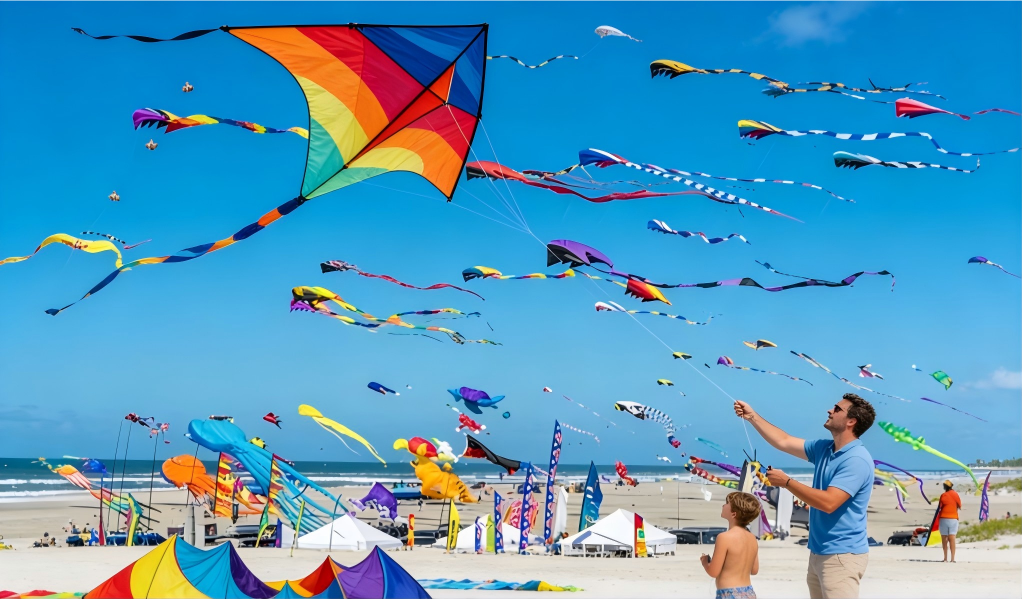
28. Bermuda spends Good Friday flying kites. The whole thing started when a local teacher used a kite to explain the Ascension to children. Now Bermudians craft elaborate tissue-paper kites for days and gather at Horseshoe Bay Beach to send them up.
29. Since rabbits are considered destructive pests in Australia, many Australians have swapped the Easter Bunny for the Easter Bilby (a small, endangered native marsupial). Chocolate bilbies are sold to raise money for conservation.
30. Florence, Italy, the centuries-old Scoppio del Carro (Explosion of the Cart) takes place every Easter Sunday. A rocket-shaped mechanical dove is launched from the church altar, flies down a wire, and ignites a cart full of fireworks in the piazza. If everything goes off perfectly, it’s said to promise a good harvest.
31. Central Otago, New Zealand, Easter isn’t about finding bunnies — it’s about hunting them. The annual Great Easter Bunny Hunt draws over 500 hunters looking to cull invasive rabbits, with a trophy and cash prize for the top team.
Final Thoughts
Easter is one of the world’s oldest and most deeply rooted festivals, interwoven with centuries of religious traditions, ancient spring rituals, and cultural customs. Today, Easter is celebrated in various ways around the world.
We hope to share the joy of Easter while delving into the true stories behind it. We hope you enjoy this reading experience.
If you want to know how much you remember, head over to our “Quiz” section to find out.