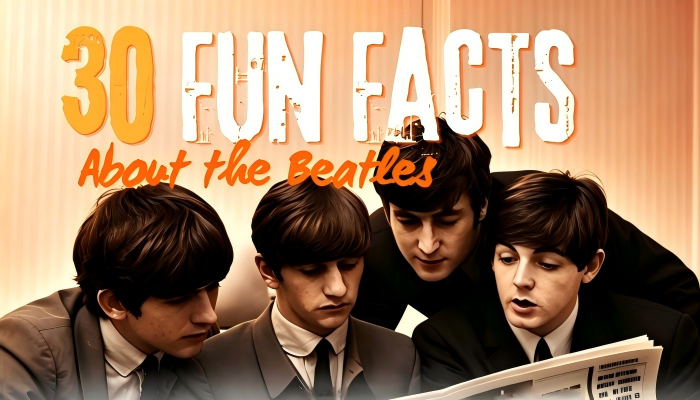
The Beatles started in Liverpool in 1960. John Lennon, Paul McCartney, George Harrison, and Ringo Starr were together for about ten years. To be exact, they spent seven years, seven months, and 24 days recording music. In that time, they sold over 600 million records and had 20 number-one hits. They also changed the way people think about popular music.
Most people know their songs, but fewer people know the fun facts behind them. For example, they had failed auditions and accidents in the studio. There were also close calls that almost changed their history. From rare trivia to facts about how the band worked, here are 30 of them.
Early Days: Beatles Origin Fun Facts
1. They went through at least seven names before landing on “the Beatles.”
The final name came from a late-night brainstorm between Lennon and bassist Stuart Sutcliffe; it is a nod to Buddy Holly’s Crickets, with the spelling twisted so “beat” was baked right into it. Lennon explained: when you said it, people thought of crawly things; when you read it, it was beat music.
2. John Lennon thought George Harrison was too young to join.
Harrison was 15 when he first auditioned for the Quarrymen in 1958. Lennon was 18 and said no. But Harrison did not give up. He took the bus to every practice and stayed around until he got another chance. He finally won Lennon over by playing an instrumental piece on the upper deck of a Liverpool bus. He became the group’s lead guitarist — and, at the time, the youngest member by three years.
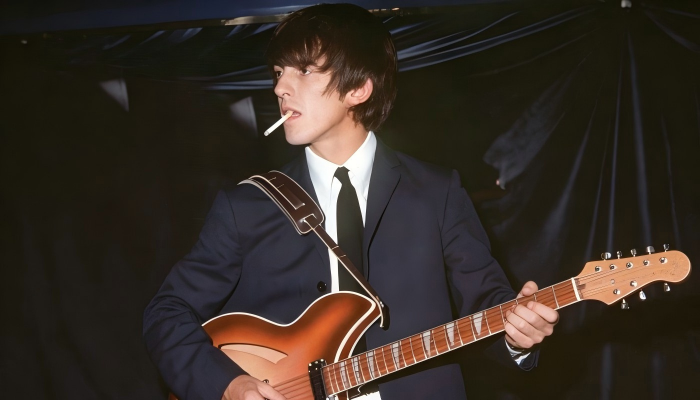
3. Decca Records rejected them, calling guitar groups “on the way out.”
On New Year’s Day 1962, the Beatles drove ten hours through a snowstorm to audition at Decca’s London studio. They recorded 15 songs in under an hour.
The label chose Brian Poole and the Tremeloes instead, which is a local act with lower travel costs. Dick Rowe, Decca’s A&R head, reportedly told manager Brian Epstein that guitar groups had no future. Rowe denied it for the rest of his life.
4. Their Hamburg residency was a brutal boot camp.
Between 1960 and 1962, the Beatles played multiple stints in Hamburg’s red-light district clubs, performing sets that stretched four to eight hours a night. Cramped rooms, little sleep, rowdy crowds. But the marathon gigs forged their tight live sound. By the time they returned to Liverpool, they were a different band.
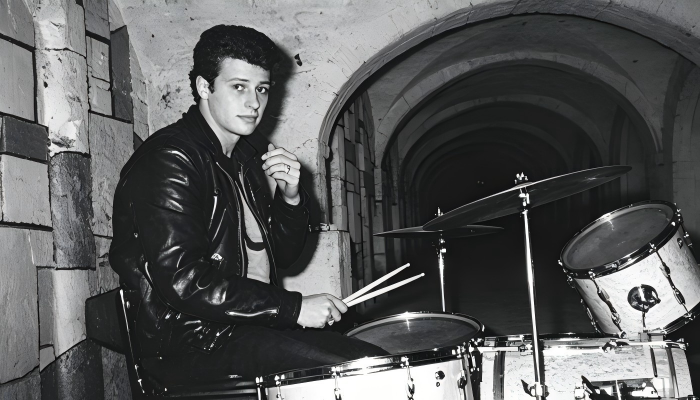
5. Pete Best was fired because the producer didn’t like his drumming.
When the Beatles finally landed a recording session with EMI’s George Martin in June 1962, Martin immediately flagged drummer Pete Best as a weak link. He suggested using a session musician instead.
The band, which had already been considering a change, replaced Best with Ringo Starr from Rory Storm and the Hurricanes in August 1962. He learned of his firing from manager Brian Epstein, not from his bandmates.
Inside Abbey Road: Untold Recording Facts
6. They recorded their debut album in under ten hours.
On February 11, 1963, the Beatles walked into Abbey Road Studios at 10 a.m. and didn’t leave until 10:45 p.m. In three sessions, they knocked out ten songs for Please Please Me. Historian Mark Lewisohn called it one of the most productive 585 minutes in recording history.
They saved “Twist and Shout” for last because it would shred Lennon’s voice. “The last song nearly killed me,” he said. “Every time I swallowed, it was like sandpaper.”
7. None of them could read or write music.
McCartney confirmed it on 60 Minutes: “None of us did in the Beatles. We did some good stuff, though.” Lennon said the same to Playboy in 1980. When they needed orchestral arrangements, they hummed melodies to George Martin, who transcribed them into notation. Their lack of formal training may have been an advantage — no rules to follow, no theory to constrain their experiments.
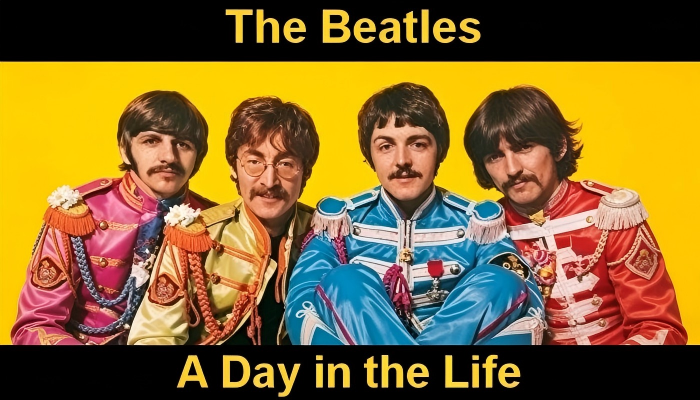
8. The final chord of “A Day in the Life” took three pianos.
That massive, slowly fading E-major chord that closes out Sgt. Pepper’s most ambitious track was produced by Lennon, McCartney, Starr, and roadie Mal Evans. They all slammed the same chord on three separate grand pianos at the same time. The studio’s recording levels were turned up to maximum to capture every second of the sound, and it rings for about 40 seconds.
9.“Yesterday” started life as “Scrambled Eggs.”
McCartney heard the melody in a dream and rushed to a piano before he forgot it. For weeks, he asked everyone in the music business if they recognized the tune, because he was terrified he had copied it without knowing.
Before he found the right lyrics, he used a placeholder: “Scrambled eggs / Oh my baby, how I love your legs.” The title stayed as a running joke until Lennon suggested the one-word replacement. After that, this classic song was truly complete.
10. Sgt. Pepper took 129 days and changed what an album could be.
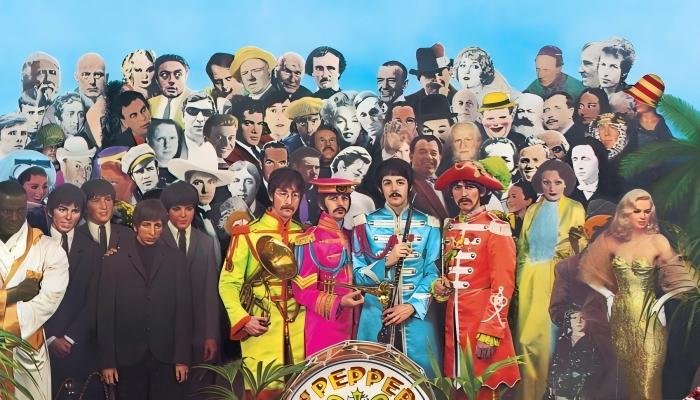
Between December 1966 and April 1967, the Beatles logged roughly 700 hours of studio time. The result was the first major pop album to print its lyrics on the sleeve, with a cover featuring cutouts of about 70 famous figures. After the one-day sprint of Please Please Me, Sgt. Pepper’s proved a pop album could be a painstaking work of art.
11. A cereal commercial inspired “Good Morning Good Morning.”
The phrase stuck. He turned it into one of Sgt. Pepper’s most rhythmically complex tracks, powered by a brass section and a chain of animal sound effects carefully sequenced so each animal could plausibly devour the one before it.
The “Fifth Beatles”: Key Hidden Figures
12. George Martin came from comedy records, not rock and roll.
Before the Beatles, Martin’s biggest successes at Parlophone were comedy and novelty albums — Peter Sellers, Spike Milligan, the Goons. That unlikely combination gave the Beatles a producer who could translate their wildest ideas into orchestral arrangements, tape loops, and studio techniques that nobody in pop had tried before.
13. Billy Preston is the only outsider credited on a Beatles single.
When tensions were high during the Get Back sessions in January 1969, Harrison invited keyboardist Billy Preston to join in. Being there, he calmed the room, because the other Beatles behaved better with a guest around.
Preston’s electric piano became so important to the sound that “Get Back” was released as “The Beatles with Billy Preston.” No other musician ever received that kind of credit on a Beatles single.
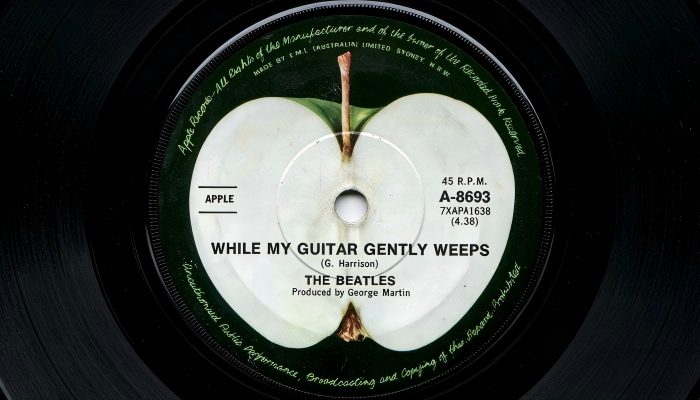
14. Eric Clapton played lead guitar on “While My Guitar Gently Weeps”.
Harrison asked his close friend Clapton to play on the track. Clapton hesitated, saying nobody played guitar on Beatles records. Harrison insisted. The result was one of the most recognizable solos in rock history.
Harrison later admitted he had a second motive: when an outsider was present, the other Beatles took the session more seriously and stopped arguing.
15. Their chief engineer started at Abbey Road at age 16.
Geoff Emerick was a teenage assistant when the Beatles recorded their first session in 1962. By 1966, at just 20, he was the lead engineer, and he immediately began to break traditional recording rules.
Close-miking the bass drum, stuffing sweaters into instruments, running vocals through a spinning Leslie speaker. His innovations on Revolver and Sgt. Pepper’s helped define the sound of an era.
16. Lennon and McCartney shared songwriting credit on everything — even solos.
Early in their partnership, the two agreed that all songs would be credited to Lennon–McCartney, regardless of who actually wrote them. “Yesterday” was almost entirely McCartney’s work. “The Ballad of John and Yoko” was almost entirely Lennon’s. Both carry the shared credit.
The arrangement became a source of tension later, but neither budged on the original pact during the band’s lifetime.
Making History: Iconic Beatles TV Moments
17. Their Ed Sullivan debut drew 73 million viewers.
On February 9, 1964, the Beatles performed on The Ed Sullivan Show for roughly 73 million Americans — close to 40 percent of the population. The appearance is widely cited as the moment Beatlemania crossed the Atlantic.
Few people know that their actual American TV debut had happened quietly three months earlier on the Huntley-Brinkley Report news broadcast.
18. They once held the top five spots on the Billboard Hot 100 at the same time.
For the week ending April 4, 1964, the Beatles occupied positions one through five on the chart, with seven more songs scattered lower down. No other act has replicated this. It remains one of the most staggering feats of chart dominance in popular music.
19. They played the first-ever stadium rock concert.
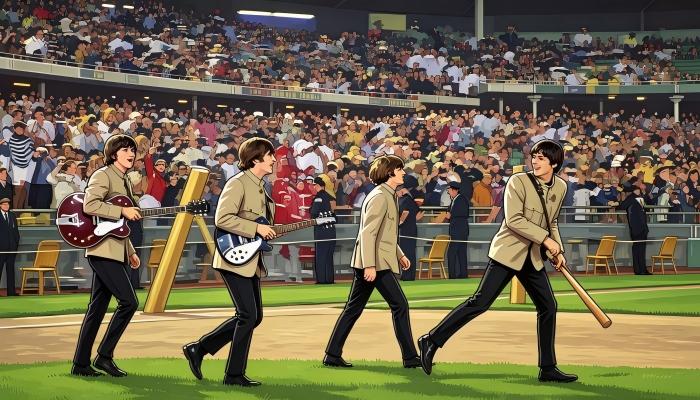
On August 15, 1965, the Beatles performed at New York’s Shea Stadium in front of 55,600 fans. It’s widely credited as the first true stadium rock concert. The screaming was so loud that the band couldn’t hear themselves play. And this problem directly led to their decision to quit touring the following year altogether.
20. Disney wanted them to voice four vultures in The Jungle Book.
During production of the 1967 film, Disney’s team designed four vultures modeled after the Beatles — mop-top haircuts, Liverpool accents, the works. The plan was for all four to voice the characters and sing their number.
Lennon killed the idea. The vultures stayed in the film, restyled as a barbershop quartet.
21. Their last public concert was on a rooftop, broken up by police.
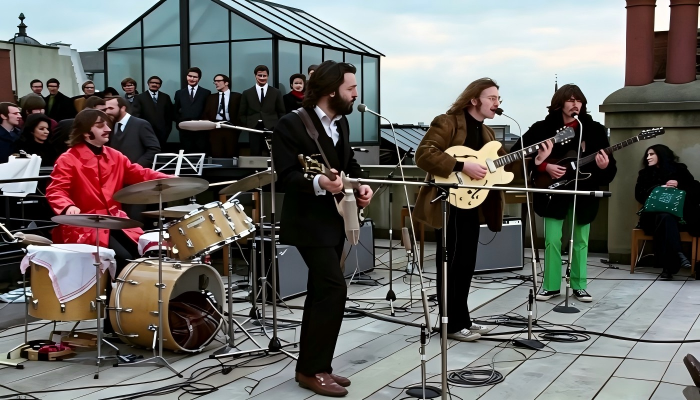
On January 30, 1969, the Beatles set up on the roof of their Apple Corps headquarters in London and played a 42-minute set to the street below. Police arrived after noise complaints from neighboring businesses.
As the set ended, Lennon leaned into the microphone: “I’d like to say thank you on behalf of the group and ourselves, and I hope we’ve passed the audition.”
Strange But True: Beatles Myths & Trivia
22. A random American tourist photobombed the Abbey Road cover.
Paul Cole was vacationing in London during August 1969 when he decided to skip a museum visit with his wife. While wandering near a zebra crossing, he spent some time chatting with a policeman and watching four men walk back and forth across the street.
At the time, he didn’t recognize the famous band and simply thought they looked like a “bunch of kooks.” It wasn’t until nearly a year later that he saw the Abbey Road album in his home and spotted himself standing in the background. He was able to confirm it was him by the new sports jacket he had been wearing throughout his trip.
23. Lennon wanted Hitler on the Sgt. Pepper’s cover.
When the band was choosing famous people to feature in the album’s iconic crowd photo, John Lennon requested controversial figures like Adolf Hitler, Mahatma Gandhi, and Jesus Christ.
However, none of them made the final cut. While a cardboard cutout of Hitler was actually prepared for the shoot, it was ultimately hidden or removed.
Gandhi was taken out because the record label didn’t want to upset fans in India. As for Jesus, he was left off the cover to avoid more trouble following Lennon’s famous and controversial comment that The Beatles were “more popular than Jesus.”
24. There really is a gravestone for Eleanor Rigby, right where Lennon met McCartney.
McCartney has always said he put the name together from actress Eleanor Bron and a Bristol shop called Rigby & Evens. But in Woolton Cemetery, just steps from the church where he first met Lennon at a garden fete in 1957, a headstone has the name Eleanor Rigby on it.
McCartney admits the name may have stuck in his memory without him knowing. Or maybe it is just a coincidence.
25. Three of them once tried to buy a Greek island and start a commune.
In the summer of 1967, Lennon, Harrison, and McCartney went island-hopping off the Greek coast, fueled by acid and the idea of founding a private utopia. Starr stayed home with his pregnant wife. They actually found an island they liked and began negotiations. The plan collapsed quickly.
“It’s a good job we didn’t do it,” McCartney said later. “There would always be arguments about who has to do the washing-up.”
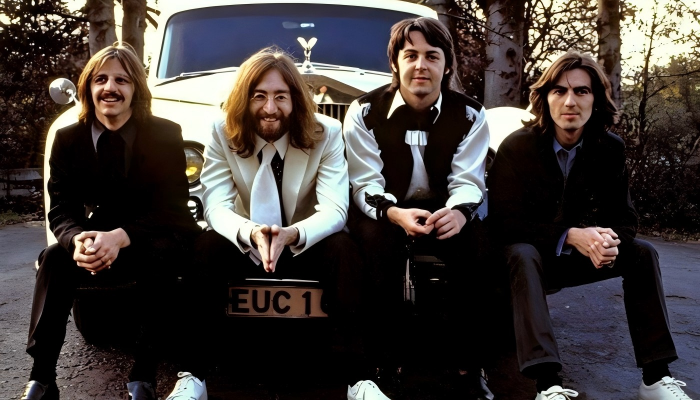
26. Ringo quit during the White Album sessions — and came back to flowers on his drum kit.
In the summer of 1968, Starr felt left out and decided to leave the band. While he was away, Paul McCartney took over the drums for a few songs. However, the rest of the band realized how much they missed him and sent him a telegram calling him the best drummer in the world.
When Ringo finally returned to the studio, George Harrison had covered his drums in flowers as a beautiful way to welcome him home.
27. Lennon never said, “I buried Paul.” He said, “cranberry sauce.”
The “Paul is dead” conspiracy theory spread across American college campuses in 1969. It was driven by supposed clues hidden in Beatles songs and album art. One key piece of “evidence” was a mumbled phrase at the end of “Strawberry Fields Forever” that sounded like “I buried Paul.”
But Lennon cleared it up in a 1980 Playboy interview: “I said, ‘cranberry sauce.’ That’s all I said.”
The Beatles’ Legacy by the Numbers
28. They remain the best-selling music act in history.
Over 600 million records worldwide. Twenty number-one singles in the US. Fifteen number-one albums in the UK. Their compilation 1, released in 2000, thirty years after the breakup, went straight to the top in 35 countries.
The numbers keep growing because new generations keep discovering the catalogue.
29. NASA beamed “Across the Universe” toward the North Star in 2008.
On February 4, 2008, NASA transmitted a digital version of the song into deep space via the Deep Space Network’s 70-meter antenna in Madrid. The signal, traveling at the speed of light, was aimed at Polaris — 431 light-years away. The event marked the song’s 40th recording anniversary and NASA’s 50th.
McCartney’s response: “Amazing! Well done, NASA! Send my love to the aliens.”
30. AI technology made their “last” song possible, 45 years after it was written.
“Now and Then” began as a rough home demo recorded by Lennon in the late 1970s. Yoko Ono gave the tape to the surviving Beatles in 1994, but the technology could not cleanly separate Lennon’s voice from the piano. So the tape sat in a drawer for decades.
Then Peter Jackson’s team, working on the Get Back documentary, created machine-learning software that could pull out individual tracks from old recordings. In 2023, McCartney and Starr used it to finish the song. They added bass, drums, guitar, and harmonies around Lennon’s recovered vocal.
It became the final Beatles single, released 53 years after the band broke up.
Whether you’re drawn to the trivia, the history, or the hidden studio secrets, the Beatles always offer something new to rediscover. Their legacy is built on much more than just melodies, which is why the stories behind the music remain as timeless as the songs themselves