Music feels familiar. You hear it in the car, at the grocery store, in every movie trailer. Behind the melodies and the rhythms, there’s a world of fun facts about music. From instruments carved out of vulture bones 40,000 years ago to a vinyl record that sold for $2 million with a clause allowing a heist, the history, science, and business of music hide many interesting facts. In this article,
I’ll share 30 music trivia facts you’ve definitely never heard of—you’ll be amazed to discover the truth behind them! Let’s dive into this journey of music trivia!
Surprising Music History Facts
1. The oldest musical instrument is a vulture bone flute — and it’s 43,000 years old. Archaeologists pulled it from Hohle Fels Cave in southern Germany in 2008. Carved from the wing bone of a griffon vulture, it has five finger holes and a V-shaped mouthpiece.
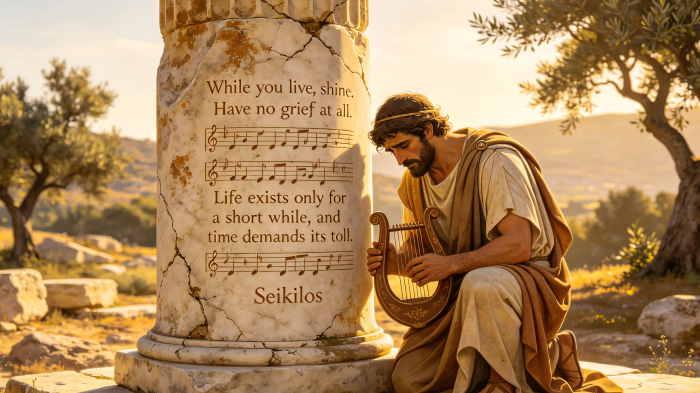
2. The world’s oldest complete song was carved on a tombstone. The Seikilos Epitaph dates to somewhere between 200 BC and 100 AD. Found on a marble column near the ancient Greek city of Tralles in modern-day Turkey, it includes both lyrics and melody in ancient Greek notation. The words translate roughly to: “While you live, shine. Have no grief at all. Life exists only for a short while, and time demands its toll.” A man named Seikilos wrote it, probably for his dead wife.
3. Humans made music at least 35,000 years before inventing writing. The earliest known instruments date back roughly 40,000 years. The earliest writing system is Sumerian cuneiform, which appeared around 3400 BC. That gap says something about which one mattered more to early humans.
4. The word “music” originally meant all art, not just sound. It comes from the Greek mousike, meaning “art of the Muses.” In ancient Greece, the Muses presided over everything from poetry to astronomy. Sound was just one corner of the creative universe they governed.
5. Before the Renaissance, almost all European music was made for the church. Secular music — songs about love, war, drinking, and daily life- only became widespread after the 14th century. For centuries, if you wanted to hear music, you went to a cathedral.
Fun Facts About Famous Musicians
6. Elvis Presley was a natural blond. He started dyeing his hair jet black at age 15. The look stuck, and so did the legend. Most fans lived their entire lives never knowing the King’s real hair color.
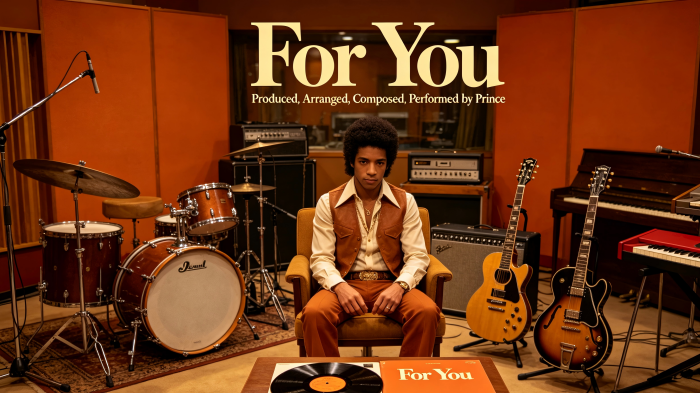
7. Prince played 27 instruments on his debut album. He was 20 years old when For You dropped in 1978. Every drum hit, every guitar lick, every keyboard line, all Prince. The liner notes credit him with producing, arranging, composing, and performing everything.
8. Freddie Mercury refused to fix his teeth because he thought they made him sing better. Mercury was born with four extra incisors, a rare condition called mesiodens. The crowding pushed his front teeth forward, giving him his trademark overbite. He believed the extra space in his mouth widened his vocal range.
Scientists later found that his real secret weapon was something else entirely: he could activate his vestibular folds — a set of “false vocal cords” above the real ones that most people never use, to produce a rare subharmonic vibration. That growl in “We Will Rock You”? That’s where it came from.
9. Metallica is the only band that has played on all seven continents. They checked Antarctica off the list in December 2013, performing for 120 scientists and contest winners at Argentina’s Carlini Station. To avoid disturbing wildlife, the sound was delivered entirely through headphones.
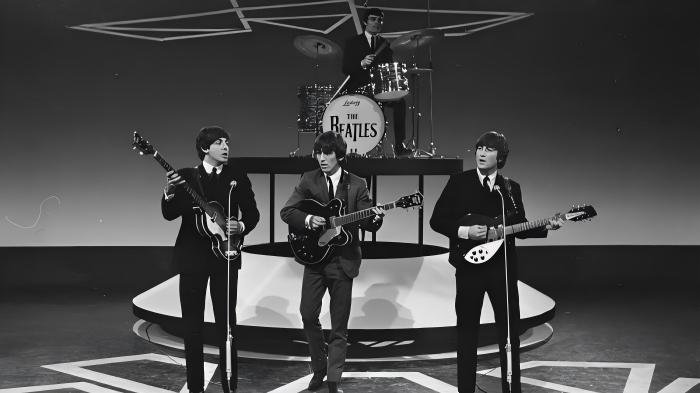
10. None of the Beatles could read sheet music. Paul McCartney has confirmed this in multiple interviews. They composed some of the most influential songs in pop history entirely by ear. “Yesterday” is the most covered song ever recorded, was hummed into existence, not created by writing it on a musical staff.
Amazing Facts About Musical Instruments
11. The most expensive instrument ever sold is a 300-year-old violin that’s barely been played. The “Lady Blunt” Stradivarius, crafted in 1721, sold at auction in 2011 for $15.9 million. All proceeds went to tsunami relief in Japan. Because it passed mostly between collectors rather than performers, the violin survives in near-original condition.
12. There’s an organ inside a cave in Virginia that uses stalactites as its keys. The Great Stalacpipe Organ in Luray Caverns covers 3.5 acres of underground space. Built by mathematician Leland Sprinkle over three years, it works by tapping stalactites with rubber mallets wired to a console. The sound is otherworldly.
13. The inventor of the Fender guitar couldn’t play guitar. Leo Fender designed the Telecaster, the Stratocaster, and the Precision Bass — instruments that shaped rock, blues, country, and jazz. But the instrument he actually plays is the saxophone; he never learned to play the guitars he built.

14. A standard violin contains over 70 individual pieces of wood, and its strings used to be made from sheep intestines. Early luthiers strung their instruments with dried sheep gut, which produced a warm, resonant tone that many purists still prefer over modern synthetic or steel strings.
The term “catgut” has confused people for centuries. No cats were harmed. The word likely derives from “cattlegut” or the Dutch word for a small violin, kit.
15. The first album recorded entirely in space sounds different from anything made on Earth — because zero gravity changes how you sing. Canadian astronaut Chris Hadfield brought a Larrivée parlor guitar aboard the International Space Station in 2013 and recorded tracks between his duties operating the station.
Without gravity pulling down on his vocal cords and sinuses, his voice took on a subtly different resonance. The album, Space Sessions: Songs From a Tin Can, was released in 2015.

Facts of the Music Business
16. The best-selling 12-inch single in history lost money on every copy sold. New Order’s “Blue Monday,” released in 1983, holds that commercial record. But designer Peter Saville created a packaging concept that Factory Records couldn’t afford: a die-cut sleeve modeled after a floppy disk, printed with color-coded strips that changed with each pressing.
The production cost per sleeve exceeded the retail price of the record itself. Factory Records co-founder Tony Wilson later confirmed the math: the more copies they sold, the deeper the label went into the red. The song has sold over three million copies.
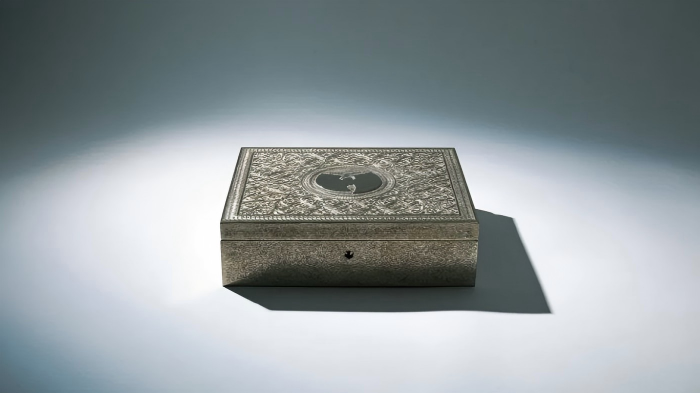
17. Only one copy of Wu-Tang Clan’s seventh studio album exists — and it sold for $2 million, making it the most expensive musical work ever sold. Once Upon a Time in Shaolin cannot be downloaded or streamed. The group recorded it in secret over six years, pressed a single two-CD copy in 2014, and locked it in a vault in Morocco before selling it through auction house Paddle8 in 2015.
The buyer, pharmaceutical CEO Martin Shkreli, agreed to a contract barring commercial release until 2103, though private listening parties are allowed. After Shkreli’s securities fraud conviction, a federal court seized the album. The U.S. Department of Justice sold it in 2021 to cover his debts. The new owners, an NFT collective called PleasrDAO, paid $4 million.
18. Mozart outsold Beyoncé in 2016. A 200-disc box set released by Universal Music Group to mark Mozart’s 225th death anniversary counted each disc as a separate sale. In a year when streaming had cratered CD numbers, that mathematical quirk put an 18th-century composer ahead of Adele, Drake, and Beyoncé on the charts.
19. “Happy Birthday” earned $2 million a year in royalties — until a judge said it was free. Warner Chappell Music collected licensing fees for decades, charging $25,000 every time the song appeared in a film or TV show. In 2015, a federal judge ruled the copyright claim invalid. The song entered the public domain, and the revenue stream dried up overnight.
20. Three companies control over 80% of the music you hear. Sony Music, Warner Music Group, and Universal Music Group dominate global recorded music. Most of the artists on your streaming playlists are signed, directly or through subsidiaries, to one of these three.

Funny Facts About Music and the Brain
21. Your heart literally tries to match the tempo of the music you’re listening to. Researchers at the University of Pavia in Italy monitored volunteers’ cardiovascular responses while they listened to different genres. Slow, meditative tracks brought heart rates down. Fast crescendos pushed them up.
The effect was measurable within seconds. The study, published in the journal Circulation, found that musical tempo influenced blood pressure, heart rate, and even breathing speed — with pauses in music triggering the sharpest drops. Your body doesn’t just hear rhythm. It obeys it.
22. About 5% of people feel absolutely nothing when they hear music. This condition is called musical anhedonia. A study at the University of Barcelona found that these individuals experience pleasure from food, social interaction, and other stimuli normally. Music just doesn’t register. They’re not broken — their brains are simply wired differently.
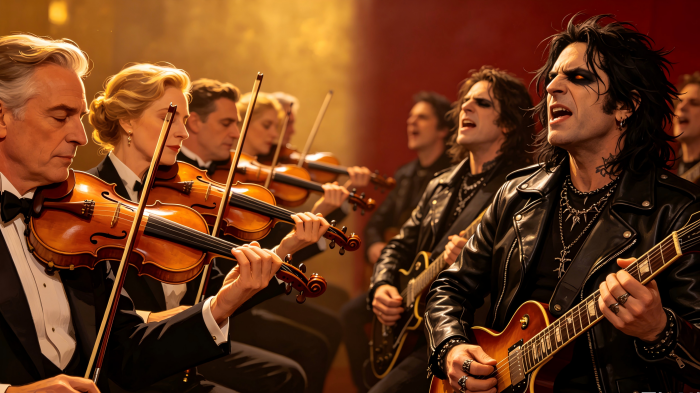
23. Classical music fans and heavy metal fans are psychologically almost identical. Multiple studies have found that listeners of both genres tend to be creative, introverted, gentle, and self-assured. The volume is different. The personality profile is not.
24. Hearing a song on repeat actually makes you like it more. Research at the University of Arkansas showed that repetition increases preference rather than breeding contempt. This is exactly why radio stations play the same 40 songs in rotation — and why that strategy works on your brain even when you think it doesn’t.
25. Musicians’ brains are physically different, and the difference is visible on a scan. Neuroscientists at Harvard Medical School and other institutions have found that the corpus callosum, the thick bundle of nerve fibers connecting the left and right hemispheres, is significantly larger in trained musicians, especially those who started playing before age seven.
The result: faster communication between the analytical left brain and the creative right brain. Brain imaging studies also show that musicians have more gray matter in areas controlling motor function, auditory processing, and spatial reasoning. Playing an instrument doesn’t just train your fingers. It rewires the hardware.
The Weirdest Music Facts We Could Find
26. There are two skulls in Haydn’s tomb. After the composer died in 1809, phrenologists stole his head to study it. When the real skull was returned in 1954, no one removed the replacement. Both remain inside the tomb today.

27. Termites eat wood twice as fast when you play them heavy metal. Australian researchers discovered that vibrations from loud music stimulate termites to chew at double speed. So if your house has a termite problem, maybe skip the Metallica.
28. “Wannabe” by the Spice Girls is scientifically the catchiest song ever recorded. In a 2014 experiment run by the UK Museum of Science and Industry, 12,000 participants tried to identify pop songs as fast as possible. “Wannabe” was recognized in an average of 2.29 seconds — less than half the 5-second average for other hits.
29. Finland has the most heavy metal bands per capita on the planet. Data from the Encyclopaedia Metallum shows 53.5 metal bands per 100,000 people. Sweden and Norway tied for second at 27.2. Something about long, dark winters seems to produce a lot of distortion pedals.
30. A British airport uses Tina Turner’s music to scare birds off the runway. Gloucestershire Airport found that playing her songs cleared the flight path more effectively than conventional bird deterrents. No word on whether the birds simply had different tastes in music.

Music is more than melody and rhythm. It threads through history, science, economics, and the deepest wiring of the human brain. Next time you press play, you might think a little differently about what you’re hearing. The world of music is more fascinating than most people ever realize. Got a music fact even wilder than these? We’d love to hear it.
You Might Also Like
How Well Do You Really Know Michael Jackson? Take This 25-Question Quiz
30 Fun Facts About Michael Jackson You’ve Never Heard Before