
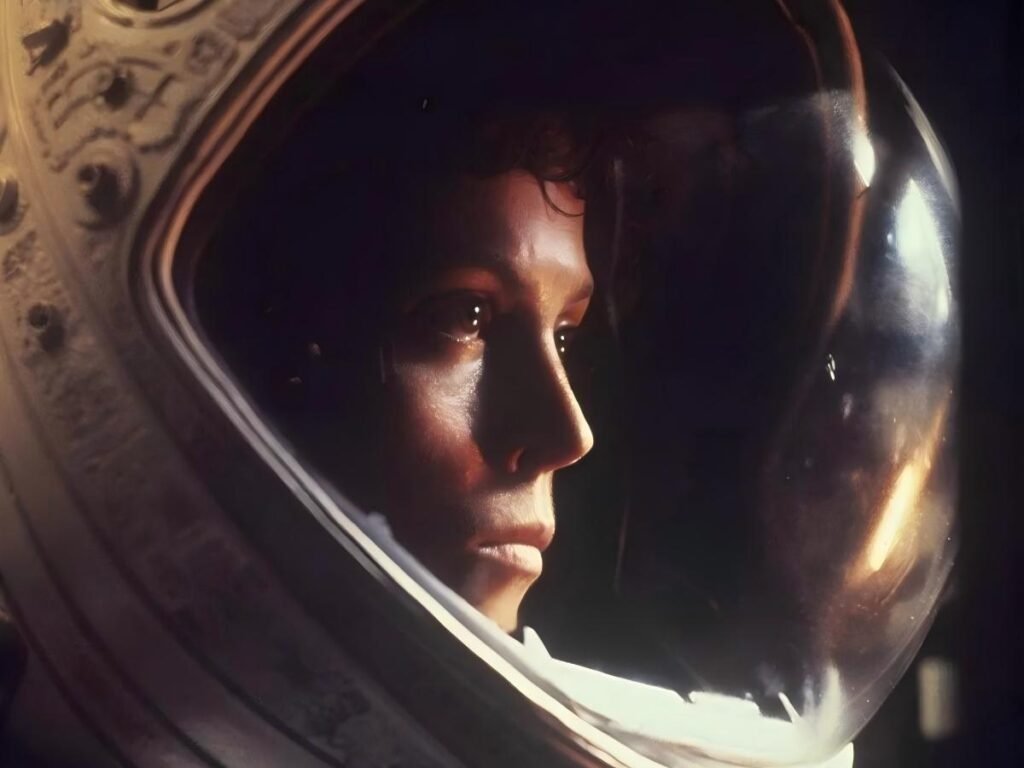
When Alien hit theaters in 1979, nobody was quite prepared for it. Ridley Scott took a B-movie premise — crew encounters monster on spaceship — and turned it into one of the most atmospheric, genuinely terrifying films ever made. It wasn’t just the creature that got under your skin. It was the silence, the claustrophobia, and the slow, suffocating realization that no one was coming to help.
The film launched Sigourney Weaver into stardom, introduced the world to H.R. Giger‘s nightmarish creature design, and basically invented a new genre: sci-fi horror done right. But beyond the iconic chestburster scene and Ripley’s last stand, there’s a mountain of behind-the-scenes stories, production secrets, and hidden details that even die-hard fans tend to miss.
Think you know this movie inside and out? These 14 trivia questions will put that to the test — from casting decisions and set design to the real people behind the Xenomorph suit. Let’s see if you can survive.
Alien (1979) Trivia: 14 Questions to Test True Fans
No matter how you scored, we hope this quiz reminded you why Alien still holds up nearly fifty years later. The script started life under the working title Star Beast before Dan O’Bannon and Ronald Shusett shaped it into what we know today. The Xenomorph was brought to life by Swiss surrealist artist H.R. Giger, and the man inside the suit was Bolaji Badejo — a 6’10” graphic design student from Nigeria who was discovered in a London pub.
If this quiz sparked your curiosity, do yourself a favor and rewatch the film. After all these years, the dark corridors of the Nostromo and Ripley’s quiet courage haven’t lost an ounce of their power. In space, no one can hear you scream — but in your living room, your neighbors definitely can.
5 Things You Probably Didn’t Know About Alien (1979)
The chestburster scene was (mostly) real. The actors knew something was going to come out of John Hurt’s chest, but they didn’t know exactly how graphic it would be. The genuine shock on Veronica Cartwright‘s face when she was sprayed with fake blood? That was real. Scott deliberately kept the cast in the dark to capture authentic reactions.
The Xenomorph’s head was made from a real human skull. Giger built the original Xenomorph head around an actual human skull, which he then layered with plastics and mechanical parts. The result was a creature that looked disturbingly organic — because part of it was.
Ripley was originally written as a man. The screenplay by Dan O’Bannon and Ronald Shusett included a note that all characters were gender-neutral and could be cast either way. The decision to cast Weaver as Ripley was made late in production — and it changed the landscape of action heroines in film forever.
The “space jockey” was an enormous set piece. The fossilized alien pilot that the crew discovers was not a miniature or a special effect. The production team built a full-scale set piece so large that they used children in spacesuits to walk around it, creating the illusion of massive scale.
The movie’s tagline almost didn’t happen. The now-iconic line “In space, no one can hear you scream” was written by Barbara Gips at the advertising agency Alien Poster Company. It nearly got cut from the campaign before test audiences responded overwhelmingly to it.
More Sci-Fi & Horror Trivia Quizzes
Top 10 Classic Horror Movies of the 1970s — How many of these iconic horror films have you seen?