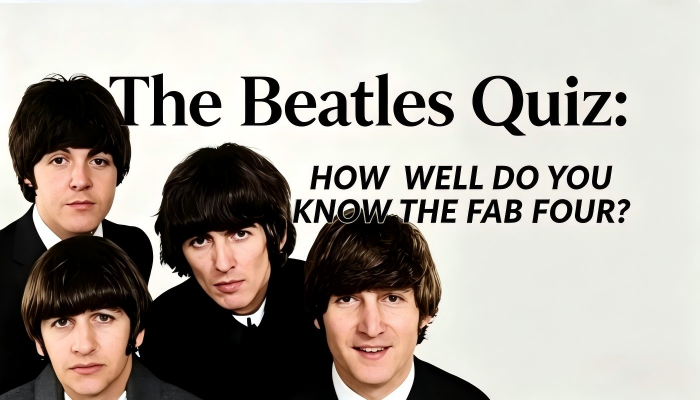
Fifteen questions covering everything from the Beatles’ early days and landmark albums to the stories behind the breakup. Think you know the Fab Four? This quiz will tell you for sure.
Play The Beatles Quiz Now
So, how did you score? The Beatles’ story is far too big for 15 questions to cover. If you’re hungry for more, our 30 Fun Facts About the Beatles Most People Don’t Know is packed with stories the quiz didn’t touch.
And what a trivia quiz can’t quite capture is how one band reinvented itself four times in eight years, and why it all fell apart. That part is worth a read, too.
How the Beatles Reinvented Themselves Four Times
Most bands find a sound and stick with it. The Beatles found a sound, abandoned it, and did it again three more times in eight years. Each reinvention wasn’t random — it was a response to something specific happening in their world.
Act One: The Merseybeat Machine (1962–64)
The raw material came from Hamburg. Between 1960 and 1962, the band played marathon sets in German nightclubs — four to eight hours a night, six or seven nights a week. That brutal schedule turned four young musicians into one of the tightest live acts in Britain.
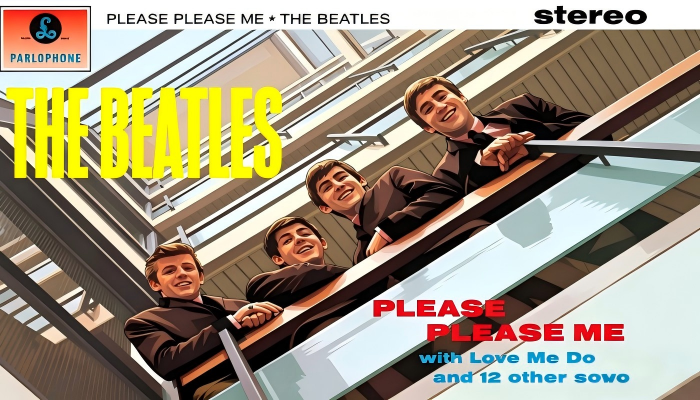
When they finally got into a studio, the efficiency showed. Their debut album, Please Please Me, was recorded in a single day. The songs were short, punchy, and built around irresistible melodies. Within two years, they had six number-one singles in the United States alone — a pace no other act has matched.
Act Two: The Dylan Turn (1965–66)
Bob Dylan changed everything. After the two met in 1964, Lennon began writing lyrics that went beyond boy-meets-girl. Rubber Soul and Revolver were the result — albums that traded teenage energy for emotional depth and sonic experiment. Harrison, meanwhile, brought the sitar into Western pop for the first time on “Norwegian Wood.”
The shift wasn’t just musical. The screaming crowds at Shea Stadium in 1965 had been so loud that the band couldn’t hear themselves play. That experience pushed them off the road entirely by 1966. The stage was no longer big enough for what they wanted to do.
Act Three: The Studio Revolution (1967)
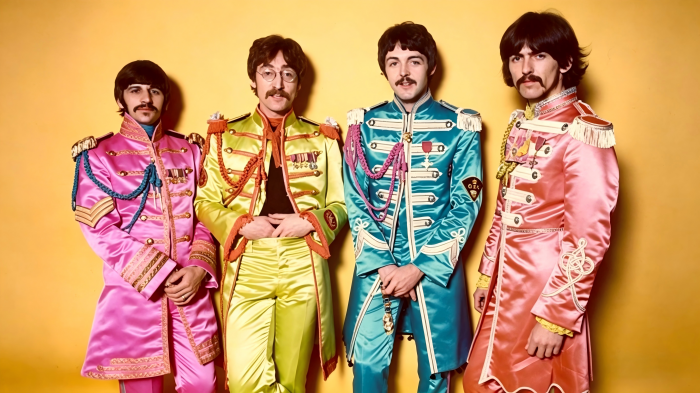
With touring behind them, the recording studio became the instrument. Sgt. Pepper’s Lonely Hearts Club Band took 129 days and roughly 700 hours to make — a world away from the one-day sprint of Please Please Me.
The album introduced backward tape loops, orchestral crescendos, and sound effects layered into the music itself. It was also the first major pop album to print its lyrics on the sleeve. The message was clear: an album wasn’t just a collection of singles anymore. It could be a unified work of art.
Act Four: The Fracture (1968–70)
The White Album sessions revealed four musicians pulling in four different directions. Lennon was writing raw, confessional songs. McCartney leaned into polished pop. Harrison, long limited to two or three tracks per album, had stockpiled enough material for a triple solo record. Starr briefly quit during the sessions, feeling like an outsider. And yet, they came back together one more time.
Abbey Road, recorded in the summer of 1969, was their most musically accomplished album — a mature, seamless record made by four people who knew the end was near but chose to go out at their best.
Why the Beatles Broke Up
There was no single moment when the Beatles ended. It was a slow unraveling that started with a death and ended with a lawsuit.
On August 27, 1967, manager Brian Epstein was found dead from an accidental overdose. He was 32.
Epstein had managed their business affairs, mediated their disagreements, and shielded them from the industry’s rougher edges. Without him, two things collapsed at once: financial oversight and personal diplomacy. “I knew that we were in trouble then,” Lennon said later. “I was scared.”
McCartney stepped into the vacuum, pushing projects like Magical Mystery Tour and trying to keep the group moving forward. The other three increasingly resented it. Harrison called it the way it was: “Ever since Mr. Epstein passed away, it’s never been the same.”

The real fracture came over money. By 1969, their Apple Corps venture was hemorrhaging cash, and the band split on who should fix it. Lennon, Harrison, and Starr backed Allen Klein, a hard-nosed American businessman who had previously managed the Rolling Stones.
McCartney wanted his father-in-law, the attorney Lee Eastman. A contract-signing ceremony was arranged in May 1969 — McCartney refused to sign. Three against one.
The creative cracks ran just as deep. Lennon was already recording with the Plastic Ono Band. Harrison had quit the group for five days during the Let It Be rehearsals after a heated argument with McCartney.
And when Klein, without McCartney’s approval, handed the Let It Be tapes to producer Phil Spector — who layered orchestration and choir over McCartney’s stripped-down arrangements — it was the final insult.
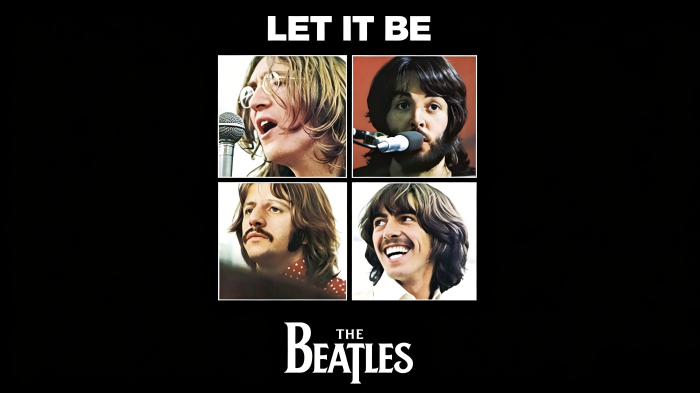
On December 31, 1970, McCartney filed a lawsuit to dissolve the Beatles’ partnership. He later told GQ: “The only way for me to save the Beatles and Apple was to sue the band.” The court ruled in his favor. The legal dissolution came through on December 29, 1974.
The Beatles’ breakup wasn’t about Yoko Ono, or ego, or any single villain. It was about four people who had grown too large for one band — and a series of business decisions that turned creative tension into legal warfare.
Think you know even more about the Fab Four? Check out our 30 Fun Facts About the Beatles Most People Don’t Know for stories the quiz didn’t cover.