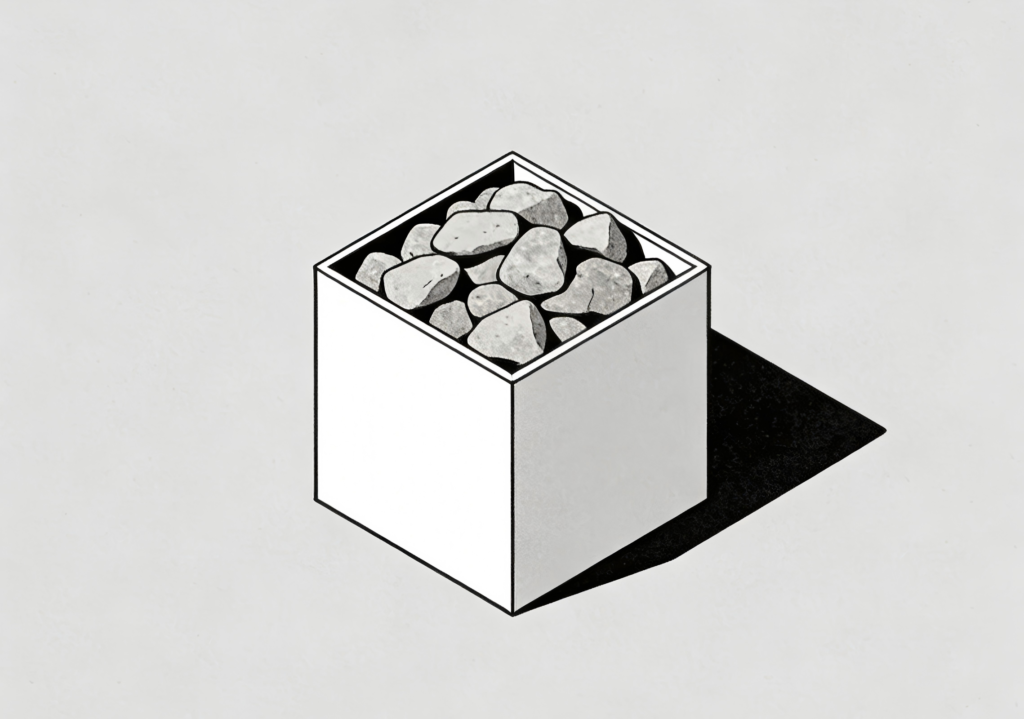
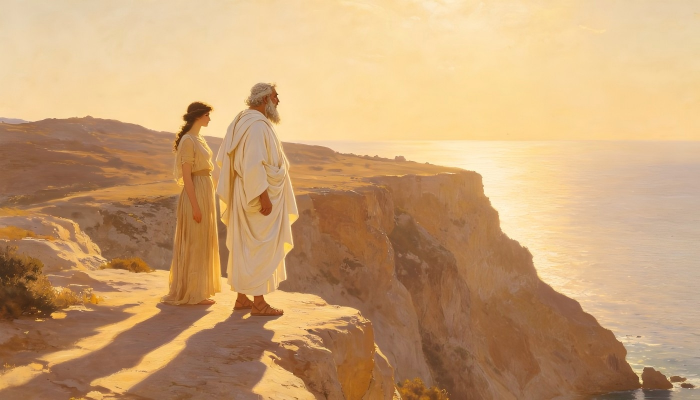
This riddle was written by one of the Seven Sages of ancient Greece, a man so respected that his words were carved into the walls of the Temple of Apollo at Delphi. It’s a family portrait, but not of any family you’ve ever met.
One father, twelve children; each of these has twice thirty daughters, half of them white and half of them black. They are immortal, yet they all die.
Here’s a hint: you’re living inside the answer right now, and you have been since the day you were born.
Click to Reveal the Answer
A Year 📅
The father is the year. The twelve children are the months. Each month has roughly thirty days and thirty nights (the white and black daughters). They come and go forever, immortal as a cycle, yet each one passes and never returns.
A Sage’s Riddle from the Shores of Rhodes
This riddle belongs to Cleobulus (6th century BC), a poet and ruler of Lindos on the island of Rhodes, and one of the legendary Seven Sages of Greece. The 3rd-century biographer Diogenes Laërtius records it in his Lives of the Eminent Philosophers (1.91), noting that it was preserved in a collection compiled by the scholar Pamphila. Cleobulus was famous for the maxim “Moderation is best,” and he composed songs and riddles amounting to some 3,000 lines of verse. This is the only complete riddle of his that survives.
The riddle works like a set of nested Russian dolls. You start with a single father and peel back layer after layer: twelve sons, then sixty daughters for each, then the twist that these daughters are split into white and black. The last line delivers the real puzzle: how can something be immortal and die at the same time? The answer is that time is a cycle. Every day ends at sunset, every month passes, every year is gone before you know it. But the pattern itself never stops. It’s a deceptively simple observation dressed up as a family mystery, and it’s been making people pause for over 2,500 years.
There’s a nice footnote to this story. Cleobulus had a daughter named Cleobulina, who became equally famous for composing riddles in hexameter verse. Three of her own riddles survive, quoted by Aristotle, Plutarch, and Athenaeus. Plutarch tells us she attended the legendary Banquet of the Seven Sages, sitting in silence while Aesop defended the art of riddling on her behalf. Father and daughter together make up one of the earliest known examples of a family tradition of intellectual play, at a time when women’s voices were rarely recorded at all.