
There’s something timeless about a good riddle.
Long before crossword puzzles, trivia games, or brain-training apps, people sharpened their minds with riddles. The ancient Greeks posed them at banquets. The Sphinx demanded one of Oedipus on the road to Thebes. Anglo-Saxon scribes filled the Exeter Book with them in the 10th century. Sumerian scribes carved them into clay tablets 4,500 years ago.
For thousands of years, riddles have been humanity’s favorite way to test wit, spark conversation, and prove that the simplest questions can have the most surprising answers.
What makes a great riddle? It’s not about being impossibly difficult. The best riddles play with language, challenge your assumptions, and make you say “of course!” the moment you hear the answer. They invite you to see the world differently — to think in metaphors, to question what seems obvious, and to find delight in the unexpected.
We’ve put together 20 of our favorite riddles, organized into four groups: quick wordplay riddles to warm up your brain, riddles from ancient Greece and Rome, Anglo-Saxon riddles from the Exeter Book, and riddles from around the ancient world — from the Bible to the Mahabharata to Sumerian clay tablets. Each one comes with the answer when you’re ready to reveal it.
A few tips before you start: read each riddle slowly — twice if needed. Pay attention to metaphors. And don’t overthink it. Sometimes the simplest answer is the right one.
Ready? Let’s see how many you can solve.
Quick Wordplay Riddles
These short riddles are all about language — they twist words, play with double meanings, and reward you for thinking literally about figurative phrases. Don’t look for deep metaphors here. Look at the words themselves.
Riddle #1
“I have cities but no houses, forests but no trees, and water but no fish. What am I?”
Reveal the Answer
Answer: A Map.
A map shows cities, forests, and water — but they’re just drawings. No real houses, trees, or fish! Read the full story →
Riddle #2
“Forward I am heavy, backward I am not, what am I?”
Reveal the Answer
Answer: Ton.
“Ton” is a unit of heavy weight. Spell it backward and you get “not” — which means the opposite of heavy! Read the full story →
Riddle #3
“What is there one of in every corner and two of in every room?”
Reveal the Answer
Answer: The letter “O”.
The word “corner” has one letter O in it. The word “room” has two. It’s not about the space. It’s about the spelling! Read the full story →
Riddles from Ancient Greece & Rome
The Greeks and Romans loved riddles. The Sphinx demanded one of Oedipus. The poet Symphosius wrote a hundred of them. The Greek Anthology preserved dozens more, passed down for centuries. These riddles speak in metaphors and personification — to solve them, think the way the ancients did, in poetic terms, not literal ones.
Riddle #4
“There are two sisters: one gives birth to the other, and she in turn gives birth to the first. Who are they?”
Reveal the Answer
Answer: Day and Night.
Each one ends where the other begins. Day “gives birth” to night, and night “gives birth” to day. In Ancient Greek, both words are feminine, which is why the riddle calls them “sisters.” Read the full story →
Riddle #5
“I am the dark child of the bright father. A wingless bird, flying even to the clouds of heaven. I bring forth tears of mourning in each eye I meet, though there is no sorrow; and when I am born, I dissolve into air.”
Reveal the Answer
Answer: Smoke.
It’s the dark child of fire (the bright father). It rises like a wingless bird, stings your eyes into tears, and vanishes into thin air the moment it’s born. Read the full story →
Riddle #6
“One father, twelve children; each of these has twice thirty daughters, half of them white and half of them black. They are immortal, yet they all die.”
Reveal the Answer
Answer: A Year.
The father is the year. The twelve children are the months. Each month has roughly thirty days and thirty nights (the white and black daughters). They come and go forever, immortal as a cycle, yet each one passes and never returns. Read the full story →
Riddle #7
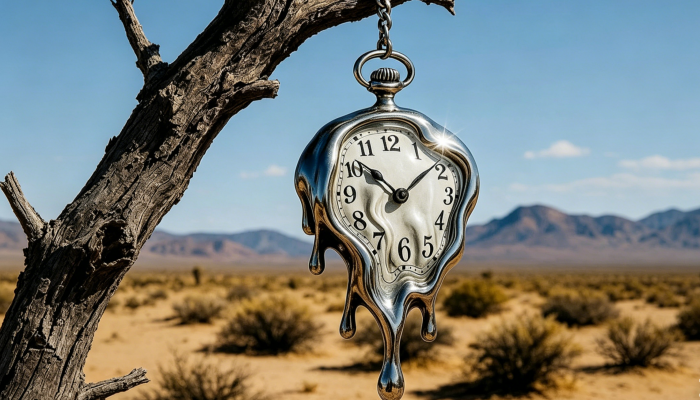
“My mother and my daughter are one and the same. I am born of water, yet I fear the sun. Touch me, and I vanish.”
Reveal the Answer
Answer: Ice.
Water (the mother) freezes into ice (the daughter). When ice melts, it becomes water again, so the daughter gives birth to the mother. They are one and the same. Read the full story →
Riddle #8
“I carry my house with me wherever I go. A small creature, bound to my dwelling. I die if I am parted from my home.”
Reveal the Answer
Answer: A Snail.
Its shell is its home, protection, and identity all in one. Remove it, and the snail can’t survive. Read the full story →
Riddle #9
“No one can see my face unless he shows me his own first. I have no eyes, yet I can show you yours.”
Reveal the Answer
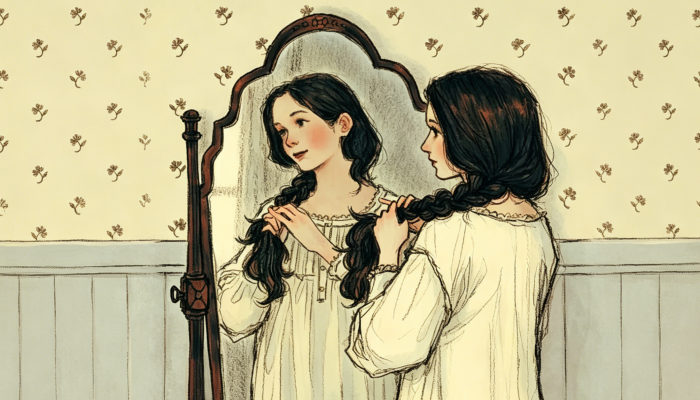
Answer: A Mirror.
It has no face of its own, only yours. It can’t see a thing, yet it shows you everything. Step away, and it goes blank. Read the full story →
Anglo-Saxon Riddles from the Exeter Book
The Exeter Book is a 10th-century manuscript of Old English poetry, and it contains around 95 riddles — some of the most inventive ever written. Anglo-Saxon scribes loved giving voice to everyday objects: a shield speaks of battle, a bookworm reflects on what it has consumed, a swan describes the music of its own flight. To solve these, listen for what kind of voice is speaking, and ask: what would describe itself this way?
Riddle #10
“I am alone, wounded by iron, scarred by sword, weary of battle. I see much war. I do not expect that aid will come to me from the fighting, before I am completely destroyed.”
Reveal the Answer
Answer: A Shield.
It endures every blow in battle so the warrior behind it doesn’t have to. It can never heal, only break down over time. Read the full story →
Riddle #11
“I was an armed warrior, but now a proud young man covers me with gold and silver. Sometimes men kiss me. Sometimes I call my companions to battle with my voice.”
Reveal the Answer
Answer: A Horn.
Once it was part of a wild ox, its natural weapon. Now it serves two roles: a drinking horn at feasts (kissed by lips) and a battle horn that calls warriors to war. Read the full story →
Riddle #12
“We are many sisters born together. Every night we are seen, every dawn we die. We are known to all, yet no man has visited us.”
Reveal the Answer
Answer: The Stars.
They appear together every night, vanish at every sunrise, and though every human being on earth has seen them, no one has ever reached them. Read the full story →
Riddle #13
“We are servants of wisdom. We bear all learning upon our backs, yet we ourselves are ignorant. We speak to the eyes, not to the ears.”
Reveal the Answer
Answer: Letters of the Alphabet.
They carry all human knowledge, yet understand none of it. They communicate through sight, not sound. Without them, wisdom would have no way to travel through time. Read the full story →
Riddle #14
“A moth ate words. That seemed to me a curious happening when I heard about that wonder, that the worm, a thief in the darkness, swallowed a certain man’s song, a glory-fast speech and its strong foundation. The stealing guest was not at all the wiser for that, for those words which he swallowed.”
Reveal the Answer
Answer: A Bookworm.
A moth larva chewing through the pages of a handwritten manuscript. It eats the words, the parchment, the binding, everything. But it understands none of it. The greatest feast of knowledge in the world, completely wasted on the guest. Read the full story →
Riddle #15
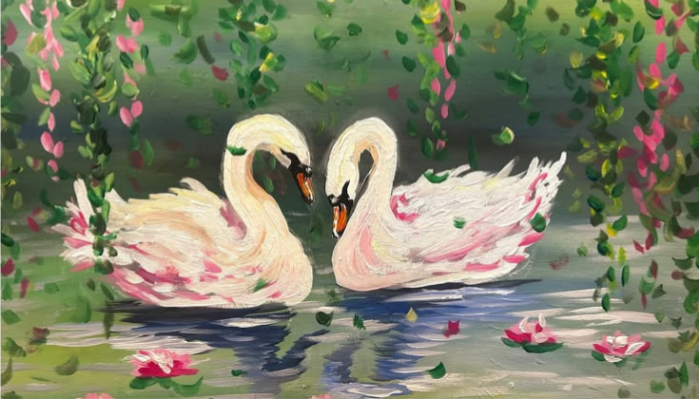
“My garment is silent when I tread upon the earth, or reside in my dwelling, or stir up the waters. Sometimes my apparel and this high air lift me over the dwellings of men, and the strength of the clouds carries me far over the people. My ornaments resound loudly and make music, sing clearly, when I am not resting on water and ground, a travelling spirit.”
Reveal the Answer
Answer: A Swan.
On land and water, a swan moves in near silence. But in flight, its wings beat with a powerful, rhythmic whistling that can be heard from far away. Silent below, singing above. Read the full story →
Riddles from Around the Ancient World
The final group spans cultures and millennia — from the Hebrew Bible to the Mahabharata, from One Thousand and One Nights to Sumerian clay tablets older than any other written riddle in history. Different civilizations, but the same instinct: the joy of describing a familiar thing in unfamiliar terms.
Riddle #16
“Out of the eater, came forth meat. Out of the strong, came forth sweetness.”
Reveal the Answer
Answer: A lion and honey.
The “eater” is a lion. The “sweetness” is honey. The riddle describes honey found inside the body of a dead lion. Read the full story →
Riddle #17
“Seven depart and nine enter; two pour and one drinks.”
Reveal the Answer
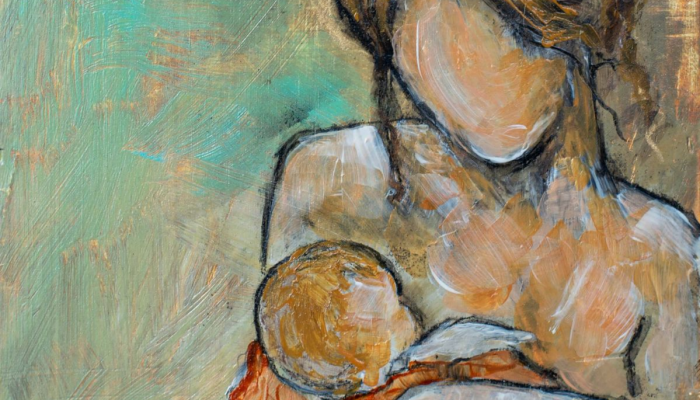
Answer: Pregnancy and Nursing.
Seven refers to the days of the menstrual cycle ending. Nine refers to the nine months of pregnancy. Two refers to the mother’s breasts. And the one who drinks is the baby. Read the full story →
Riddle #18
“What is the thing that can travel the whole world while staying in its corner?”
Reveal the Answer
Answer: Pregnancy and Nursing.
Seven refers to the days of the menstrual cycle ending. Nine refers to the nine months of pregnancy. Two refers to the mother’s breasts. And the one who drinks is the baby. Read the full story →
Riddle #19
“What is swifter than the wind?”
Reveal the Answer
Answer: The Mind.
The mind can leap across oceans, travel through time, and visit places that don’t even exist, all in less than a heartbeat. No wind can keep up with that. Read the full story →
Riddle #20
“A house which one enters blind and leaves seeing. What is it?”
Reveal the Answer
Answer: A School.
You walk in not knowing, and you walk out understanding. The “blindness” is ignorance; the “seeing” is knowledge. Simple, timeless, and written 4,500 years ago. Read the full story →
How Did You Do?
17–20 correct — Riddle Master. Your mind naturally thinks in metaphors and wordplay. Most of these have stumped readers for centuries, and you solved them like it was Tuesday.
12–16 correct — Sharp as Ever. Solid work. The instinct is there — keep going and the harder ones will start clicking faster.
6–11 correct — Warming Up. You’re finding the patterns. Riddles are a skill, not a talent — practice changes everything.
0–5 correct — A Great Place to Start. Don’t worry. These riddles draw on traditions spanning four millennia. Bookmark this page, come back tomorrow, and you’ll spot the patterns you missed today.Want more? We post a new riddle every day. Check out our Daily Riddle page
Why Riddles Are Good for Your Brain
Riddles aren’t just fun — they’re genuinely good for cognitive health. Solving riddles engages multiple areas of the brain simultaneously: language processing, pattern recognition, creative thinking, and working memory. For adults over 50, regular mental challenges like riddles, puzzles, and trivia games have been associated with maintaining sharper cognitive function as we age.
Think of riddles as a workout for your mind. Just like a daily walk keeps your body active, a daily riddle keeps your thinking flexible and engaged — and unlike many “brain training” apps, riddles like these have been doing the job for thousands of years.
Frequently Asked Questions
What makes a riddle different from a regular question?
A riddle uses figurative or misleading language to describe something in an unexpected way. The challenge isn’t finding information — it’s recognizing what’s being described when the description is deliberately tricky.
Are these riddles suitable for all ages?
Most of the riddles on this page work well for adults and older teens. Some of the ancient mythology and biblical riddles assume familiarity with sources younger children may not yet have encountered.
Where do these riddles come from?
Our collection draws from ancient Greek and Roman tradition (the Greek Anthology, Symphosius, Cleobulus), Anglo-Saxon literature (the Exeter Book), biblical texts (the Book of Judges), Jewish tradition (the riddles of Solomon and Sheba), Sanskrit epic (the Mahabharata), Arab folk tradition (One Thousand and One Nights), and Sumerian clay tablets older than the Pyramids.
How can I get better at solving riddles?
Practice helps — but so does changing how you read. When you see a riddle, try reading it literally first. Ask yourself: “What if this isn’t a metaphor? What if the answer is hiding in the actual words?” Many wordplay riddles reward this approach. For mythological and Anglo-Saxon riddles, do the opposite: assume everything is a metaphor, and ask what kind of voice is speaking.