
When did you last pause to think about what Memorial Day actually means? In May 1996, a group of schoolchildren touring Washington, D.C. were asked exactly that. Their answer: “That’s the day the pools open.” That answer prompted a federal law calling for a nationwide moment of silence.
Memorial Day 2026 falls on Monday, May 25. Beyond the cookouts and three-day weekends, the holiday carries 160 years of layered history. Here are the meanings, the origins, and 15 Memorial Day facts most lists leave out.
What Memorial Day Actually Is
Memorial Day is a federal holiday observed on the last Monday of May, honoring members of the United States military who died in service to the country.
The single most common mistake is confusing it with Veterans Day. The two holidays, along with the lesser-known Armed Forces Day, honor different groups.
So the U.S. Department of Veterans Affairs is fairly emphatic about the distinction:
- Memorial Day (last Monday of May): those who died while serving.
- Veterans Day (November 11): all who served, living or dead. Largely a thank-you to the living.
- Armed Forces Day (third Saturday of May): those currently serving.
Memorial Day’s roots stretch back to the years immediately after the Civil War, which remains the deadliest conflict in American history, with roughly 620,000 military deaths.
Originally called Decoration Day, the holiday grew from local traditions of placing flowers on soldiers’ graves and slowly evolved into the national observance we know today. Its full path was anything but straight.
15 Memorial Day Facts You Probably Didn’t Know
1. The original name was “Decoration Day.”
The custom of placing flowers and flags on soldiers’ graves gave the holiday its first name. The transition to “Memorial Day” was gradual through the late 1800s and early 1900s, but federal law didn’t make “Memorial Day” the official designation until 1967. Many older Americans, especially in parts of the South, still call it Decoration Day.
2. One of the earliest known commemorations was held by formerly enslaved Americans.
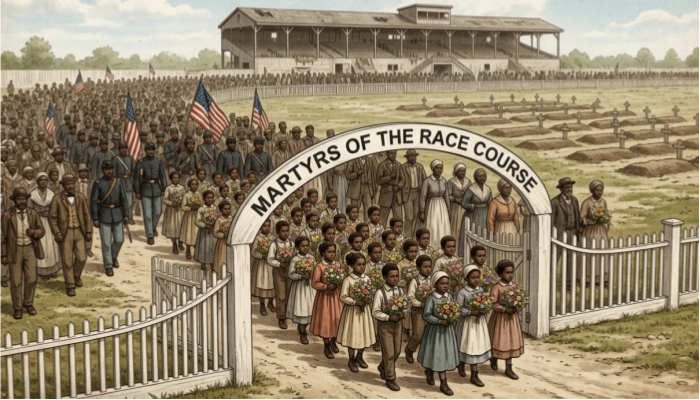
On May 1, 1865, less than a month after the Confederate surrender, about 10,000 newly freed Black Americans gathered at Charleston, South Carolina’s old Washington Race Course. The site had served as a Confederate prison camp where 257 Union soldiers had died and been buried in a mass grave behind the grandstand.
In the weeks before the ceremony, Charleston’s Black residents exhumed the remains, gave them proper burial, and built an arched fence inscribed “Martyrs of the Race Course.” The procession was led by 3,000 schoolchildren carrying flowers.
Yale historian David Blight rediscovered the story in a Harvard archive in the late 1990s; before that, it had been almost entirely forgotten.
3. In 1866, a Mississippi Memorial Day ceremony decorated both Confederate AND Union graves.
On April 25, 1866, the women of Columbus, Mississippi, gathered at Friendship Cemetery to honor Confederate soldiers who had fallen at the Battle of Shiloh. When they noticed the unmarked graves of Union soldiers nearby, they covered those with flowers too. The gesture of reconciliation drew national press coverage and inspired the popular poem “The Blue and the Gray” by Francis Miles Finch. President Obama cited the Mississippi ceremony in a 2010 weekly address.
4. General John A. Logan made it a national observance in 1868.
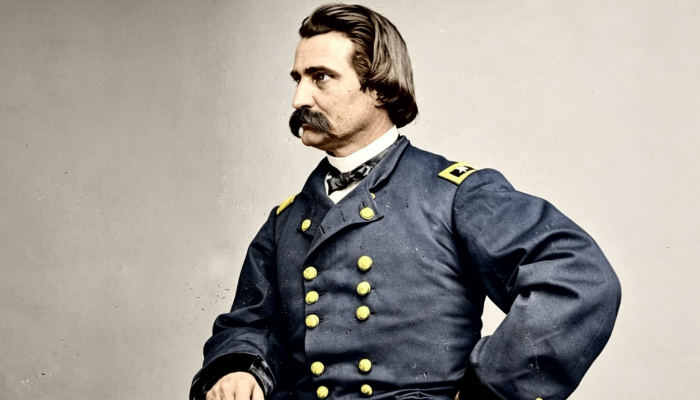
On May 5, 1868, General Logan, commander-in-chief of the Grand Army of the Republic, issued General Orders No. 11 calling for a nationwide Decoration Day on May 30. The first national observance took place at Arlington National Cemetery that year. Future president James Garfield gave the keynote address, and some 5,000 attendees decorated the graves of more than 20,000 Union and Confederate soldiers buried there.
5. May 30 was chosen because no major Civil War battle had occurred on that date.
Logan picked it deliberately. With no battle anniversary attached, neither side could claim it as a partisan date, and spring flowers would be in full bloom for grave decoration.
6. President Lyndon Johnson declared Waterloo, New York the official birthplace in 1966.
The town had hosted a community-wide observance on May 5, 1866, with businesses closing so residents could decorate soldiers’ graves. But the VA’s own records list at least seven serious claimants for the title, including Carbondale, Illinois; Macon, Georgia; and Richmond, Virginia. By some counts, more than 25 places have claimed the founding.
7. New York was the first state to make Memorial Day an official legal holiday.
That happened in 1873. By 1890, every Northern state had followed. Southern states held out longer, observing their war dead on separate dates until after World War I.
8. It originally honored only Civil War dead.
After World War I, the meaning expanded to include American military personnel who died in any war. This is part of why the holiday is now sometimes confused with Veterans Day.
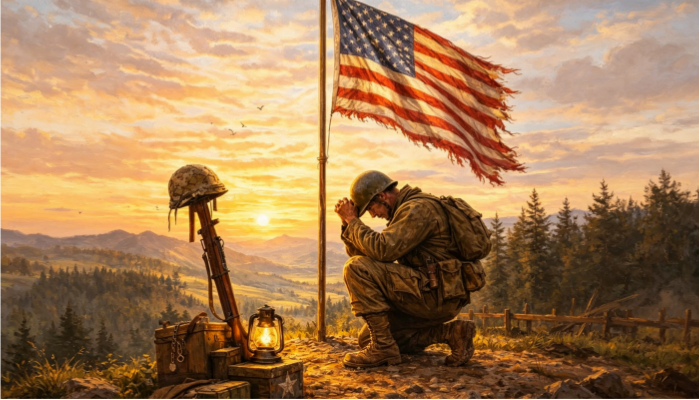
9. Memorial Day became a federal holiday only in 1971.
Congress passed the Uniform Monday Holiday Act in 1968, moving Memorial Day from its long-fixed May 30 date to the last Monday of May to create a three-day weekend. The change took effect in 1971. Many older Americans still remember when Memorial Day always fell on May 30, and several veterans groups have lobbied since the late 1980s to restore the original date.
10. The red poppy tradition came from a World War I poem.
In 1915, Canadian Lieutenant Colonel John McCrae, a military physician moved by the sight of poppies blooming over fresh graves at Flanders Field in Belgium, wrote “In Flanders Fields”. American teacher Moina Michael read the poem in 1918 and began wearing a silk poppy in tribute to fallen American soldiers.
By 1920 the red poppy had become the official American symbol of remembrance.
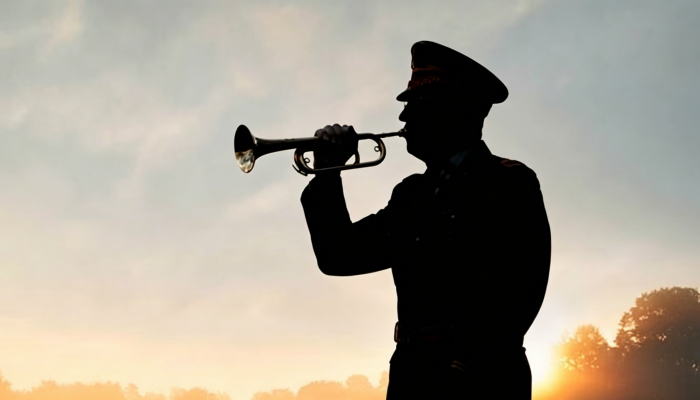
11. “Taps” was composed during the Civil War, in July 1862.
At Harrison’s Landing, Virginia, Brigadier General Daniel Butterfield, a future Medal of Honor recipient, found the standard “lights out” bugle call too formal. Working with his bugler Oliver Willcox Norton, he reworked an older tune called “Tattoo” into the 24-note melody we know today. Within months, both Union and Confederate troops were using it.
In 2012, Congress recognized “Taps” as the National Song of Remembrance.
12. Memorial Day has its own specific flag etiquette.
The U.S. flag is raised briskly to full-staff, then slowly lowered to half-staff until noon, signifying mourning. At noon, it is raised back to full-staff for the rest of the day, signifying the resolve of the living to carry forward the work of those who fell.
13. There’s a National Moment of Remembrance at 3 p.m. local time.
In 2000, Congress passed the National Moment of Remembrance Act, asking Americans to pause for one minute at 3 p.m. local time on Memorial Day in silence or while listening to “Taps.” The bill was a direct response to that 1996 anecdote — Carmella LaSpada, founder of the nonprofit No Greater Love, launched the initiative after hearing the schoolchildren’s answer.
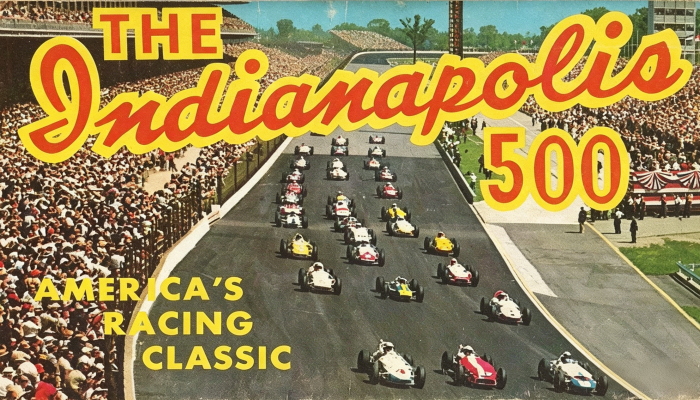
14. The Indianapolis 500 has been tied to Memorial Day since the very first race in 1911.
The inaugural Indy 500 ran on Decoration Day, May 30, 1911. Speedway organizers picked the date deliberately because the previous year’s Decoration Day races had been their most successful event of the season. The race has been held on Memorial Day weekend ever since, including this year’s 110th running on Sunday, May 24, 2026.
Pre-race ceremonies still include a playing of “Taps” and a military flyover, alongside the more famous singing of “Back Home Again in Indiana” and the command to start engines.
15. The Tomb of the Unknown Soldier has been guarded continuously since July 2, 1937.
At Arlington National Cemetery, sentinels of the 3rd U.S. Infantry Regiment, known as “The Old Guard,” have stood watch around the clock, in every weather condition, since the Army issued the order. The watch has not stopped during hurricanes, blizzards, or the September 11 attacks. Each Memorial Day, the President or Vice President lays a wreath at the tomb.
Ending Thought
At the first national Decoration Day in 1868, James Garfield opened his Arlington speech with a confession: “I am oppressed with a sense of the impropriety of uttering words on this occasion.” That morning, his audience stood at the new graves of 20,000 Civil War dead. On Monday, May 25, 2026, at 3 p.m. local time, Americans are asked to observe one minute of silence.
The Department of Veterans Affairs counts more than 1.2 million Americans who have died in U.S. military service since 1775. The minute is for them.
You Might Also Enjoy
30 Surprising Facts About Plants You Probably Never Knew
31 Things You Didn’t Know About Easter
30 Fun Facts About Human Body That Will Change How You See Yourself