
Right now, as you read this sentence, roughly 50,000 cells in your body just died and were replaced by new ones.
Your stomach is producing acid strong enough to corrode metal. And your skin — every square inch of it — is emitting a faint glow that no human eye can detect. The human body runs on systems so strange.
Here are 30 fun facts about human body that you definitely heard before.
30 Fun Facts About Human Body
1. You were born with nearly 100 extra bones.
Many of those infant bones are soft cartilage that gradually fuses as the child grows. The skull alone starts as five separate plates, connected by soft spots called fontanelles, which allow the head to compress during birth.
The two halves of the jaw? Separate bones in a newborn, fused into one by early childhood. The entire process — called ossification, it fully complete until around age 25.
2. Your brain is the fattiest organ in your body.
Strip away the water, and the human brain is approximately 60 percent fat. That makes it the most fat-dense organ you own.
These aren’t wasted calories — fatty acids like DHA form the structural backbone of neuronal membranes and myelin sheaths, the insulation that lets nerve signals travel fast.
Epidemiological studies have linked diets rich in omega-3 fatty acids to lower rates of cognitive decline, which is one reason the Mediterranean diet keeps showing up in brain health research.
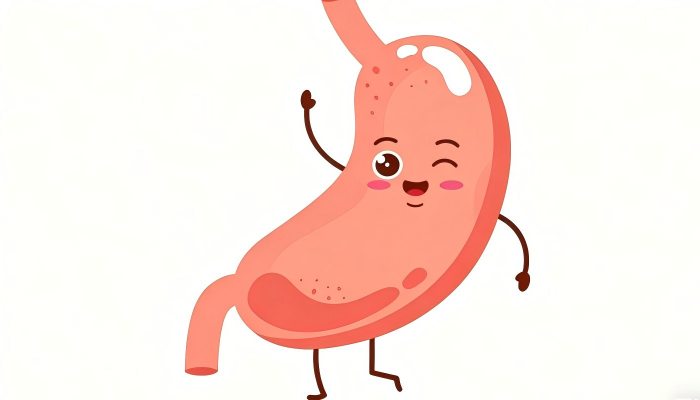
3. Your stomach acid can eat through a razor blade.
In a 1997 study published in Gastrointestinal Endoscopy, researchers dropped double-edged razor blades into simulated gastric juice and waited. After 24 hours, the blades had lost 37 percent of their original weight. The thickened back of a single-edged blade dissolved entirely in just two hours.
Pennies, by contrast, sat in the acid completely unaffected.
The stomach’s secret weapon is hydrochloric acid, with a pH between 1 and 2 — strong enough to corrode steel, yet kept in check by a mucus lining that replaces itself every few days.
4. Your skin could cover a standard door.
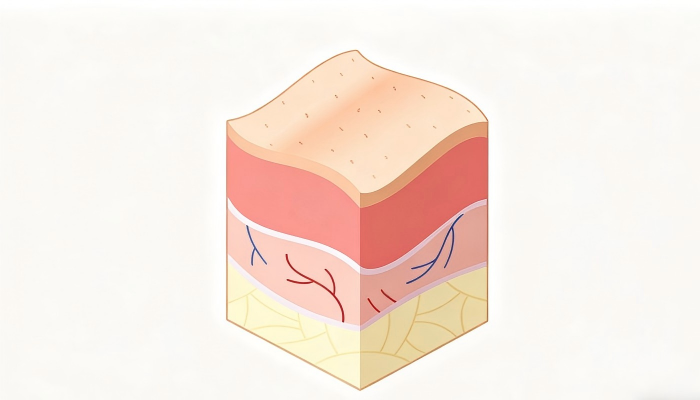
Skin is the body’s largest organ, stretching about 22 square feet across an average adult.
It weighs around eight pounds and performs triple duty as a waterproof barrier, temperature regulator, and sensory receptor.
And it never stops shedding: you lose approximately 30,000 to 40,000 dead skin cells every hour, which means most of the dust in your house used to be you.
5. Your nose outperforms your eyes and ears combined.
Here’s one of the most amazing facts about the human body that scientists got wrong for almost a century.
Textbooks claimed humans could distinguish about 10,000 odors — a number dating back to a 1927 estimate that nobody had actually tested.
Then in 2014, neurobiologist Leslie Vosshall at Rockefeller University put the question to a proper experiment. Her team mixed 128 odor molecules into different combinations and had 26 volunteers sniff their way through hundreds of samples.
The result, published in Science: the human nose can discriminate at least one trillion distinct scents. That dwarfs the estimated 10 million colors our eyes can see and the roughly 340,000 tones our ears can detect.
6. Your blood vessels could circle the planet four times.
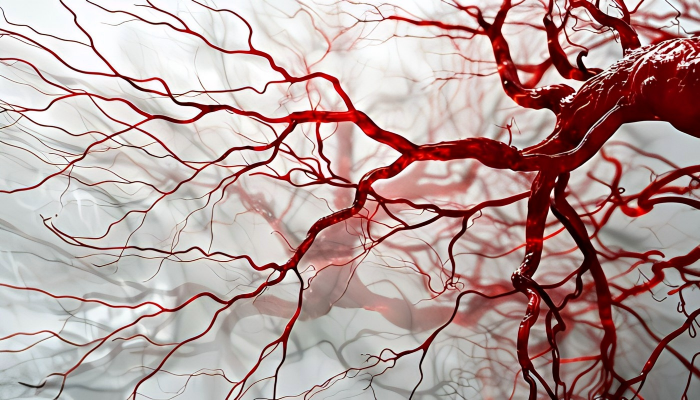
Lay out every artery, vein, and capillary in an adult body end to end, and you’d have roughly 60,000 miles of tubing — enough to wrap around Earth’s equator four times over.
Most of that length belongs to capillaries, the microscopic vessels where oxygen and nutrients actually pass into tissues. Your heart pumps blood through this entire network about once every minute.
7. The word “muscle” means “little mouse.”
The Latin word musculus translates literally to “little mouse.”
Ancient Romans looked at a flexing bicep and saw something that resembled a small mouse running beneath the skin. The name stuck.
Today your body houses more than 600 muscles, from the powerful gluteus maximus that keeps you upright to the tiny stapedius deep inside your ear — smaller than a grain of rice — that protects your hearing from loud sounds.
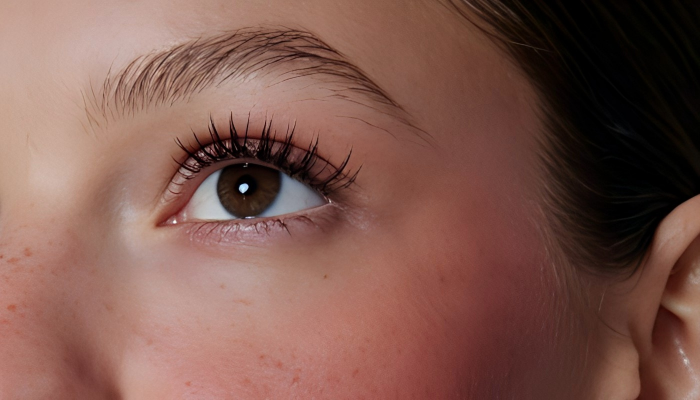
8. Your corneas are the only tissue that runs on air.
The cornea is one of only two tissues in the human body — cartilage being the other — that contains zero blood vessels. It gets its oxygen directly from the atmosphere.
Scientists couldn’t explain why until 2006, when researchers at Harvard’s Schepens Eye Research Institute identified a protein called VEGFR-3 that actively blocks blood vessel growth in the cornea.
Without that protein, vessels would cloud the transparent surface, and your vision would blur.
9. Your gut manufactures 95 percent of your happiness chemical.
The gut microbiome produces approximately 95 percent of the body’s serotonin — the neurotransmitter that stabilizes mood, regulates sleep, and influences digestion.
Your gastrointestinal tract contains its own independent nervous system, sometimes called the “second brain,” with enough neurons to operate even if the vagus nerve connecting it to your actual brain were severed.
That gut feeling you get before a big decision? It’s more literal than metaphorical.
10. Your heart syncs to the beat of the music you’re listening to.
Studies have found that your cardiovascular system mirrors the tempo of whatever song is playing. Crescendos drive up blood pressure, heart rate, and breathing. Quiet passages bring them back down. Repeated rhythmic patterns can even cause your heart to synchronize with the beat.
The effect is stronger with familiar music — another reason your favorite song from 1978 still makes you feel something a playlist algorithm can’t replicate.

11. Your skeleton is younger than you think.
Bones aren’t the static scaffolding they appear to be. They’re constantly breaking down and rebuilding through a process called remodeling.
Old bone is dissolved, its calcium released into the bloodstream, and new bone is laid in its place.
The cycle is so thorough that your entire skeleton is essentially replaced every 10 years.
12. Your nose and lungs can taste.
In 2009, researchers discovered that the cilia lining your nasal passages and lungs contain bitter taste receptors. When these microscopic hairs detect a bitter substance — nicotine, for example: they speed up their sweeping motion to expel the irritant.
Your respiratory system is essentially tasting the air and deciding what doesn’t belong, long before anything reaches your conscious awareness.
13. Your hair keeps a diary of your sleep schedule.
In 2010, Makoto Akashi at Yamaguchi University discovered that hair follicle cells contain RNA from circadian clock genes — and their activity peaks match individual sleep-wake cycles.
The earliest riser in the study showed the earliest peak in clock gene expression. When researchers disrupted subjects’ sleep schedules, the hair follicles lagged behind by about two and a half hours.
In shift workers, the lag stretched to five hours — which may help explain the health problems associated with irregular schedules.

14. Your nerve signals travel at freeway speed.
Electrical impulses race through your nervous system at roughly 270 miles per hour — comparable to a Japanese bullet train at top speed.
That’s fast enough to send a signal from your toe to your brain and back in a fraction of a second.
Not all nerves move at the same speed, though. Pain signals from a stubbed toe travel on slower fibers, which is why there’s a brief delay between impact and agony.
15. Your appendix isn’t useless after all.
For generations, the appendix was dismissed as a vestigial organ — an evolutionary leftover with no function.
Recent research suggests otherwise. The appendix appears to serve as a safe house for beneficial gut bacteria, a reserve colony that can repopulate the intestines after a severe illness like food poisoning or cholera wipes out the gut flora.
People who’ve had their appendix removed may take longer to recover healthy gut bacteria after digestive infections.
16. You are literally glowing right now.
In 2009, a team from Japan’s Tohoku Institute of Technology pointed ultra-sensitive cameras at five volunteers in a sealed dark room and captured something remarkable: the human body emits visible light.
The glow is about 1,000 times too faint for human eyes to detect. It peaks around the forehead and cheeks in late afternoon and dips to its lowest levels late at night, following the body’s circadian rhythm.
17. You shed and rebuild faster than you realize.
In the time it takes to read this paragraph, roughly 50,000 of your cells will die and be replaced by fresh ones.
Your stomach lining replaces itself every five days. You get a new layer of skin about once a month. A new liver every six weeks. The body is less a fixed object than a continuous process — tearing itself down and rebuilding around the clock, without you noticing.
18. You produce enough saliva to fill two swimming pools.
Over a lifetime, the average person generates about 25,000 quarts of saliva — enough to fill two standard swimming pools.
Daily output is roughly one liter, most of it produced during meals. Saliva does far more than moisten food: it contains enzymes that begin digesting starches before you swallow, antibacterial compounds that protect your teeth, and proteins that help wounds inside the mouth heal faster than cuts elsewhere on your body.
19. Your feet may grow a full shoe size by age 70.
After decades of walking, the tendons and ligaments in your feet gradually weaken. Arches flatten. Feet get wider and longer. By age 70 or 80, many people have gained a full shoe size compared to their 20s.
It doesn’t happen to everyone — factors like weight, swelling, and conditions like diabetes increase the odds.
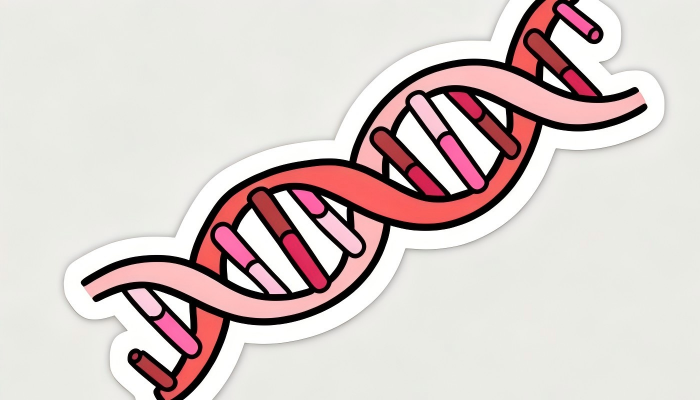
20. Your DNA could stretch to Pluto and back — 17 times.
Each of the roughly 37 trillion cells in your body contains about six feet of DNA, tightly coiled inside the nucleus.
Unravel it all and lay it end to end, and the total length reaches approximately 34 billion miles — enough to make the trip from Earth to Pluto and back 17 times. Yet all of that genetic information fits inside cells far too small to see without a microscope.
21. Hot coffee tastes less bitter because of your biology, not the coffee.
By age 60, most people have lost about half of their taste buds. But temperature plays a role, too.
Research has shown that bitter taste receptors are most sensitive near room temperature. Hot coffee suppresses the activation of those receptors, which is why the same brew can taste pleasant when steaming and harsh when it cools.
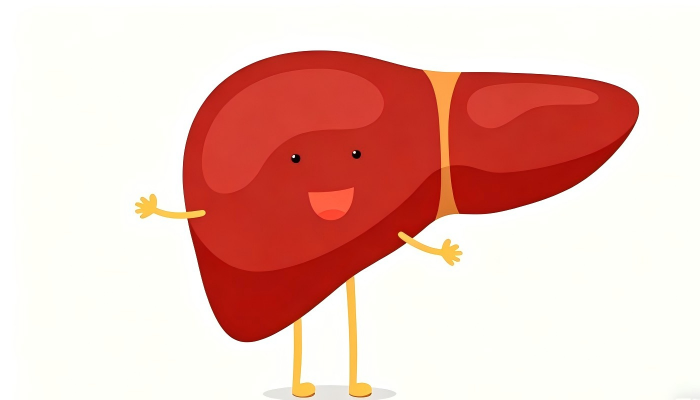
22. Your liver runs hotter than the rest of your body.
While your skin sits around 98.6°F (37°C), your liver — the body’s busiest chemical processing plant — operates at roughly 104°F (40°C).
It’s the hottest internal organ, constantly performing over 500 functions: filtering blood, producing bile, metabolizing drugs, storing vitamins, and generating heat as a byproduct of all that work.
23. Babies barely blink.
Adults blink 10 to 12 times per minute. Newborns? Once or twice.
Scientists aren’t entirely sure why. One theory is that babies’ smaller eyes are less exposed to air and need less lubrication. Another suggests that infants are absorbing so much visual information that blinking — which briefly interrupts sight — would be too costly.
As children age, their blink rate gradually climbs until it matches an adult’s.

24. A sneeze is a 100-mph windstorm.
When you sneeze, air rockets out of your nose at speeds approaching 100 miles per hour, carrying up to 40,000 droplets with it.
And no, you almost certainly can’t keep your eyes open while it happens. The eye-closing reflex is controlled by your brainstem, and it fires automatically with every sneeze. It’s not protecting your eyes from popping out, it’s simply part of the coordinated muscle contraction that powers the sneeze itself.
25. Your lungs are the only organ that can float.
Drop most organs in water and they sink. Lungs float. The reason is structural: each lung contains about 300 million tiny air sacs called alveoli, which keep the tissue buoyant even when deflated.
This same architecture gives your lungs a combined internal surface area of roughly 70 square meters , all packed inside your ribcage.
26. Koalas have fingerprints nearly identical to yours.
In 1996, anatomists at the University of Adelaide examined koala fingertips under a scanning electron microscope and found something startling: their fingerprints — the loops, whorls, and arches — are so close to human prints that distinguishing them requires careful expert analysis.
Koalas are the only non-primates with fingerprints. The trait evolved independently — our last common ancestor lived over 70 million years ago.
Scientists believe both species developed fingerprints as an adaptation to grasping: humans for tools, koalas for selectively picking eucalyptus leaves.

27. When you blush, so does your stomach.
Blushing is triggered by adrenaline, which causes blood vessels to dilate. But adrenaline doesn’t limit itself to your face — it hits blood vessels throughout the body, including the lining of your stomach.
When your cheeks flush red, your stomach lining is doing the same thing. You just can’t see it. It’s one of the few involuntary responses that Charles Darwin once called “the most peculiar and most human of all expressions.”
28. Bone is five times stronger than steel.
Ounce for ounce, bone can withstand more compressive force than a steel bar of equivalent weight. A cubic inch of bone can bear a load of roughly 19,000 pounds — about the weight of five pickup trucks.
The secret is its composite structure: a hard outer shell of compact bone surrounding a lighter, spongy interior, a design that civil engineers have borrowed for building bridges and skyscrapers.
29. You’re taller in the morning than at night.
Measure yourself when you first wake up, then again before bed, and you’ll find a difference of about one centimeter.
The discs between your vertebrae are filled with fluid that compresses under gravity throughout the day. When you lie down to sleep, the discs rehydrate and expand.
Astronauts experience an extreme version of this effect: without gravity, the spine can stretch by up to two inches during a space mission.

30. You are not the same person you were a year ago — literally.
In the 1950s, scientists at Oak Ridge National Laboratory fed volunteers food containing radioactive tracer atoms and watched what happened.
They found that 98 percent of the atoms in the human body are replaced every year. Water molecules swap out every eight days. Carbon atoms turn over within a few months. Even the calcium in your bones dissolves and reforms on a regular cycle.
Dr. Paul Aebersold, who led the research, put it simply: a human body is less a permanent object and more like a regiment — the members change constantly, but the organization persists.
The you sitting here reading this is, at an atomic level, almost entirely different from the you who existed 12 months ago.
Ending Thought
Next time you catch your reflection, remember: the person staring back is rebuilding at a rate of millions of cells per second, running on an electrical system faster than a bullet train, and glowing with a light too faint for any human eye to see.
These fun facts about human body aren’t trivia — they’re a reminder that you’re not just living in your body. Your body is living through you.
You May Also Like
31 Things You Didn’t Know About Easter
25 Fun Facts About Dogs That’ll Make You Love Them Even More