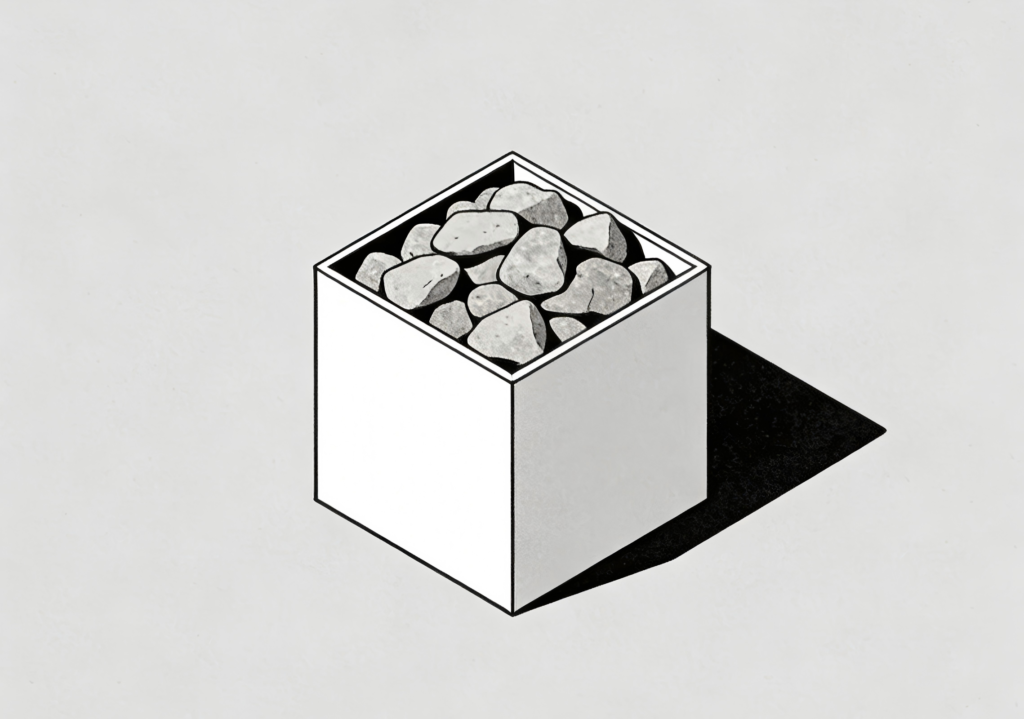
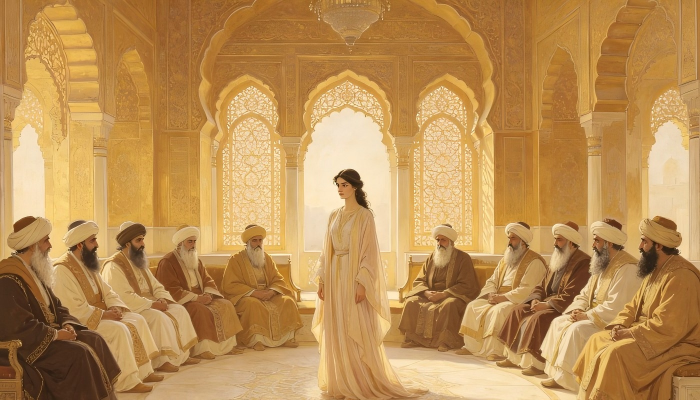
This riddle was posed by a slave girl standing in front of the most powerful scholars in the Islamic Golden Age. They couldn’t answer it. She could. It’s about something every person on earth will eventually need, but no one ever wants to think about.
What thing is it that is built for the living by the living, yet its dweller within is dead and neither speaks nor breathes?
Here’s a hint: it’s the last piece of furniture anyone will ever need.
Click to Reveal the Answer
A Coffin ⚰️
It’s made by the living, for the living to give to the dead. The person inside will never speak, never breathe, and never leave.
The Slave Girl Who Outsmarted the Scholars
This riddle comes from one of the most extraordinary stories in One Thousand and One Nights: the tale of Abu Al-Husn and his slave girl Tawaddud. The story spans Nights 436 to 482, and the setup is simple but brilliant. Abu Al-Husn, a wealthy merchant’s son who has spent his entire fortune, owns one last asset: a slave girl named Tawaddud who claims she is worth ten thousand dinars because of what she knows. To prove it, she is brought before the court of Caliph Harun al-Rashid, where she faces the greatest scholars of the age in a public contest of knowledge.
One by one, Tawaddud defeats them all. She answers questions on Islamic law, medicine, astronomy, chess, music, and poetry. When the scholars try to stump her with riddles, she solves every one and then turns the tables, posing her own riddles that leave them speechless. The coffin riddle is one of these counterattacks: a question so stark and simple that it cuts right through the scholars’ elaborate learning. What is built by the living, for the living, yet only the dead will ever use it? The room falls silent.
What makes the Tawaddud story remarkable is that it’s ultimately about the power of knowledge in the hands of someone the world underestimates. She’s a slave, a woman, and young. By every measure of her society, she shouldn’t be the smartest person in the room. But she is. The tale was so popular that it traveled far beyond the Arabic-speaking world, appearing in medieval Spain as La Doncella Teodor and in Ethiopia as Tauded, each culture recognizing something universal in the story of a brilliant outsider who proves her worth through wit alone.