
The 80s arrived loud and left louder. Between MTV’s first broadcast on August 1, 1981 and the Berlin Wall coming down on the night of November 9, 1989, the decade compressed more cultural change into eight years than most do in twenty: cable rewired the home, the personal computer became a household appliance, and a charity single recorded over a single weekend in November 1984 fed millions in Ethiopia and reshaped what pop music could do.
The 25 questions below cover the music, films, television, technology, and headlines that defined the decade, Try it now!
Play 80s Quiz Now
How well do you really remember the 80s? Not the version Stranger Things sells you—the actual decade, with its blackout summers and Cold War anxieties, its Walkmans humming on commuter trains and a charity single recorded in 24 hours that fed millions. The 25 questions above span from MTV’s first second on the air to the Berlin Wall’s last night standing. If you cleared the 80s quiz without flinching, what follows is the chronicle that explains why those eight years still matter.
Why the 80s Won’t Stop Coming Back
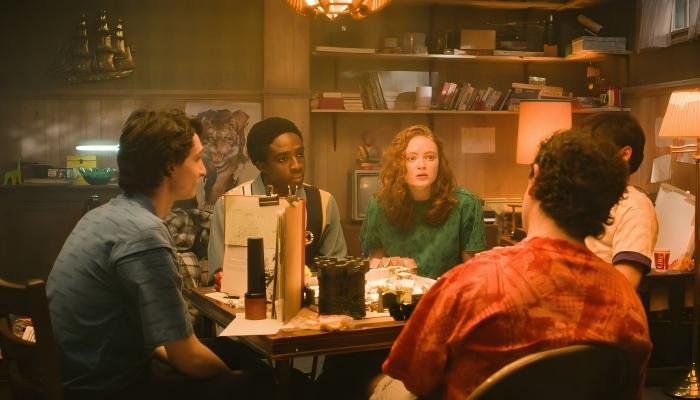
The decade is ostensibly over, but the cultural balance sheet keeps reopening it. Stranger Things arrived in 2016 and turned a generation born after Reagan into archaeologists of synth-pop and Trapper Keepers. Six years later, Kate Bush’s “Running Up That Hill,” released in 1985 and largely dormant outside its UK fanbase, hit #1 on the UK Singles Chart in 2022—37 years late. Top Gun: Maverick grossed $1.49 billion that same year by inviting audiences back into a Tom Cruise cockpit they’d last seen in 1986.
The pattern isn’t accidental. The 80s built the operating system the present still runs on: cable as a delivery system for narrative entertainment, the personal computer as a household appliance, and the global brand as a consumer category. The decade didn’t end. It just stopped advertising itself.
How the Music Crossed the Atlantic
Just past midnight on August 1, 1981, the cable channel MTV opened its broadcast with The Buggles’ “Video Killed the Radio Star“—a British New Wave single that had peaked at #40 in the United States but reached #1 in sixteen other countries. The choice was almost prophetic. Within two years, MTV‘s appetite for visually arresting music had pulled British acts back into American living rooms at a scale unseen since the Beatles.
On July 16, 1983, seven of the top ten singles on the Billboard Hot 100 were British; in the middle of 1985, UK acts scored nine American number ones in a five-month window.
The decade’s center held until the summer of 1985. On July 13, Bob Geldof and Midge Ure—who six months earlier had organized Band Aid’s “Do They Know It’s Christmas?”—staged Live Aid simultaneously at Wembley Stadium in London and JFK Stadium in Philadelphia. An estimated 1.9 billion people in 150 countries watched. Phil Collins played both venues the same day, helicoptered to Heathrow, boarded a Concorde, and sat next to Cher on the flight; he convinced her to come, and she sang in the “We Are the World” finale.
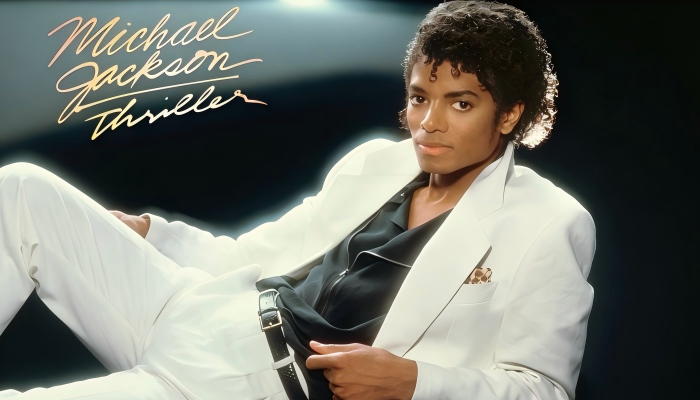
By the end of the decade, Michael Jackson’s Thriller—released November 30, 1982, with a $750,000 recording budget—had become the world’s best-selling album, a record it still holds.
How the 80s Changed What We Watched
In 1980, only about 1 percent of American households owned a videocassette recorder. By 1989, the figure had reached roughly 65 percent. The cassette tape, MTV, and 24-hour cable news together rewrote the relationship between viewer and schedule—for the first time, the audience could choose.
NBC’s Cheers premiered on September 30, 1982, finished dead last in its first season’s ratings, and survived only because NBC needed a hit; eleven years later, its finale pulled in more than 80 million U.S. viewers.
The British counterweight arrived on February 19, 1985, when EastEnders opened on BBC One with 17 million viewers watching a body discovered in an Albert Square armchair.
The 1986 Christmas Day episode, in which Den Watts served Angie divorce papers, drew over 30 million—still among the most-watched non-sporting broadcasts in British television history.

The Toys and Tech That Trained a Generation
The objects that came to define 80s pop culture arrived in waves, each shaping what the next would carry. Sony’s first Walkman, the TPS-L2, went on sale in Japan on July 1, 1979, and reached the U.S. market in June 1980—though American buyers would have asked for a “Sound-About,” British buyers a “Stowaway,” and Swedes a “Freestyle” until Sony unified the brand that November.
The device taught a generation that music could be private, portable, and self-curated. Five years earlier, Hungarian architecture professor Ernő Rubik had patented a wooden teaching aid he called the Magic Cube; rebranded as the Rubik’s Cube and introduced internationally in 1980 by Ideal Toys, it sold an estimated 200 million units worldwide between 1980 and 1983, and in 1981 alone, three of the top ten best-selling books in the United States were guides to solving it.
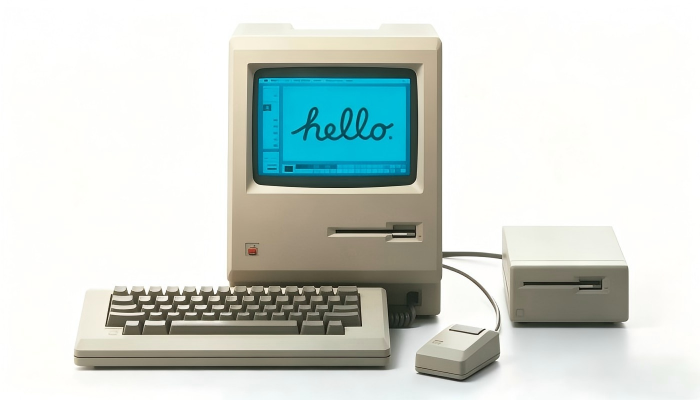
Then on January 22, 1984, during the third quarter of Super Bowl XVIII, Ridley Scott’s “1984” commercial introduced the Apple Macintosh—a 60-second short that Apple’s own board of directors had tried to scrap. They lost. The ad ran. Two days later, the Macintosh shipped, and the personal computer became something a household could imagine owning.
How You Did
The decade closed faster than it opened. On the night of November 9, 1989, an East German press secretary misread a directive at a routine press conference and announced that travel restrictions would be lifted “immediately”—by midnight, Berliners were dancing on the Wall they had spent twenty-eight years living beside. Two months later, the 80s were over.
If you scored 22 or higher on this 80s quiz, you almost certainly lived the decade as an adult. Sixteen to twenty-one suggests you watched a lot of VH1. Anything below that, you may have missed some background knowledge about your upbringing.
You Might Also Like
How Well Do You Really Know Michael Jackson? Take This 25-Question Quiz to Find Out
30 Fun Facts About the Beatles Most People Don’t Know
10 Best 80s Horror Movies and the Wild Stories Behind Their Making