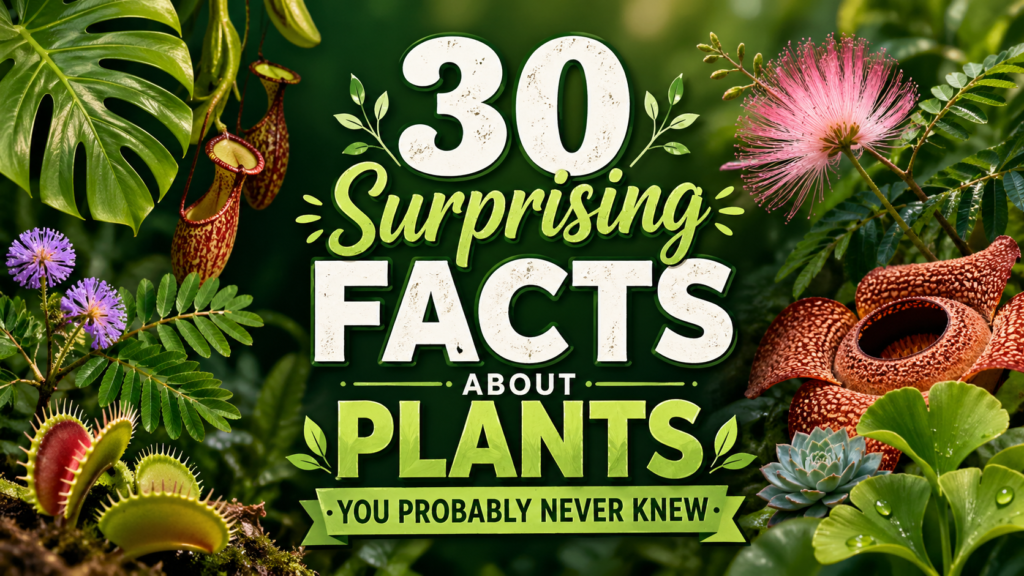
There are more than 300,000 known plant species on Earth. We eat roughly 30 of them. That ratio alone should tell you something: the plant kingdom is vast, strange, and almost entirely unexplored by most of us.
Plants communicate, deceive, wage chemical warfare, and outlive civilizations. Some have crashed economies. Others have survived since before the pyramids existed. Here are 30 surprising facts about plants that will make you rethink everything growing in your backyard — from amazing plant trivia to deeply strange science.
They Sense More Than You Think
1. Plants make sounds when they’re stressed — you just can’t hear them.
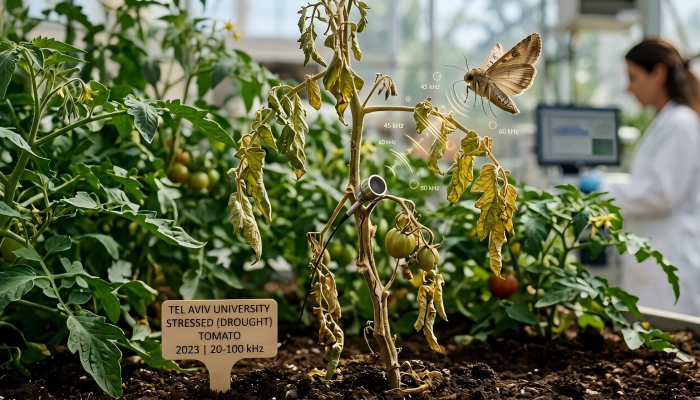
In 2023, a team at Tel Aviv University proved something scientists had debated for years: plants emit airborne sounds. Using ultrasonic microphones in a soundproofed chamber, Prof. Lilach Hadany and her colleagues recorded tomato and tobacco plants clicking at frequencies between 20 and 100 kHz — well above human hearing range, but perfectly audible to bats, mice, and moths.
A thirsty tomato plant produced roughly 35 clicks per hour. A healthy one was nearly silent. Machine learning algorithms could even distinguish between drought stress and physical injury based on sound alone. A follow-up study in 2025 revealed that female moths use these sounds to decide where to lay their eggs, avoiding plants that sound distressed. An idyllic field of flowers, it turns out, may be a rather noisy place.
2. Young sunflowers chase the sun across the sky — then stop.
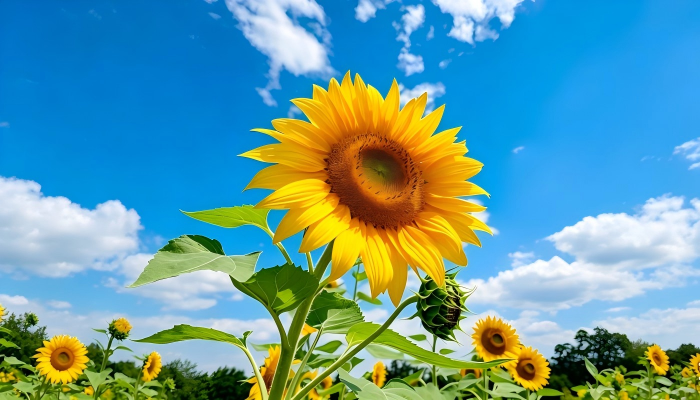
Before they mature, sunflowers track the sun from east to west each day through a process called heliotropism. The east side of the stem grows faster during the day, pushing the head westward. At night, the pattern reverses, resetting the flower to face east by dawn.
Once the sunflower matures, it locks into a permanent eastward position. Why? East-facing flowers warm up faster in the morning, and researchers at UC Davis found they attract up to five times more pollinators than west-facing ones. The tracking wasn’t random. It was a strategy.
3. A sunflower head isn’t one flower — it’s up to 2,000.
That big yellow disc you think of as a single bloom is actually a dense cluster of up to 2,000 tiny individual flowers called florets. Each one can produce its own seed. Look closely, and you’ll notice the florets spiral outward in two interlocking patterns — typically 34 spirals one way and 55 the other.
Those numbers belong to the Fibonacci sequence, a mathematical pattern that shows up everywhere from seashells to galaxies. In a sunflower, it’s just efficient packing.
4. The Venus flytrap can count.
A Venus flytrap won’t snap shut at the first touch. An insect has to trigger the tiny hair-like sensors inside the trap at least twice within about 20 seconds. One touch primes the trap. The second closes it. This mechanism prevents the plant from wasting energy on raindrops, pollen, or wind-blown debris — closing and reopening a trap drains resources, and each trap can only do it a handful of times before it dies and falls off.
Charles Darwin called the Venus flytrap “one of the most wonderful plants in the world.” He wasn’t exaggerating. It’s one of the very few plants on Earth capable of rapid, visible movement.
They Talk to Each Other
5. Plants gossip through underground chemical networks.
Plant roots secrete tiny amounts of chemicals into the surrounding soil — substances scientists call root exudates.
These aren’t waste products. They’re signals. Researchers have identified more than 100,000 different chemical compounds that roots can produce, each carrying specific information.
In a 2011 experiment, scientists induced drought stress in a single pea plant and watched as neighboring plants — connected through shared root systems — closed their stomata to conserve water, even though they weren’t stressed themselves. Plants that didn’t share root access showed no response. Even more striking: plants can distinguish between siblings, same-species strangers, and entirely different species, and they adjust their root growth accordingly.
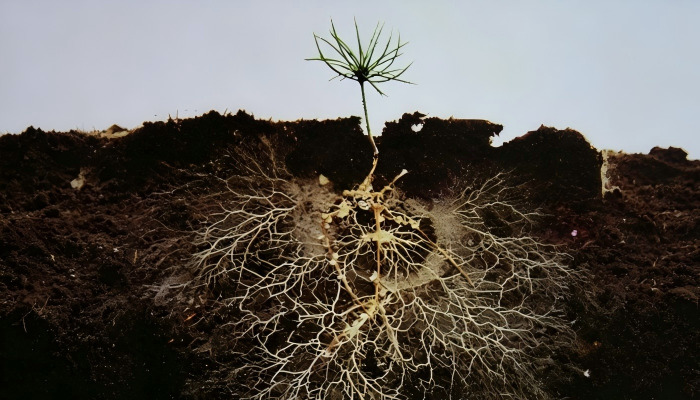
6. The “Wood Wide Web” connects entire forests.
Those root-level conversations aren’t just one-on-one. Beneath most forests lies a vast network of mycorrhizal fungi — thread-like organisms that attach to tree roots and extend the root system far beyond what the tree could reach alone. The fungi absorb minerals from the soil and share them with the tree. In return, the tree feeds the fungi sugars it produces through photosynthesis.
One fungus can connect to many trees. One tree can partner with many fungi. The result is a sprawling underground network through which trees share nutrients, water, and chemical alarm signals. Researchers have documented a 40-meter spruce sharing carbon with shorter beech, larch, and pine trees through this network. It’s cooperation at a scale we’re only beginning to map.
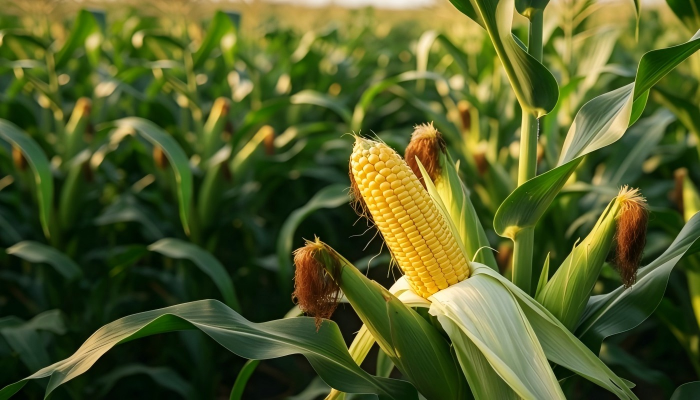
7. Corn plants call for backup when under attack.
When caterpillars start chewing on corn leaves, the plant doesn’t just sit there. It releases a cocktail of volatile organic compounds — green leafy chemicals that drift through the air and accomplish two things simultaneously.
First, they attract parasitic wasps and other predators that feed on the caterpillars. Second, they warn neighboring corn plants, which begin producing a protective acid normally triggered only by direct physical damage. The neighbors arm themselves before a single caterpillar reaches them. It’s not quite a scream. But it’s not silence, either.
8. The smell of freshly cut grass is a distress signal.
That clean, green scent you associate with summer weekends? It’s a blend of volatile organic compounds — mainly green leaf volatiles like hexenal — released by grass cells when they’re torn apart. The function is similar to what corn does: the chemicals attract predatory insects that feed on whatever is damaging the plant.
You’re not smelling freshness. You’re smelling a lawn full of plants calling for help. Once you know this, mowing on a Saturday morning feels a little different.
They Cheat, Trick, and Deceive
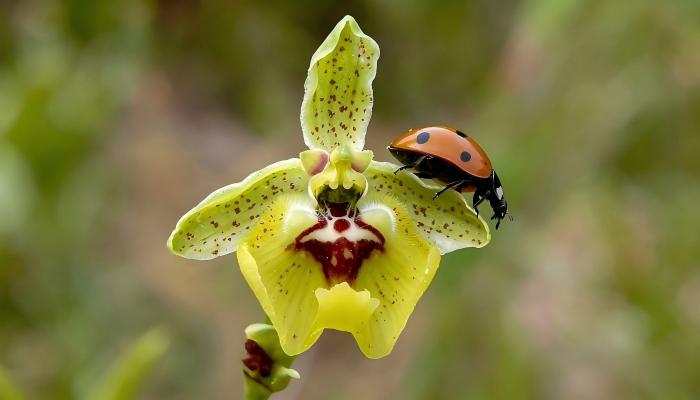
9. Some orchids con insects into mating with them.
Certain orchid species have evolved flowers that mimic the appearance, texture, and even the pheromones of female wasps. Male wasps land on the flower and attempt to mate with it. In the process, they pick up pollen, which they carry to the next convincing fake. The orchid offers no nectar, no reward of any kind.
It’s pure deception — visual, chemical, and tactile — perfected over millions of years of evolution. The pollinator gets nothing. The orchid gets everything.
10. The world’s largest flower smells like a rotting corpse.
Rafflesia arnoldii produces blooms that can stretch more than three feet across and weigh up to 15 pounds. It has no roots, no stems, and no leaves. It exists entirely as a parasite inside the woody Tetrastigma vine in the rainforests of Borneo and Sumatra, invisible until the flower erupts through the vine’s bark.
The bloom lasts roughly five days. Its scent — an overpowering stench of decaying flesh — attracts carrion flies, which crawl into the flower’s central chamber and emerge coated in pollen. The smell is the strategy.
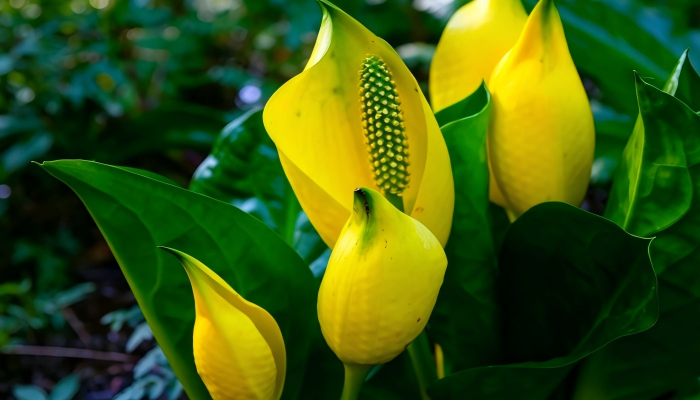
11. Skunk cabbage generates enough heat to melt through snow.
Eastern skunk cabbage is one of the first plants to bloom in North America each spring — sometimes as early as February, while snow still covers the ground. It pulls this off through thermogenesis: the flower’s spadix burns starch stored in its massive root system, producing internal temperatures up to 35°C (63°F) above the surrounding air.
This heat melts a circle of snow around the plant and wafts its smell — driven by chemicals literally named putrescine and cadaverine — into the winter air, luring flies and beetles in search of a meal. The heat lasts 12 to 14 days. The roots, meanwhile, grow downward rather than upward, pulling the stem deeper into the mud each year. Old skunk cabbage is nearly impossible to dig up.
12. Caffeine is a pesticide — not a pick-me-up.
The caffeine in your morning coffee didn’t evolve for your benefit. In the coffee plant, caffeine functions as a natural insecticide, toxic to most insects that try to feed on the leaves and seeds. Tea plants developed theine — chemically identical to caffeine — for the same reason. But the story has a twist. Some plants produce low concentrations of caffeine in their nectar.
Research published in Science found that honeybees exposed to caffeinated nectar were significantly better at remembering which flowers to revisit. The plants were drugging their pollinators into loyalty.
They’ve Been Here Longer Than Almost Everything
13. The oldest living tree predates the Egyptian pyramids by centuries.
In the White Mountains of eastern California, a Great Basin bristlecone pine named Methuselah has stood for approximately 4,853 years. It was already centuries old when the first stones of the Great Pyramid at Giza were laid. In 2012, another bristlecone nearby was dated at over 5,060 years — potentially the oldest individual non-clonal organism on record.
The U.S. Forest Service keeps the exact locations of both trees secret to prevent vandalism. Bristlecone pines survive precisely because their environment is brutal: freezing temperatures, arid soil, relentless wind. They grow so slowly that some years they don’t add a single ring. Their wood becomes incredibly dense, resistant to insects, fungi, and rot. Even their needles can live up to 30 years.
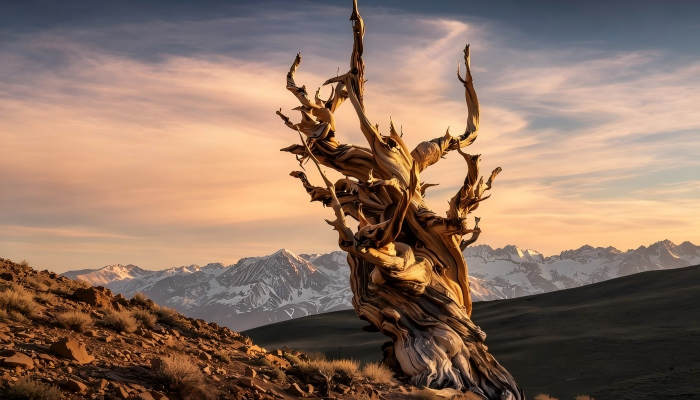
14. A graduate student accidentally cut down the world’s oldest known tree.
In 1964, a graduate student named Donald Currey was studying climate history on Wheeler Peak in Nevada. He needed a core sample from a bristlecone pine called Prometheus. When his coring tool broke inside the tree, Forest Service personnel helped him cut it down. The ring count revealed at least 4,862 years — possibly over 5,000, depending on corrections for missing rings.
Nobody had known before the saw touched bark. The incident generated outrage, but it also galvanized public support for protecting the area. Twenty-two years later, the site became Great Basin National Park. Currey himself testified before Congress in favor of its creation.
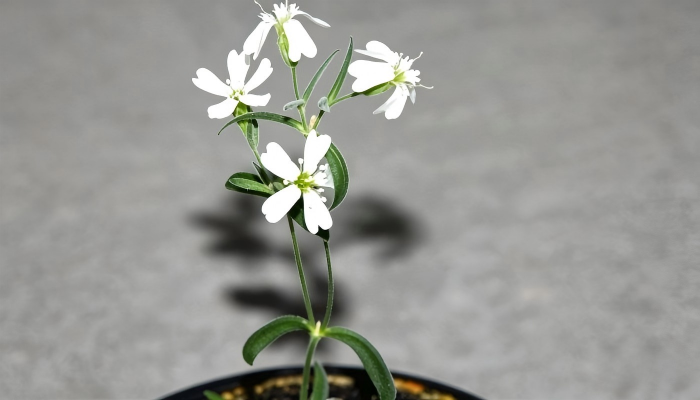
15. Scientists grew a plant from 32,000-year-old seeds.
In 2012, a Russian team at the Institute of Cell Biophysics published a paper in Proceedings of the National Academy of Sciences that stunned the botanical world. They had regenerated living Silene stenophylla — narrow-leafed campion — from fruit tissue frozen 38 meters below the Siberian permafrost for approximately 32,000 years.
The seeds were found in an Ice Age ground squirrel’s food cache, surrounded by mammoth, bison, and woolly rhinoceros bones. The mature seeds were damaged, probably by the squirrel itself, to prevent germination. But immature seeds still contained viable tissue. The regenerated plants grew, flowered, and produced seeds with a 100% germination rate — better than their modern counterparts, which managed only 86 to 90%.
The previous record holder was a 2,000-year-old date palm. This discovery obliterated it by 30 millennia.
16. The world’s largest organism is one plant pretending to be a forest.
In Utah’s Fishlake National Forest stands a grove of roughly 47,000 quaking aspen trees covering 106 acres. Every single one shares the same root system. Genetically, they are identical — one vast clonal organism nicknamed Pando, Latin for “I spread.” Individual trunks above ground average about 130 years old, but the root system is conservatively estimated at 9,000 to 16,000 years.
That makes Pando not just the largest known plant, but the largest known organism of any kind, and one of the oldest living things on Earth. What looks like a forest is a single individual.
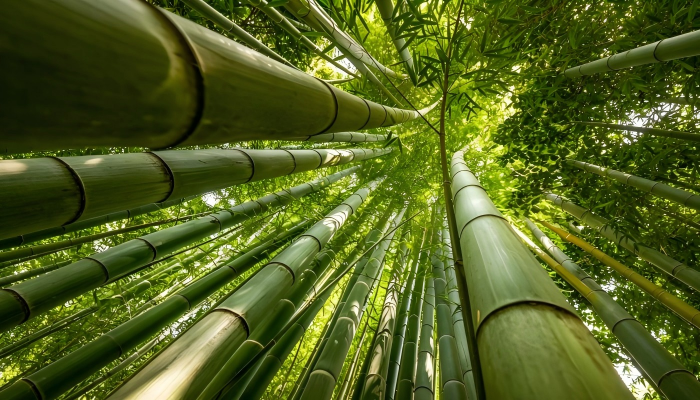
17. Bamboo can grow nearly a meter in a single day.
Certain bamboo species have been recorded growing at rates of up to 91 centimeters (about 35 inches) in 24 hours — making bamboo the fastest-growing woody plant on the planet. For perspective, human hair grows roughly 0.015 centimeters per day. Bamboo outpaces it by a factor of about 6,000. There are over 1,500 species of bamboo worldwide, native to every continent except Europe and Antarctica.
18. The world’s smallest flowering plant is nearly invisible.
On the opposite end of the spectrum sits Wolffia globosa, commonly known as Asian watermeal. Each individual plant measures just 0.1 to 0.2 millimeters across — smaller than the tip of a needle. It’s a floating aquatic plant with no leaves, no stems, and no roots. It’s just a tiny green speck. To grasp the range: the plant kingdom spans from Wolffia, which you could miss on your fingernail, to Pando, which covers 106 acres.
They Changed Human History
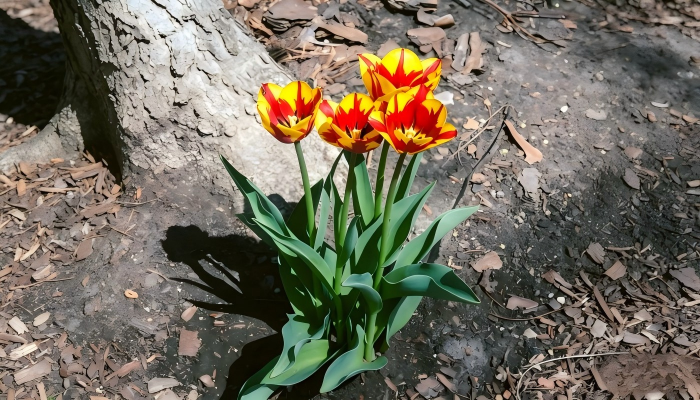
19. A virus made tulips so beautiful it crashed the Dutch economy.
In the 1630s, the most prized tulips in the Netherlands displayed dramatic flame-like streaks of color across their petals — vivid reds and whites, purples and yellows. What no one knew at the time was that this effect was caused by a mosaic virus now called the Tulip Breaking Virus.
The virus made the flowers stunning. It also slowly killed the bulbs, reducing their ability to reproduce and shrinking the supply of the most coveted varieties. Prices rose accordingly. By the winter of 1636-1637, tulip speculation had become a frenzy. A single Semper Augustus bulb — white petals with crimson flames — reportedly sold for the equivalent of 12 acres of farmland. Another variety fetched a coach, two horses, and a silver goblet.
Bakers and bricklayers quit their trades to speculate full-time. In February 1637, the market collapsed. It is widely regarded as the first recorded speculative bubble in history.
20. Carrots were purple before they were orange.
The earliest cultivated carrots, grown in the Persian Empire around the 10th century, came in purple and white. Orange carrots are the result of a natural genetic mutation, later selected and bred by Dutch growers in the 17th century. Today, you can still buy purple, white, yellow, and red carrots at farmers’ markets — all nutritionally packed. But the orange one won the popularity contest, and most people have no idea it’s the newcomer.
21. Brazil is named after a tree.
The country of Brazil takes its name from Paubrasilia echinata, a tree commonly called brazilwood. Portuguese colonizers prized the wood for its deep red dye — so intensely that the tree became the economic engine of early colonial trade. The exploitation was so thorough that Brazilwood is now endangered. But the name stuck. An entire nation, named after a single species.
22. The most expensive spice in the world requires 75,000 flowers to produce one pound.
Saffron comes from the stigmas of the Crocus sativus flower. Each bloom produces exactly three delicate crimson threads, and they must be hand-picked — usually at dawn, before the sun wilts the petals. The harvest window is one to two weeks per year. A skilled worker can process roughly 150 to 200 flowers per hour. Iran produces about 90% of the world’s supply, and saffron has been cultivated for over 3,500 years. One pound costs upward of $1,000. That price isn’t markup. It’s arithmetic.

23. Potatoes were the first vegetable grown in space.
In 1995, potato plants became the first food crop cultivated outside Earth’s atmosphere, grown aboard a NASA space shuttle mission. On the ground, the potato’s resume is equally impressive: humans first cultivated it roughly 7,000 years ago in what is now Peru. From ancient Andean terraces to orbital growth chambers — not a bad run for a root vegetable.
Fun Facts About Plants in Your Own Backyard
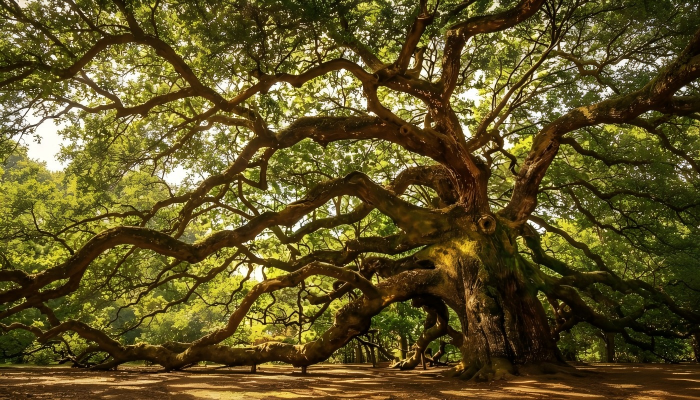
24. Oak trees get struck by lightning more than any other tree.
Oaks are disproportionately targeted by lightning strikes, likely due to a combination of their height, deep root systems, and high water content, all of which create an efficient path for electrical current. Ancient cultures noticed. The Greeks associated the oak with Zeus, god of thunder. The Romans linked it to Jupiter. The Norse connected it to Thor. The tree’s sacred status across multiple civilizations wasn’t arbitrary — it was observational.
25. Dandelions are more nutritious than most vegetables in your fridge.
A single cup of dandelion greens contains between 7,000 and 13,000 IU of vitamin A, along with significant iron, calcium, and potassium. The flowers, leaves, and roots are all edible. Most people spray them with herbicide. A few centuries ago, they were a deliberate garden staple.
26. Roses are related to apples, cherries, and strawberries.
They all belong to the Rosaceae family. Peaches, plums, apricots, and almonds are in there too. The bouquet you sent last Valentine’s Day and the pie you ate last Thanksgiving share a family tree. Rose petals, incidentally, are also edible.
27. A single tree can produce enough wood for 170,000 pencils.
One average-sized mature tree yields approximately 170,100 pencils. It sounds like a piece of random plant trivia, but it lands differently when you consider that we tend to think of trees as scenery, not as the raw material for nearly every physical thing we’ve built for the past ten thousand years.

28. The Venus flytrap exists in the wild in only one tiny corner of the planet.
Despite being one of the most recognized plants on Earth, the Venus flytrap (Dionaea muscipula) grows naturally only within a roughly 120-kilometer radius of Wilmington, North Carolina. That’s it. Nowhere else.
A 2019 survey counted approximately 302,000 individuals remaining in the wild — down from an estimated 4.5 million in 1979. That’s a decline of more than 93% in four decades, driven by poaching, habitat destruction, and fire suppression. Darwin’s “most wonderful plant” is running out of room.
The Bigger Picture
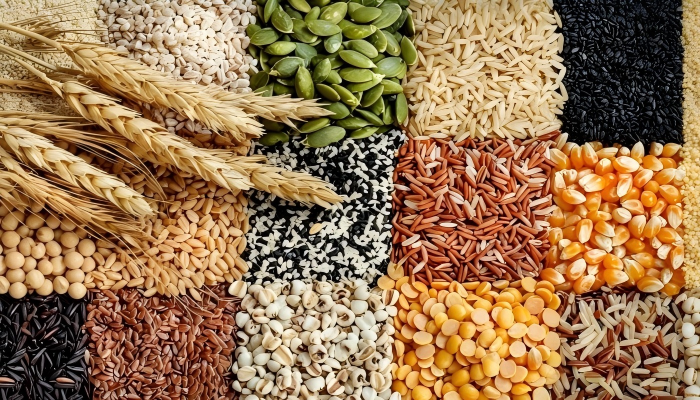
29. Ninety percent of the food you eat comes from just 30 plants.
Rice, wheat, and corn alone account for a staggering share of global nutrition. That concentration isn’t just surprising — it’s dangerous. Climate change, new pests, and shifting rainfall patterns could devastate any one of these crops. The safety net? Wild relatives of domesticated species are naturally adapted to a range of environmental extremes. But many of those wild cousins are themselves under threat.
30. Nearly two-thirds of all plant species may be endangered.
Of the roughly 320,000 known plant species, an estimated 64% face some degree of extinction risk. Trade in medicinal plants has tripled over the past two decades, and 75% of those plants are still harvested from the wild. Every species that disappears takes with it a potential medicine, a food source, an ecological role we may not even understand yet.
There are 300,000 plant species. We’ve barely studied a fraction. And most of them may not survive the century.
Next time you walk through your garden, mow the lawn, or pour a cup of coffee — remember these surprising facts about plants. The ones around you are talking, scheming, and surviving in ways that took us thousands of years to even begin to notice. Maybe it’s time to start paying attention.
You Might Also Like
30 Fun Facts About Human Body That Will Change How You See Yourself
30 Fun Facts About Music That Sound Too Wild to Be True
25 Fun Facts About Dogs That’ll Make You Love Them Even More