

You’ve lived with dogs. You’ve watched them sleep, sniff, bark, and stare at you for treats. You probably think you understand them. Then you take a dog trivia quiz and find out : ”There are so many facts about dogs that I didn’t know before!”
This 18-question dog trivia quiz covers the stuff most dog lovers get wrong — breed origins, famous canines in history, what your dog’s senses can actually do, and a few behaviors nearly everyone still misreads. Best of luck.
18 Dog Trivia Questions
Most dog trivia quizzes stop after you see your score. But our HearthAndHint’s quiz is different. The 18 questions you just answered aren’t random — they add up to a consistent picture of what makes dogs unlike every other species we live with.
Here’s what the science actually says about the five things dog owners most often get wrong.
Dogs’ Senses Are Exceptional, But Not in the Ways You Think
Every dog trivia quiz mentions the 300 million olfactory receptors. Fewer explain what dogs actually do with them.
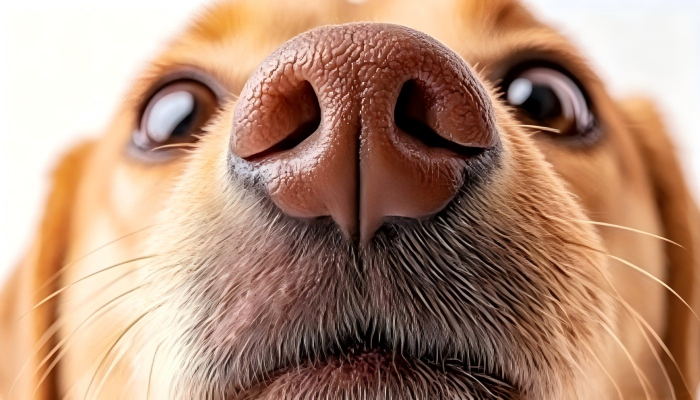
According to the American Kennel Club, a dog’s nose has up to 300 million scent receptors against a human’s 5 to 6 million. The real trick is architectural.
National Geographic reports that a dog’s nasal passages split airflow into two separate routes: one for breathing, one for smelling. Scent molecules stay parked on the receptors instead of getting flushed out on every exhale. That’s how a search-and-rescue dog holds a scent trail across days.
Vision tells a similar story. Dogs aren’t colorblind in the black-and-white sense. They have dichromatic vision, meaning they see blues and yellows clearly and perceive reds and greens as muted browns.
The bright red toy you threw into the green grass? Your dog is using memory and motion to find it, not color.

Breed Differences Matter More Than Most Owners Realize
The AKC recognizes 202 breeds, organized into seven groups based on what the dogs were originally bred to do.
A Dachshund was built to fight badgers underground — the name literally means “badger dog” in German. A Border Collie was shaped over centuries to stare down sheep. A Newfoundland has webbed feet and a water-resistant coat because it was meant to pull drowning fishermen out of the North Atlantic.
None of these traits vanish in a modern apartment. A Husky whose ancestors pulled sleds across the Arctic still needs to run. A terrier bred to kill vermin will still fixate on squirrels.
The flip side is the origin-story surprise: Australian Shepherds were developed in the American West; The Poodle is German, not French and the Chihuahua’s ancestor- Techichi, traces back to 9th-century Mexico.

Dog Behavior Is Communication — Including the Tail Wag
The most persistent dog myth is that a wagging tail means a happy dog. It doesn’t always.
A 2013 study published in Current Biology by researchers at the University of Trento found that dogs wag asymmetrically.
Tails swing more to the right (the dog’s right) when the dog is looking at something it wants to approach, and more to the left when it’s facing something it wants to avoid. Other dogs can read this.
When test dogs watched videos of peers wagging left, their heart rates spiked and they showed signs of stress. Right-wag videos kept them relaxed.
Direction isn’t the only signal. A high, stiff tail with a fast twitch is very different from a loose, mid-height sweep. Ear position, weight distribution, and whether the whites of the eyes are showing fill in the rest.
A dog communicating is using its whole body, not just the tail.
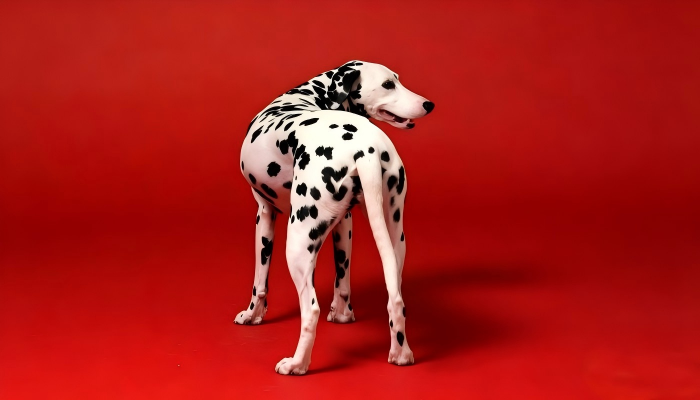
Dogs and Humans Have Co-Evolved for 20,000 Years
DNA evidence pushes domestication back a long way. A 2021 literature review in PNAS placed the origin at up to 26,000 years ago in Siberia, when a now-extinct wolf population began associating with human camps.
Twenty-plus millennia of living together has left measurable biological traces. Dogs digest starches that wolves can’t, thanks to extra copies of the amylase gene. They read human pointing gestures from puppyhood, something wolves raised by humans still can’t reliably do.
The most striking finding came from a 2015 study in Science by Nagasawa and colleagues at Azabu University. When dogs and their owners looked into each other’s eyes, both showed spiked oxytocin, the same hormone released between a nursing mother and her infant.
The same test run on hand-raised wolves produced nothing. Mutual gaze is a dog-specific adaptation.

Common Dog Trivia Myths Worth Clearing Up
Five things that keep showing up in dog trivia quizzes but don’t hold up:
“One dog year equals seven human years.”
The math is wrong. A one-year-old dog is closer to a 15-year-old human, and the ratio compresses after that. Small breeds also age more slowly than large ones.
“Dogs see only in black and white.”
Traced back to a 1937 training manual by Will Judy. Refuted by Jay Neitz and the Color Vision Lab at the University of Washington.
“A warm, dry nose means your dog is sick.”
Nose moisture shifts constantly with temperature, activity, and humidity. It’s not a reliable health indicator.
“Dogs feel guilt when they misbehave.”
The guilty look is a submissive response to your body language and tone, not moral reflection.
“You can’t teach an old dog new tricks.”
Cognition studies consistently show senior dogs can still learn — they may need more reps, and their memory works differently, but trainability doesn’t disappear.
Every one of these is treated as fact somewhere on the internet right now.
Closing
The point of a dog trivia quiz isn’t really the score. It’s the moment you realize something you’ve been wrong about for years — that your Poodle is German, that the tail wag you’ve been reading as friendly might actually be a warning, that your “guilty” dog isn’t feeling guilty at all.
The more accurately you know what dogs actually do, the better you listen to the one sleeping at your feet right now.
You Might Also Enjoy
25 Fun Facts About Dogs That’ll Make You Love Them Even More
30 Fun Facts About Human Body That Will Change How You See Yourself