On January 19, 1953, 44 million Americans crowded around their television sets to watch Lucy Ricardo give birth. The next night, just 29 million tuned in for President Eisenhower’s inauguration. That single comparison says almost everything you need to know about I Love Lucy — but it barely scratches the surface.
The show that ran from 1951 to 1957 didn’t just dominate ratings. It rewrote the rules of television, made overnight millionaires of its stars, and hid more secrets behind those six iconic seasons than most fans ever realize. Here are 25 I Love Lucy facts and trivia bits even lifelong viewers rarely hear about.
How It Almost Didn’t Happen
1. The show was almost called I Love Lopez
In the original concept, Lucy and Ricky weren’t Ricardos. They were Lucy and Larry Lopez. The writers eventually swapped the surname because “Ricardo” had a snappier rhythm — and a good thing too. I Love Lopez sounds like a different show entirely.
2. A dream about Carole Lombard convinced Lucy to take the part
Lucille Ball was nervous about leaving the safety of radio for the still-shaky world of TV. Then she had a dream. Her late friend Carole Lombard — the screwball comedy queen who died in a 1942 plane crash — appeared in a sharp suit and said, “Take a chance, honey. Give it a whirl.” Ball took it as a sign.
3. CBS refused to cast Desi Arnaz
The network told Lucy that American audiences wouldn’t accept a Cuban husband on screen. Her response was blunt: “We ARE married.” To prove they had chemistry, the couple toured the country in the summer of 1950 with a vaudeville act. Audiences roared. CBS caved.
4. The pilot was filmed on Desi’s 34th birthday
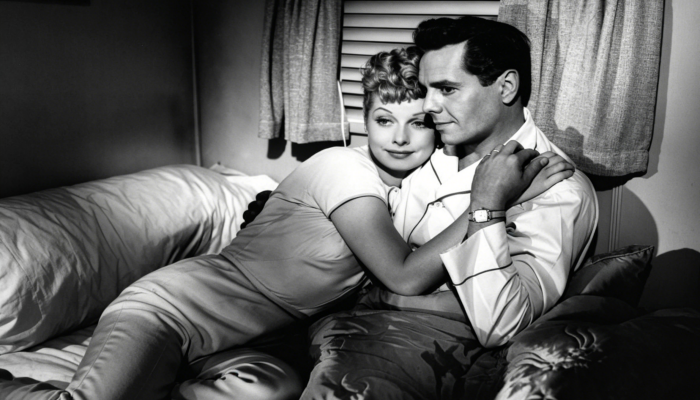
March 2, 1951 — Desi Arnaz’s birthday — was the day they shot the pilot. Then it vanished. For nearly 40 years, no one knew where the original footage was. In 1990, a 35mm print turned up at the home of Pepito Perez, one of Desi’s closest collaborators. Most of it survived.
5. The show grew out of a radio comedy
Before I Love Lucy, there was My Favorite Husband, a CBS radio sitcom Lucy starred in from 1948 to 1951. The three writers — Jess Oppenheimer, Madelyn Pugh, and Bob Carroll Jr. — moved with her to television and adapted dozens of their old radio scripts for the new format.
How I Love Lucy Changed Television Forever
6. Desi invented the multi-camera sitcom
The three-camera setup that every modern sitcom uses — Friends, Seinfeld, Cheers, all of them — was Desi Arnaz’s idea. He wanted the energy of a stage play with the picture quality of film. Seventy years on, his system is still the industry default.
7. The show was shot on 35mm film, not kinescope
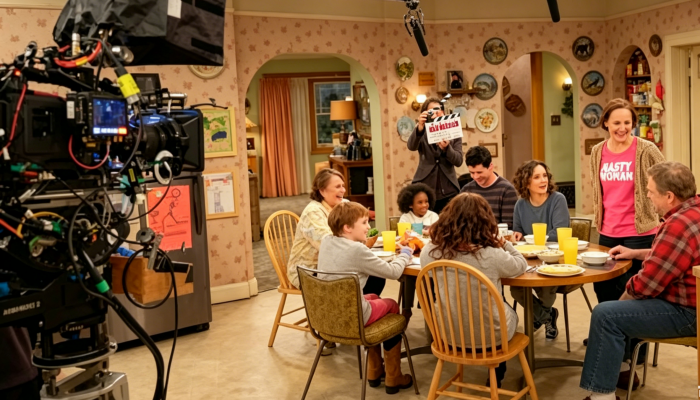
In 1951, most TV was broadcast live and recorded with low-quality kinescopes — film cameras pointed at TV monitors. Desi insisted on 35mm. The picture quality was vastly better. It’s the only reason we can still watch crisp, restored episodes today.
8. Hollywood owes its TV industry to I Love Lucy
Almost every major show in 1951 was produced in New York. Lucy and Desi refused to leave Los Angeles. To make it work, they took a $1,000-per-week pay cut and financed the higher-quality filming themselves. Their stand helped flip the entire industry — Hollywood became the capital of TV production within a decade.
9. The rerun was invented because Lucy got pregnant
When Lucille Ball needed time off after the real-life birth of Desi Jr., the show couldn’t keep producing new episodes. Desi simply re-aired old ones with minor tweaks. He called them “reruns.” Nobody had done it before. He had no idea he had just invented a billion-dollar industry.
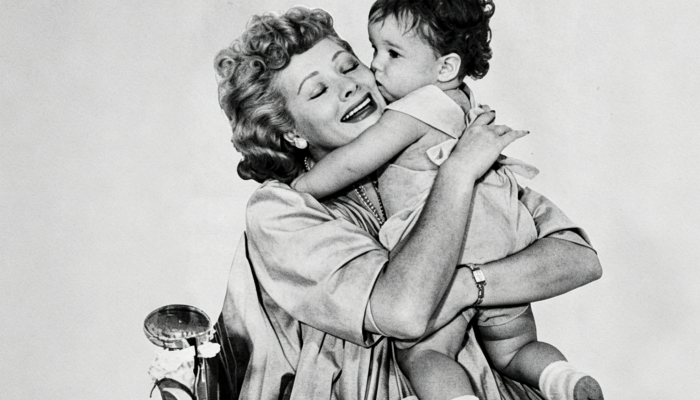
10. The deal made Lucy and Desi TV’s first millionaires
In exchange for the pay cut and LA filming, Desilu Productions kept ownership of every episode after it aired. CBS thought they were giving away nothing. They had given away a fortune. By the late 1950s, Lucy and Desi were the first millionaires the television industry had ever produced.
The Real People Behind the Characters
11. Lucy’s red hair wasn’t natural
Her natural color was brown. Hollywood tried her as a blonde first. In 1943, the studio dyed her red for DuBarry Was a Lady alongside Red Skelton and Gene Kelly. The shade stuck. America’s most famous redhead became one entirely by accident.
12. Vivian Vance and William Frawley couldn’t stand each other
On screen, Fred and Ethel Mertz were a comfortably married couple. Off-screen? Frawley was 22 years older than Vance — 64 to her 42 when the show premiered. She reportedly said no one would believe she was married to “that old coot.” Frawley overheard her, and the feud lasted six seasons. They barely spoke once the cameras stopped.
13. Frawley signed a “three-strikes” deal with Desi over his drinking
William Frawley’s drinking was legendary, and not in a fun way. CBS executives didn’t want to cast him at all. Desi Arnaz worked out a deal directly: one warning, one severe reprimand, then fired. Frawley never showed up drunk once. But watch closely in his episodes — his hands are often jammed in his pockets, hiding the tremors.
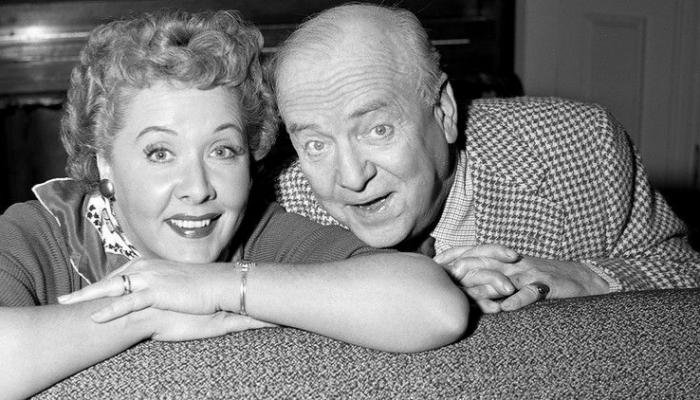
14. He also had a clause about the World Series
Frawley was a die-hard New York Yankees fan. So die-hard that he wrote it into his I Love Lucy contract: he wouldn’t work whenever the Yankees played in the World Series. The Yankees made it in 1951, 1952, 1953, 1956, and 1958. The clause kicked in seven times during his run, and Fred Mertz had to be written out of two whole episodes because of it.
15. Lucy’s mother can be heard laughing in nearly every episode
DeDe Ball — Lucille’s mother — attended almost every taping. Her laugh was distinctive enough that fans can pick it out on the soundtrack. Listen carefully right before Lucy gets into trouble and you’ll often hear a nervous “Uh-oh!” That’s DeDe too.
CBS later harvested those audience recordings into laugh tracks — meaning DeDe Ball’s “uh-oh” can still be heard on shows she never watched.
Behind the Iconic Scenes
16. CBS wouldn’t let her say “pregnant”
When Lucy’s pregnancy got written into the show in 1952, network censors panicked. The word “pregnant” was deemed too vulgar for prime time. They convened a rabbi, a priest, and a minister to decide on a safer substitute. The verdict: Lucy could only say “expecting.”
17. The birth episode beat the presidential inauguration
“Lucy Goes to the Hospital” aired January 19, 1953. 44 million Americans watched — 71.7% of every household with a TV. The next day, only 29 million watched President Eisenhower take office. The surreal twist: that same morning, Lucille Ball really did give birth to Desi Arnaz Jr. by scheduled C-section.
18. The chocolate factory boss was a real See’s Candies worker
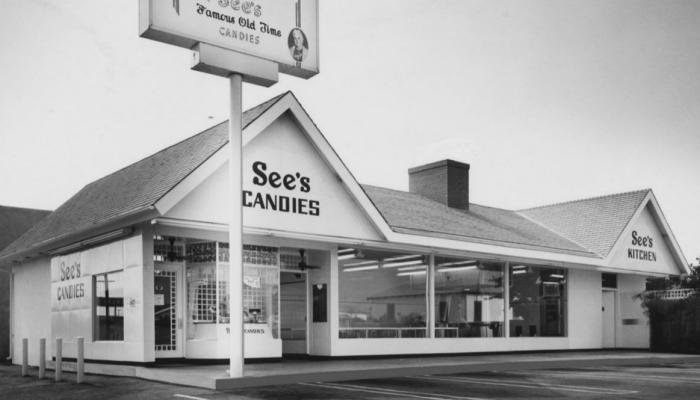
“Job Switching” — the candy conveyor belt episode — needed someone who could play a stone-faced foreperson. Stage manager Herb Browar found Amanda Milligan, a real candy dipper at See’s Candies on Santa Monica Boulevard. She had never seen the show — Mondays at 9 p.m., she watched wrestling.
During rehearsals, she was too gentle, so on the live take, Lucy slapped her hard first to provoke a real response. Milligan retaliated with a wallop that made Lucy think her nose was broken.
19. The Vitameatavegamin syrup was apple pectin
That gloopy “health tonic” Lucy slurps until she’s hammered? In the script, it was 23% alcohol. In real life, it was apple pectin. Stage manager Herb Browar tried half a dozen substitutes before finding it at a health food store on Santa Monica Boulevard.
Ball later said drinking that much sweet pectin made her genuinely nauseous — a lot of her famous “drunk” face was real disgust.
20. The eight-foot loaf of bread in “Pioneer Women” was real
When the script called for an enormous loaf of homemade bread to come shooting out of an oven, Desi Arnaz balked at the special-effects estimate for a fake. Instead he contacted a Los Angeles bakery, which baked an actual eight-foot rye loaf. After the taping wrapped, the cast, crew, and studio audience broke off pieces and ate it together.
The Numbers That Made History
21. Roughly 9% of US homes had a TV when I Love Lucy premiered
By the time the show went off the air in 1957, that number had climbed to nearly 80%. Lucy didn’t just ride the wave of TV adoption — it helped create it. Families bought their first set specifically to watch it.
22. It hit number one in its first season — and stayed there
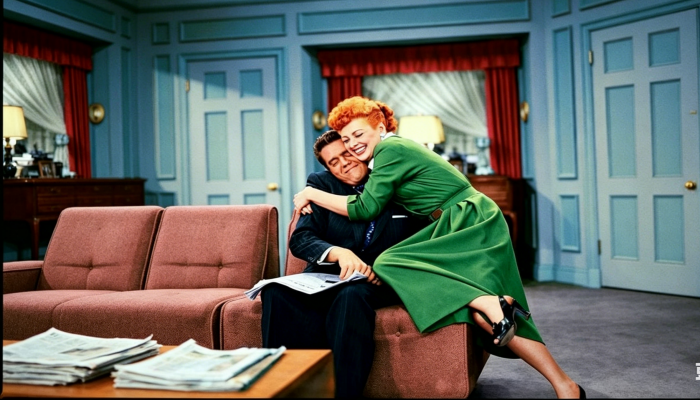
By February 1952, four months after its debut, I Love Lucy was the top-rated show in America. It held the number-one spot for four of its six seasons and never finished lower than third. No sitcom had ever achieved that before. Few have since.
23. The show aired in 80 countries and 22 languages
Decades after its 1957 finale, I Love Lucy was still being broadcast around the world. The Library of Congress documented dubbed versions in over 20 languages — including Mandarin, Arabic, and Hebrew — all featuring local voice actors trying to match Lucille Ball’s iconic delivery.
24. Lucy bought Desi out and ran Hollywood
Lucille Ball and Desi Arnaz divorced in 1960. Two years later, Ball purchased his Desilu shares outright and became the first woman to head a major Hollywood studio since Mary Pickford in the 1920s. Under her watch, Desilu greenlit Star Trek, Mission: Impossible, The Andy Griffith Show, and The Dick Van Dyke Show. Hard to overstate that footprint.
25. The Christmas episode disappeared for 33 years
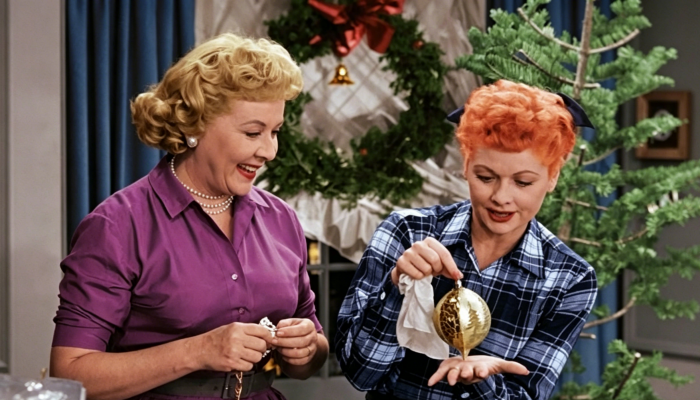
The 1956 Christmas special — a clip-show framing Little Ricky’s birth — was pulled from regular syndication after its initial run. It vanished for over three decades. CBS finally re-aired a colorized version in 2013, and 8.7 million viewers tuned in. Six decades after it first aired, the audience was still there.
After 25 facts, the picture comes into focus. I Love Lucy hit number one in its first season and held the top spot for four of six. It pulled 44 million viewers for a single birth episode — more than any presidential inauguration of its era. It aired in 80 countries and 22 languages. It made its two stars the first millionaires in television history. No sitcom before it had done any of those things, and very few since.
But the bigger story isn’t the records — it’s what came after the final episode in 1957. The three-camera setup Desi invented is still how every sitcom is filmed today. The reruns he created out of necessity built a multi-billion-dollar syndication industry.
The studio Lucy ran after their divorce greenlit Star Trek, Mission: Impossible, The Andy Griffith Show, and The Dick Van Dyke Show. Those 25 I Love Lucy facts and trivia bits add up to something larger than nostalgia. Turn on a TV tonight, on almost any channel, and somewhere in what you’re watching — the camera angles, the reruns, the studio behind it — Lucy and Desi are still there.
You Might Also Enjoy
30 Fun Facts About the Beatles Most People Don’t Know
30 Fun Facts About Michael Jackson You’ve Never Heard Before